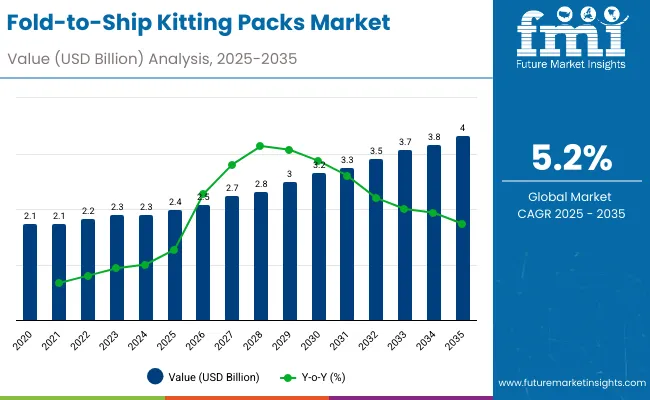
The global fold-to-ship kitting packs market is entering a new phase of expansion and technological transformation, driven by rising demand for efficient packaging solutions, dynamic supply chains, and customer expectations for faster delivery timelines. As e-commerce and logistics industries continue to evolve, both established manufacturers and emerging players are introducing breakthrough products and strategic initiatives to capture growing opportunities.
Fold-to-ship kitting packs — pre-assembled packaging kits designed to minimize assembly time and simplify fulfillment processes — have emerged as a key enabler of operational efficiency across industries. With businesses under intense pressure to improve productivity while reducing costs, these pre-configured packs are redefining how organizations manage fulfillment, packaging, and delivery.
The market expansion reflects a strategic shift among vendors who are not only strengthening their existing offerings but also actively incorporating digital innovations and sustainability practices. This evolution marks a pivotal moment for the packaging industry, where traditional approaches are being reimagined for tomorrow’s demands.
Established Manufacturers Leading the Charge
Several long-standing manufacturers in the fold-to-ship kitting packs market have reaffirmed their leadership by broadening their product portfolios and investing in cutting-edge technology. These companies continue to leverage decades of experience in packaging design and production while embracing modern capabilities such as automation, intelligent tracking, and customization platforms.
Known industry leaders have prioritized flexibility and scalability, enabling businesses of all sizes to benefit from ready-to-use kitting solutions. Their advanced systems are designed to seamlessly integrate with high-speed assembly lines and digital fulfillment centers, enhancing throughput and reducing error rates. By focusing on robust quality, reliability, and customer-centric service, these established manufacturers maintain strong trust among global clients.
In addition, many seasoned players are embracing eco-friendly materials and sustainable manufacturing processes. As corporate sustainability commitments grow stronger across sectors, the demand for recyclable and biodegradable fold-to-ship packs has surged. Established brands have responded with innovative designs that support circular economy ideals without compromising performance.
Emerging Players Driving Innovation and Market Disruption
Alongside well-known manufacturers, a wave of new entrants is making its mark on the market by championing advanced technologies and novel business models. These nimble innovators are reshaping expectations for what fold-to-ship kitting packs can achieve. Startups and emerging firms are increasingly focused on smart packaging solutions that go beyond structural design to add digital value.
Several of these companies are integrating Internet of Things (IoT) sensors, QR-enabled tracking, and data-driven insights directly into packaging systems. This enables real-time monitoring of inventory, condition, and movement throughout the supply chain, giving businesses unprecedented visibility and control. Such intelligent solutions are particularly appealing to sectors like pharmaceuticals, electronics, and high-value goods where traceability and security are paramount.
New manufacturers are also exploring customization at scale. Through cloud-based configuration tools and automated production lines, clients can now tailor kitting packs to specific product dimensions, branding elements, and logistical requirements with minimal lead time. This shift toward personalized packaging not only enhances brand experience but also optimizes material usage and shipping efficiency.
Technology Adoption Fuels Competitive Advantage
A defining trend across the fold-to-ship kitting packs market is the adoption of transformative technologies. Robotics, machine learning, and digital twin simulations are enabling manufacturers to streamline processes from design to delivery. Automated folding and assembly systems significantly reduce manual labor, enhance consistency, and support higher output rates.
Machine learning algorithms are being employed to analyze usage patterns, forecast demand, and recommend optimal packaging configurations. These insights help businesses reduce waste, lower inventory carrying costs, and improve responsiveness to sudden market shifts.
Virtual and augmented reality tools are also gaining traction, allowing design teams and customers to visualize pack configurations in immersive environments before production. This accelerates decision-making and reduces the risk of costly errors.
Collaborative Growth and Market Synergies
The market’s rapid evolution is fostering greater collaboration between manufacturers, technology providers, and end-users. Strategic partnerships and alliances are emerging as key growth drivers, enabling companies to co-develop bespoke solutions that address unique industry challenges.
For instance, logistics firms are partnering with packaging innovators to create folds optimized for automated warehouse systems. Similarly, producers of delicate or high-value products are working closely with smart pack designers to embed condition-monitoring features that safeguard product integrity during transit.
Such partnerships not only strengthen individual offerings but also elevate overall market capability, making advanced fold-to-ship solutions increasingly accessible across sectors.
Outlook: A Future Built on Efficiency and Innovation
As the fold-to-ship kitting packs market continues to expand, the combination of operational efficiency, technological enhancement, and sustainability is setting new standards for packaging excellence. Established manufacturers are reinforcing their dominance through innovation and strategic investments, while new players disrupt norms with digital-first approaches and customizable offerings.
Organizations seeking to enhance fulfillment performance, reduce environmental impact, and meet evolving customer expectations will find increasingly sophisticated solutions within this vibrant market. With innovation at its core and collaboration shaping its future, the fold-to-ship kitting packs industry is well positioned to support next-generation supply chains and redefine packaging efficiency worldwide.