Japan’s cardboard trays market is entering a dynamic new phase of growth as both established global players and ambitious domestic manufacturers accelerate efforts to expand business footprints and adopt cutting-edge technologies. With robust demand from food and beverage, retail, agricultural, and logistics sectors, stakeholders across the value chain are gearing up to meet evolving customer expectations, environmental mandates, and technological opportunities.
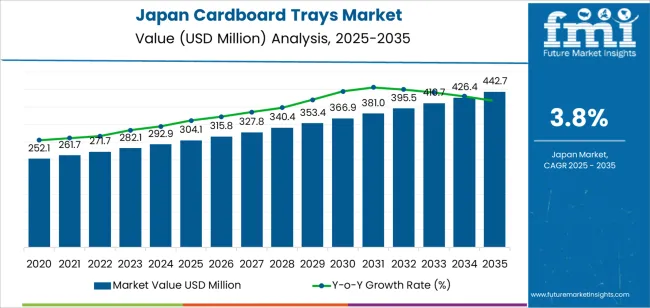
The market, currently valued in the hundreds of millions of dollars, is projected to grow steadily over the next decade as end users increasingly favour sustainable, stackable, and highly functional packaging solutions. Cardboard trays — prized for their lightweight nature, recyclability, and adaptability — continue to outpace other formats across retail and industrial applications. Demand reflects Japan’s unique consumer landscape, where quality presentation, ease of use, and eco-friendliness remain core priorities.
Global Leaders Strengthen Presence in Japan
Leading international packaging groups are reinforcing their commitment to the Japan market, bringing advanced production capabilities and innovative design philosophies that elevate cardboard tray offerings. These global manufacturers — known for their strong research capacity, broad distribution networks, and high-performance products — are working collaboratively with local partners and customers to tailor solutions that reflect Japan’s diverse packaging needs.
Their strategic initiatives include expanding production lines that integrate automation and precision engineering, enabling consistent quality at high volume. These advancements help customers — from major food processors to retail grocery chains — streamline packing operations and deliver products that stand out on crowded store shelves. Customization is becoming a key differentiator, with tailored dimensions, branding options, and enhanced structural features that support automated filling and sealing systems.
By leveraging digital tools and data-driven forecasting, these established players are also improving responsiveness to market trends, reducing lead times, and enhancing supply chain transparency for their clients.
Domestic Innovators Drive Local Growth and Customization
Alongside the global heavyweights, Japanese manufacturers and converters are gaining traction by offering deep local insights and flexible production capabilities. These companies are uniquely positioned to respond to shifting regulatory landscapes, regional preferences, and seasonal market fluctuations with agility.
Domestic firms are increasingly investing in technologies that boost sustainability and product performance. From optimized die-cutting systems to precision forming and eco-friendly coatings, local innovators are enhancing tray strength, moisture resistance, and visual appeal without compromising recyclability. Such technologies support diverse categories — from fresh produce and chilled ready meals to confectionery and premium bakery items.
Smaller players are also leveraging data analytics and real-time quality monitoring to improve efficiency and minimize material waste, making their products attractive to brands that balance environmental goals with operational budgets.
Sustainability at the Core of Innovation
Across the spectrum, sustainability is more than a buzzword — it’s a central business strategy. As consumers demand greener alternatives and governments tighten regulations on plastics and waste, companies that prioritize biodegradable materials, high recycled content, and designs that simplify recycling are gaining competitive advantage.
What’s more, the trend toward sustainable packaging resonates particularly well with Japan’s cultural emphasis on minimal waste and product stewardship. Manufacturers are responding by offering trays made from a broader mix of virgin and recycled fibers, with innovations that enhance durability while reducing environmental impact.
These eco-centric initiatives are paired with efforts to educate customers about lifecycle impact, compostability, and recycling pathways, ensuring that cardboard trays remain top-of-mind solutions for brands seeking to elevate their sustainability credentials.
Regional Demand Growth Highlights Opportunity
Across Japan’s major regions — from bustling urban hubs to emerging secondary markets — demand for cardboard trays is rising. Urban centers with dense retail networks are driving high volume needs, while regional food processing clusters are adopting trays that offer both protection and presentation value.
This geographic diffusion of demand signals broad opportunity for manufacturers to scale operations and customize offerings based on local preferences and supply chain conditions. Strategic expansion into key regions is helping companies reduce logistics costs and improve service levels, creating a virtuous cycle of growth and client satisfaction.
Looking Ahead: Trends and Opportunities
As Japan’s packaging landscape evolves, several exciting trends are shaping the future of the cardboard trays industry:
-
Technology-enabled manufacturing: Integration of automated systems, precision cutting, and real-time quality controls are enhancing efficiency and product consistency.
-
Sustainable innovation: Advanced material science and eco-design principles are driving new product formats that align with environmental goals and regulatory standards.
-
Customization and branding: Brands are increasingly adopting tailor-made tray solutions that communicate value and differentiate products on crowded shelves.
-
Collaborative ecosystems: Partnerships between global firms and local producers are fostering knowledge exchange, capacity building, and market expansion.
These trends underscore a market that is not only stable but ripe for continued innovation and competitive growth. With both well-established multinationals and agile local manufacturers advancing new technologies and business models, Japan’s cardboard trays market is poised to support sustainable packaging solutions well into the future.
About the Market
The cardboard trays sector encompasses a range of material sources, tray formats, and end-use applications. Its growth is influenced by consumer demand for convenience foods, retail ready packaging, and environmentally responsible materials — trends that show no signs of slowing.