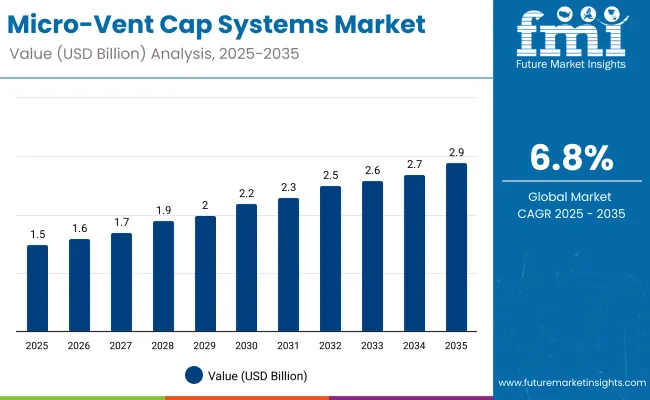
The global Micro Vent Cap Systems market is poised for robust growth as leading industry players and innovative new entrants accelerate development, broaden their geographic footprints, and introduce cutting-edge technologies designed to meet increasing demand across key end-use sectors. This surge is powered by rising requirements for precision ventilation solutions, stringent safety and compliance standards, and expanding applications in pharmaceuticals, food and beverage packaging, and industrial fluids.
Micro vent cap systems, essential in ensuring controlled air flow while preventing contamination and leakage, have become integral components in packaging solutions that prioritize quality, safety, and sustainability. With stakeholders across the value chain recognizing the strategic importance of these systems, the market today stands at a transformative juncture.
Established Leaders Reinforce Market Position
Industry veterans who have long dominated the micro vent cap systems landscape continue to innovate and extend their value propositions. These established manufacturers have leveraged decades of experience, global customer networks, and deep technical expertise to introduce next-generation venting solutions. Their focus remains on improving performance, enhancing durability, and providing cost-effective systems compatible with diverse packaging formats.
Many frontrunners reported increased investments in research and development to optimize cap design, integrate advanced materials, and streamline manufacturing processes. This commitment to innovation has yielded a range of micro vent caps with superior anti-blockage features, enhanced chemical resistance, and improved ease of assembly. By embracing digital tools such as simulation modeling and automated quality control, these companies are setting new benchmarks for operational excellence.
“Today’s competitive landscape requires that we not only meet expectations but surpass them,” said a senior executive at a leading micro vent cap manufacturer. “Our latest systems are designed to elevate performance, reduce waste, and adapt seamlessly with customer requirements globally.”
Newcomers Energize the Market with Fresh Ideas
Alongside the established players, a wave of new manufacturers has entered the micro vent cap systems arena. These agile innovators bring fresh approaches, disruptive technologies, and a willingness to challenge traditional norms. Many are startups or mid-sized firms leveraging advanced materials science, sustainable design philosophies, and flexible manufacturing to carve out market share.
Their strategies emphasize quick responsiveness to customer feedback, modular solutions that can be customized for niche applications, and partnerships with packaging firms seeking tailored venting solutions. These companies have introduced novel products including ultra-thin micro vent films, biodegradable vent components, and smart caps embedded with sensor capabilities to monitor pressure and environmental conditions.
The synergy between new entrants and established manufacturers is reshaping industry dynamics. Collaboration through joint ventures, co-development agreements, and shared technology platforms is becoming more common, allowing diverse players to combine strengths and accelerate delivery of innovative products.
Technology Advancements Driving Market Evolution
Emerging technologies are at the heart of current market growth. Micro vent cap systems now incorporate a range of advancements aimed at improving performance and sustainability:
-
Advanced Polymer Formulations: Novel materials with enhanced barrier properties and flexibility are being used to create vent caps that balance air permeability with strength and chemical resistance.
-
Smart Venting Solutions: Integration of micro-sensors and connectivity features allows real-time monitoring of internal conditions, ensuring optimal venting performance throughout a product’s lifecycle.
-
Sustainable Materials and Design: Eco-conscious innovations include the use of recyclable and bio-based materials, reducing environmental impact and appealing to sustainability-focused brands.
-
Automation in Production: Manufacturers are implementing automation technologies along production lines, from precision molding to quality inspection, boosting output consistency and reducing lead times.
By adopting these technologies, manufacturers are not only addressing current market requirements but are also anticipating future trends where agility, intelligence, and sustainability will distinguish market leaders.
Expanding Global Reach and Strategic Alliances
With demand growing across Asia, Europe, and the Americas, micro vent cap system providers are intensifying efforts to expand their global footprints. Many have established regional hubs, strengthened distribution networks, and localized services to better serve customers in emerging markets.
Strategic alliances with packaging OEMs, supply chain partners, and research institutions are further enabling innovation and widening market reach. These partnerships foster shared expertise, co-creation of custom solutions, and expedited commercialization cycles for new technologies.
Outlook and Market Potential
Industry analysts predict that the micro vent cap systems market will continue to expand as adoption increases across multiple industries. Key drivers include heightened quality control requirements, consumer demand for safer and longer-lasting packaged goods, and increased investment in automation and smart technologies.
Executives from both established and new market players underscore a shared optimism: with collaboration, continuous innovation, and customer-centric strategies, the micro vent cap systems market is positioned for sustainable, long-term growth.