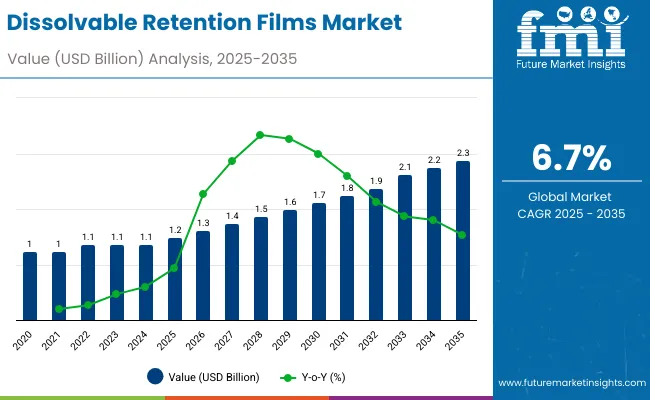
The global dissolvable retention films industry is entering a transformative phase of growth and technological evolution, with both established and emerging manufacturers strategically expanding their capabilities to meet the increasing demand for sustainable and efficient packaging solutions. With the market expected to nearly double in value over the next decade, this sector is poised to become a cornerstone of eco-friendly packaging across multiple industries.
As global consumers and businesses increasingly prioritize sustainability, dissolvable retention films are being adopted more widely due to their unique ability to dissolve completely in water, minimizing residual waste and eliminating the need for traditional secondary packaging. This trend is reflected across diverse end-use segments — from home and laundry care to agriculture, pharmaceuticals, and food & beverage applications — signaling a shift toward more responsible, cost-effective solutions that align with environmental objectives.
At the heart of this market’s expansion is a combination of innovation in materials and strategic business growth initiatives by both established multinational players and dynamic new entrants. Industry leaders are investing in research and development to enhance film performance, improve manufacturing efficiencies, and unlock new applications that extend well beyond conventional packaging.
Advancing Technological Frontiers
Dissolvable retention films are primarily driven by advanced polymer technologies such as polyvinyl alcohol (PVA) and hydroxypropyl methylcellulose (HPMC), alongside starch-based polymers and cellulose derivatives. These materials offer excellent solubility, strength, and versatility. PVA, in particular, leads the market thanks to its strong balance of environmental compatibility and performance, making it ideal for applications where water solubility and biodegradability are priorities.
Technological progress continues to focus on multi-layer film constructions, barrier enhancements, and customized formulations that serve specific industry needs. For example, next-generation films are being engineered to dissolve rapidly under controlled conditions, enabling precise dosing and safe handling in pharmaceutical and agrochemical products. Such innovations are unlocking opportunities for dissolvable films in high-growth sectors that demand both performance and sustainability.
Researchers and developers are also experimenting with smart dissolvable coatings and micro-encapsulation technologies, which can deliver active ingredients — such as detergents, nutrients, or pharmaceuticals — only upon contact with water. These breakthroughs not only improve user experience but also elevate the functional value of dissolvable films in specialized markets.
Market Dynamics and Opportunities for Growth
The dissolvable retention films market is experiencing robust momentum as sustainability initiatives intensify across the globe. Increasing regulatory emphasis on reducing plastic waste, coupled with consumer preferences for single-use, low-waste products, has helped these films transition from niche applications to mainstream adoption.
Home and laundry care products — such as laundry pods and dishwashing tablets — remain one of the largest contributors to market demand. Consumers appreciate the convenience, safety, and reduced environmental impact that dissolvable films offer, and leading brands are responding with investments in automated production lines and innovative film technologies that improve dissolution performance and material integrity.
Beyond the consumer sector, agriculture and pharmaceutical industries are embracing dissolvable films for safe, unit-dose packaging of crop protection agents and controlled-release pharmaceutical products. This broader adoption extends the reach of dissolvable films into segments where precision delivery and contamination control are critical.
Established Leaders and Emerging Innovators
Several key players are making significant strides in the dissolvable retention films space. Long-standing manufacturers are leveraging their deep expertise to refine product portfolios, expand global production capacity, and integrate environmentally responsible feedstocks into their materials.
Simultaneously, newer companies are entering the market with fresh perspectives and competitive technologies that challenge conventional approaches. These innovators are focusing on biodegradable polymer development, unique branded film formats, and niche applications — all of which contribute to a more diversified and dynamic industry landscape.
This combination of legacy manufacturers and entrepreneurial newcomers is accelerating the pace of innovation. Collaborative efforts between material scientists, packaging firms, and brand owners are also driving cross-industry synergies that bring advanced film solutions to market more rapidly.
Regional Expansion and Competitive Positioning
Regionally, Asia-Pacific is fast emerging as a production powerhouse, supported by access to raw materials and cost-efficient manufacturing infrastructure. Meanwhile, North America and Europe continue to push the envelope with regulatory compliance, performance consistency, and high-barrier applications.
Emerging markets are also gaining traction, with local manufacturers tapping into growing domestic demand for sustainable packaging solutions. This regional expansion enables a broader distribution of dissolvable films and reinforces global industry competitiveness.
Looking Ahead
With the industry on track for sustained double-digit growth, the dissolvable retention films sector represents a compelling opportunity for manufacturers seeking to expand their business horizons. As consumers, regulators, and industries alike embrace the dual imperatives of performance and sustainability, the demand for advanced dissolvable film solutions is expected to surge.
From elevating everyday household products to enabling cutting-edge pharmaceutical delivery systems, dissolvable retention films are reshaping the way products are packaged, used, and perceived — heralding a future where convenience and environmental stewardship coexist.