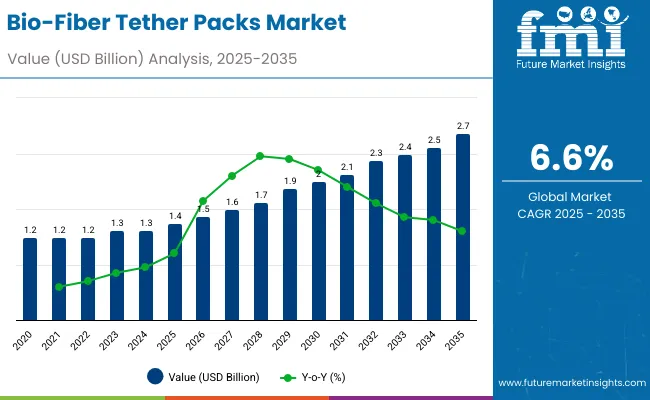
The global bio-fiber tether packs market is poised for significant expansion as demand for sustainable, eco-friendly packaging solutions continues to rise across industries worldwide. Driven by strong regulatory support, heightened consumer awareness of environmental impact, and ongoing technological innovation, both established manufacturers and new entrants are capitalizing on opportunities to scale and diversify their offerings in this fast-evolving market.
Bio-fiber tether packs represent a cutting-edge solution in sustainable packaging. Designed to offer durable, biodegradable alternatives to traditional plastic tethering systems, these fiber-based packs deliver functional strength while aligning with global efforts to reduce single-use plastics. With current market valuations in the billions and anticipated double-digit growth over the next decade, industry stakeholders are investing heavily in product development, manufacturing capacity, and advanced technologies to meet surging demand.
Market Growth and Dynamics Fuel Broad Adoption
The bio-fiber tether packs market is currently experiencing a strong growth trajectory. Eco-legislation and circular-economy mandates in regions around the world have accelerated the shift away from conventional plastic packaging toward renewable, compostable materials. This shift is particularly evident in the food and beverage sector, which remains the largest end-use category adopting fiber tether solutions due to increasing regulatory pressures and sustainability commitments by leading brands.
As beverage manufacturers, household goods companies, and personal care product producers strive to reduce their environmental footprint, fiber-based tether packs have emerged as a compelling alternative that complements high-speed filling lines without sacrificing performance. Key material innovations — including molded fiber, paper pulp composites, agricultural residue fiber, and recycled cellulose — are enhancing structural integrity and recyclability while meeting the nuanced needs of various product formats.
Established Leaders and Emerging Innovators Drive Competition
The competitive landscape of the bio-fiber tether packs market is broad and moderately fragmented, featuring a blend of well-known packaging manufacturers alongside ambitious new players seeking to expand their footprint. Established companies with deep production experience are leveraging their scale to refine manufacturing efficiencies and integrate bio-polymer technologies that enhance product durability and barrier properties. These leaders are pivotal in setting industry standards and meeting the demands of global and regional brands committed to sustainable packaging.
At the same time, rising innovators — including emerging biopolymer specialists and agile regional producers — are introducing fresh approaches and creative designs that further diversify the market. These new entrants are experimenting with lightweight structural formats, advanced coating solutions, and hybrid fiber composites that push the boundaries of traditional tether pack performance. Their efforts are accelerating technological evolution and expanding the use cases for bio-fiber tether applications in both mainstream and niche segments.
This influx of fresh talent and investment is fostering a dynamic environment ripe for collaboration and competition. Many smaller manufacturers are forming strategic alliances with established brands to gain market access, while legacy producers are partnering with research institutions to enhance their product pipelines.
Technological Advancements Poised to Redefine Packaging Standards
Innovation remains at the heart of the bio-fiber tether packs market. Manufacturers are focused on developing next-generation technologies that improve moisture resistance, strength-to-weight ratios, and integration with automated production systems. Techniques such as wet press molding, multi-layer barrier coatings, and nanocellulose-enhanced fiber blends are rapidly gaining traction as they deliver performance improvements without compromising sustainability credentials.
These advancements are essential in addressing historic challenges associated with fiber-based materials — particularly in high-moisture and high-speed production environments where traditional plastics have long been dominant. By enhancing functional performance and compatibility with existing packaging infrastructure, manufacturers are enabling broader adoption and opening doors to new applications across pharmaceuticals, cosmetics, and household product categories.
Regional Opportunities and Strategic Expansion
Geographically, the bio-fiber tether packs market reflects diverse regional momentum. Asia-Pacific is leading production volumes, buoyed by cost-efficient manufacturing ecosystems, large fiber supply chains, and growing industrial investment. Emerging economies within the region are rapidly scaling facilities and fostering ecosystems that support both domestic consumption and export growth.
In contrast, North America and Europe are emphasizing design optimization, compliance with stringent regulatory frameworks, and the integration of value-added features. These mature markets are catalysts for premium sustainable solutions and continue to influence global packaging standards.
Across all regions, both established players and new market entrants are expanding capabilities through capacity investments, strategic partnerships, and targeted innovation initiatives. These efforts are positioning the industry for resilient long-term growth and reinforcing the value of sustainable packaging in the global marketplace.
Outlook and Future Prospects
With robust demand forecasts and a steadily improving technological foundation, the future of bio-fiber tether packs is promising. Market participants — from seasoned manufacturers to rising startups — are navigating a landscape of opportunity driven by environmental imperatives, corporate responsibility agendas, and changing consumer preferences.
As the world transitions toward more sustainable packaging formats, the bio-fiber tether packs market stands out as a pivotal contributor to the circular economy, offering functional, eco-friendly alternatives that align with both regulatory expectations and brand sustainability goals.