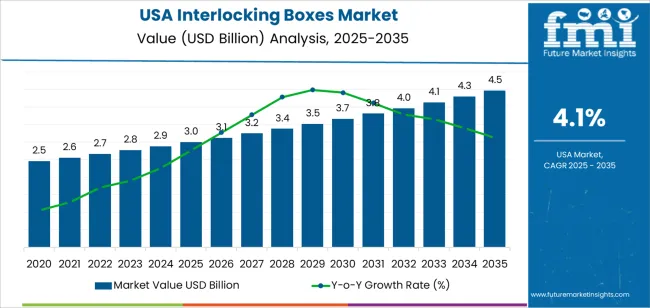
The United States interlocking boxes market is poised for an exciting period of growth and transformation as both long-standing industry leaders and emerging manufacturers ramp up efforts to expand business operations and pioneer new technology solutions. With increasing demand from industries such as electronics, pharmaceuticals, logistics, and retail, interlocking box manufacturers are strategically positioning themselves to meet evolving customer needs with innovative, efficient, and sustainable packaging solutions.
Interlocking boxes — designed to snap together without the need for tape or adhesives — are quickly gaining traction as a versatile and eco-friendly packaging alternative. Their ease of assembly, structural durability, and ability to protect delicate and high-value products have made them especially attractive to businesses seeking to reduce packaging costs while enhancing product safety.
Industry Leaders Strengthen Market Position with Strategic Expansion
Established players in the U.S. interlocking boxes market are leveraging decades of expertise to extend their reach and capabilities. These seasoned manufacturers are investing in state-of-the-art manufacturing facilities, expanding distribution networks, and integrating smart technologies to enhance production efficiency.
One long-standing industry leader has announced plans to expand its production footprint by constructing a new facility in the Midwest, aimed at reducing lead times for customers along the East and West Coasts. This expansion reflects a broader trend among seasoned manufacturers to decentralize production in order to better serve regional demand and improve supply chain resilience.
In addition to physical expansion, established companies are adopting advanced automation and robotics to increase throughput and consistency. By implementing smart manufacturing practices, these companies are future-proofing their operations while maintaining high standards of quality and compliance with environmental regulations.
Emerging Manufacturers Innovate to Compete and Collaborate
Alongside established players, a wave of new manufacturers is entering the U.S. interlocking boxes market with fresh ideas and agile business models. These emerging companies are differentiating themselves with specialized solutions that cater to niche applications and unique customer requirements.
For example, some startups are focusing on customizable interlocking box designs that can be tailored to specific product profiles — from ultra-lightweight consumer electronics to heavy industrial components. By leveraging digital design tools and rapid prototyping technologies, these innovators can deliver tailored packaging faster and more cost-effectively than traditional manufacturers.
In parallel, eco-conscious startups are developing biodegradable and compostable interlocking boxes, responding to growing customer demand for sustainable packaging options. These new manufacturers are collaborating with material scientists and sustainability experts to bring next-generation materials to market — including plant-based polymers and recycled feedstocks — without compromising strength or performance.
Technological Advancements Reshaping the Market Landscape
Technology is playing an increasingly pivotal role in shaping the future of the interlocking boxes market. Manufacturers are adopting digital twin technologies, enabling them to simulate production processes and optimize designs before committing to full-scale manufacturing. This approach reduces waste, shortens development cycles, and improves product reliability.
Another notable trend is the integration of smart packaging features — such as embedded RFID tags and QR codes — directly into interlocking box designs. These innovations empower customers with real-time tracking and inventory management capabilities, transforming a simple packaging solution into a connected component of the supply chain.
Some forward-thinking companies are also exploring augmented reality (AR) tools that help customers visualize how interlocking boxes will fit with their products. This interactive experience enhances customer confidence and reduces the likelihood of returns or redesigns.
Collaborative Initiatives Drive Market Growth
Recognizing the value of cross-industry collaboration, several established and emerging manufacturers are forming strategic partnerships with research institutions, logistics firms, and material suppliers. These collaborations are aimed at accelerating innovation, validating new materials, and expanding use cases for interlocking boxes across diverse sectors.
For instance, collaborative projects are underway to develop heavy-load capable interlocking systems for the automotive and aerospace sectors. These applications demand high structural integrity and precision engineering — areas where collaborative research efforts bring together complementary expertise and resources.
At the same time, partnerships with logistics and e-commerce companies are enabling manufacturers to fine-tune designs for high-velocity distribution environments. By addressing challenges such as stackability, weight optimization, and automated handling compatibility, these initiatives are further unlocking market potential.
Looking Ahead: A Dynamic and Sustainable Future
As the interlocking boxes market experiences sustained growth, manufacturers — both established and new — are embracing innovation, flexibility, and sustainability as core pillars of their business strategies. The alignment of advanced technologies, customer-centric design, and a shared commitment to environmental responsibility is setting the stage for a vibrant and competitive market ecosystem.
With continued investment in research and development, expanded production capabilities, and deliberate efforts to adopt cutting-edge technologies, the U.S. interlocking boxes market is well positioned to meet the evolving needs of customers across industries — today and into the future.