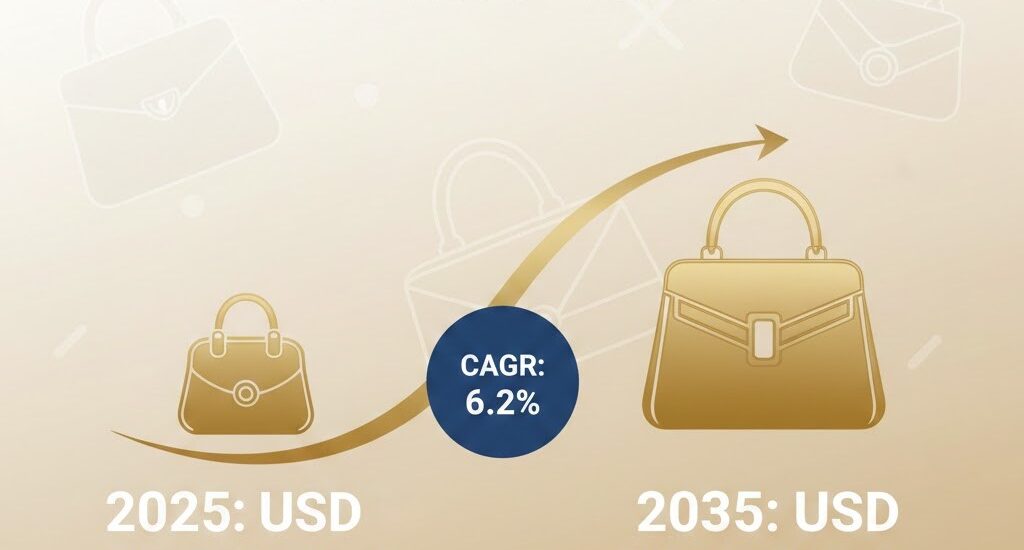
The luxury handbag market is on an exhilarating growth trajectory, projected to expand from a valuation of USD 27.25 billion in 2025 to an impressive USD 50.21 billion by 2035, exhibiting a steady CAGR of 6.2%. This surge reflects evolving consumer preferences, technological innovation, and a global push towards sustainable luxury, as highlighted in the latest comprehensive market analysis by FMI.
A Market Shaped by Tradition and Innovation
The luxury handbag sector is a fusion of heritage craftsmanship and cutting-edge technology. Established players like Louis Vuitton, Hermès, Chanel, Gucci, and Prada continue to dominate with their unwavering commitment to exclusivity, innovation, and sustainability. Meanwhile, newer manufacturers are entering the fray, bringing fresh perspectives and technologies to meet the demands of a discerning, eco-conscious, and digitally savvy clientele.
These brands are investing heavily in AI-driven personalization, blockchain-enabled authentication, and the integration of sustainable, cruelty-free materials such as vegan leather and lab-grown fabrics. This not only enhances product authenticity and transparency but also appeals to the rapidly growing segment of environmentally aware consumers.
Subscribe for Year-Round Insights → Stay ahead with quarterly and annual data updates – https://www.futuremarketinsights.com/reports/sample/rep-gb-18753
Market Dynamics: Past Trends and Future Outlook
Between 2020 and 2024, the luxury handbag market witnessed a robust recovery powered by digital transformation and shifting consumer attitudes. Social media influencers and e-commerce platforms democratized access to luxury, while the second-hand market blossomed due to sustainability concerns.
Looking ahead to 2025-2035, sustainability, personalization, and digital innovation will be the cornerstones of growth. AI-powered customization and blockchain authentication will become industry standards. Luxury brands are expanding resale platforms, and digital spaces like the metaverse will redefine shopping experiences. Emerging economies, particularly in Asia and the Middle East, will become pivotal growth engines.
Sustainability and Technology: Twin Catalysts for Change
Luxury brands are embracing sustainability not just as a trend but as a core strategy. This involves:
- Eco-friendly Materials: Use of plant-based, lab-grown, and upcycled fabrics.
- Circular Economy Models: Buy-back, rental, and resale programs that extend product lifecycle.
- Blockchain & NFC: Providing traceability and authenticity to combat counterfeiting.
- AI and Digital Customization: Offering hyper-personalized experiences, from bespoke designs to virtual try-ons using AR and VR.
These innovations are transforming production and retail, fostering closer consumer relationships while minimizing environmental impact.
Leading Players and Their Strategic Moves
- Hermès: Maintains exclusivity through limited production runs and unparalleled craftsmanship.
- Louis Vuitton (LVMH): Continues to emphasize brand prestige and digital expansion despite pricing challenges.
- Gucci: Undergoing strategic restructuring, focusing on digital marketing and influencer collaborations.
- Coach: Thriving on accessible luxury pricing combined with product innovation.
- Ralph Lauren: Broadening consumer base with balanced pricing and brand elevation.
Other brands like Bottega Veneta, Dior, Saint Laurent, Fendi, and Balenciaga are making significant inroads through design refreshes, sustainability commitments, and targeted e-commerce growth.
Opportunities for New Entrants and Expanding Players
Emerging manufacturers have a unique opportunity to carve out a niche by:
- Leveraging eco-friendly production and ethical sourcing.
- Adopting AI-driven design and customization to offer unique, personalized products.
- Building digital-first business models, including proprietary resale platforms.
- Partnering with influencers and communities to tap into niche markets.
- Exploring new materials like mycelium leather and bio-fabricated textiles to reduce environmental impact.
By combining traditional craftsmanship with modern technology and sustainable values, new players can differentiate themselves in a crowded marketplace.
Regional Insights: Growth Drivers and Consumer Behavior
- USA: A strong economy and expanding online platforms fuel luxury consumption, especially among affluent millennials and Gen Z. Sustainability and exclusivity remain key purchase drivers.
- UK: Rich heritage brands and London’s global shopping appeal sustain market growth, with Brexit influencing pricing and consumer sentiment.
- Japan: Demand is driven by appreciation for craftsmanship, exclusivity, and product durability, supported by urban wealth and retail innovation.
- Germany: Value-conscious consumers favor functionality and ethical sourcing, while online retail continues to expand.
- India: Rising disposable incomes, western fashion influence, and luxury retail expansion are propelling the market forward.
Key Market Segments Driving Growth
By Product Type:
- Tote Bags: Timeless and versatile, tote bags remain a staple in luxury fashion.
- Backpacks: Combining style and function, luxury backpacks are surging in popularity among professionals and travelers.
- Mini and Micro Bags: Compact and chic, these bags cater to the minimalist and trend-conscious shopper.
- Crossbody Bags: Popular for their convenience and style, appealing to urban consumers.
- Others: Including clutches and evening bags, favored for special occasions.
By Material Type:
- Leather: The classic material remains dominant but faces growing competition from sustainable alternatives.
- Nylon and Cotton: Used for casual and eco-friendly designs.
- Synthetic Materials: Gaining significant traction due to the demand for cruelty-free and sustainable products.
By Region:
- North America: Fueled by urban wealth and e-commerce expansion, with a CAGR of 6.2%.
- Europe: Home to historic luxury brands, with Germany showing a 6.4% CAGR driven by ethical sourcing.
- Asia Pacific: The fastest-growing market with India leading at 6.7% CAGR, supported by rising affluence and western fashion influence.
- Middle East & Africa: Emerging as a luxury hotspot, particularly for exclusivity-driven products.
- Latin America: Gradual growth supported by increased digital retail penetration.
Why FMI: https://www.futuremarketinsights.com/why-fmi
About Future Market Insights (FMI)
Future Market Insights, Inc. (FMI) is an ESOMAR-certified, ISO 9001:2015 market research and consulting organization, trusted by Fortune 500 clients and global enterprises. With operations in the U.S., UK, India, and Dubai, FMI provides data-backed insights and strategic intelligence across 30+ industries and 1200 markets worldwide.
Contact Us:
Future Market Insights Inc.
Christiana Corporate, 200 Continental Drive,
Suite 401, Newark, Delaware – 19713, USA
T: +1-347-918-3531
For Sales Enquiries: sales@futuremarketinsights.com
Website: https://www.futuremarketinsights.com
LinkedIn| Twitter| Blogs | YouTube