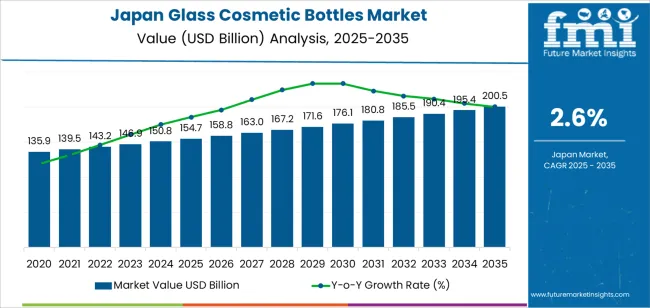
The Japan glass cosmetic bottles market is entering a pivotal era of growth and transformation, driven by both established leaders and dynamic new entrants implementing forward-looking strategies. With increasing global demand for premium and sustainable packaging solutions, manufacturers in Japan are leveraging cutting-edge technologies and strategic partnerships to expand their footprints domestically and internationally.
Glass cosmetic bottles have long been admired for their elegance, durability, and recyclability — qualities that align with consumer desire for luxurious yet environmentally responsible packaging. In recent years, this segment has witnessed unprecedented attention from cosmetic brands seeking packaging that reinforces their quality standards and sustainability commitments. As a result, manufacturers across Japan are innovating aggressively to meet evolving market needs.
Established Manufacturers Lead with Tradition and Transformation
Japan’s legacy glass producers have built strong reputations for precision craftsmanship and quality control. These companies are now capitalizing on their expertise to adopt advanced manufacturing technologies that streamline production and elevate product offerings.
One such industry leader, with decades of experience in specialty glass, has integrated state-of-the-art automated molding systems to enhance consistency across large production runs. By combining traditional artisanal techniques with robotics and AI-assisted quality checks, the company has been able to broaden its client base among luxury skincare and fragrance brands.
Another prominent name in the market has invested heavily in digital color matching and surface treatments. This innovation not only accelerates production timelines but also allows cosmetic brands to achieve complex aesthetic effects — such as metallic finishes and gradient hues — that were once difficult and costly to produce. These developments have positioned the company as a preferred partner for global beauty labels seeking bespoke solutions.
In addition to product innovation, established players are also expanding their global reach. Several have announced strategic alliances with international distributors to enter new markets in Europe, Southeast Asia, and North America. These collaborations are enabling Japanese manufacturers to showcase their premium glass bottles on the global stage.
Emerging Players Bring Fresh Perspectives and Agility
While the legacy names continue to shape the industry’s foundation, a wave of new manufacturers is injecting fresh energy into the Japan glass cosmetic bottles market. These newer entrants are typically smaller, more agile companies that specialize in niche segments such as eco-friendly packaging or high-tech functional glass.
One up-and-coming manufacturer has gained attention for its proprietary lightweight glass technology, which reduces material usage without compromising strength or appearance. This innovation aligns with the growing trend of sustainability — offering brands the allure of luxury glass packaging with a reduced carbon footprint.
Another noteworthy newcomer has developed smart bottle solutions that integrate sensors to interact with consumer devices. Though still in the early stages of commercial adoption, this technology has attracted interest from beauty tech start-ups aiming to enhance user engagement through connected packaging. The company’s blend of aesthetics and functionality suggests a new frontier for glass cosmetic bottles beyond traditional roles.
Many of these emerging firms are also forging partnerships with cosmetic brands that prioritize localized production and rapid turnaround. By maintaining smaller, digitally-enabled manufacturing facilities, they offer customization at scale — a powerful differentiator in a market where unique packaging can significantly influence consumer choice.
Innovation Across Materials and Processes
Across the board, manufacturers in Japan’s glass cosmetic bottle sector are embracing innovation in materials and process technologies. From improved annealing methods that strengthen glass integrity to advanced coating processes that enhance resistance to scratches and chemical interactions, the industry is witnessing a wave of enhancements that benefit both producers and brand partners.
Sustainability continues to be a major driver of innovation. Many companies are adopting closed-loop recycling systems that reclaim glass waste for reuse in production lines. Others are exploring bio-based coatings that reduce reliance on traditional chemical treatments. These efforts not only reduce environmental impact but also resonate with a consumer base increasingly aware of packaging’s role in ecological stewardship.
Market Outlook and Future Potential
Industry analysts point to strong growth prospects for the Japan glass cosmetic bottles market in the coming years. Demand from premium skincare, luxury fragrances, and niche cosmetic brands remains robust, fueled by rising consumer expectations around quality and sustainability. The convergence of digital technologies with traditional glass manufacturing is also expected to unlock new opportunities for product differentiation.
As both established and emerging manufacturers continue to innovate and expand their operations, Japan is well positioned to remain a global hub for high-quality glass cosmetic packaging. Collaborative efforts between manufacturers, brands, and technology partners will play a crucial role in shaping the next generation of glass bottles — marrying timeless beauty with functional intelligence and environmental responsibility.