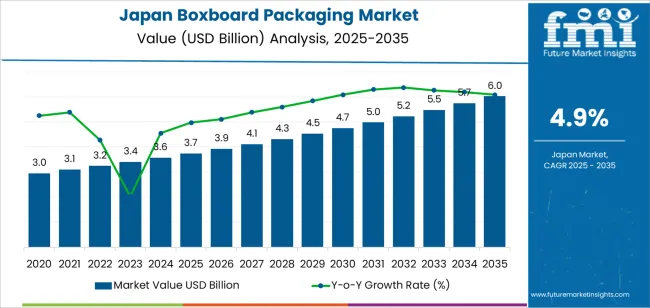
The Japan boxboard packaging market is experiencing a dynamic phase of growth driven by rising demand for sustainable solutions, technological advancements, and a renewed focus on both domestic and international business expansion. As industries across food, beverage, personal care, and e-commerce seek versatile and eco-friendly packaging alternatives, established manufacturers are scaling operations and new players are entering the market with cutting-edge approaches that promise to redefine standards.
Boxboard packaging, a segment known for its rigidity, lightweight properties, and recyclability, has traditionally served as a backbone of Japan’s packaged goods ecosystem. In recent years, manufacturers have sharpened their strategic focus on innovation, aligning product offerings with evolving consumer expectations and environmental mandates. This transition is encouraging established brands to diversify product portfolios while emerging companies harness modern technologies to stake their claim in a competitive landscape.
Established Manufacturers Reinforce Leadership with Innovation and Expansion
Japan’s long-standing packaging leaders are not resting on legacy strengths alone. Many are undertaking strategic initiatives that combine production scale with sustainability goals. These efforts include the introduction of high-performance, lightweight boxboard grades that maintain durability while reducing raw material usage. With global consumers placing greater emphasis on environmentally responsible packaging, the demand for recycled and recyclable board materials is outpacing traditional alternatives.
Manufacturers such as leading paper and packaging corporations are expanding manufacturing capacities across regional hubs, investing in infrastructure to boost output and improve supply chain resilience. These investments are not only aimed at satisfying domestic consumption but also capturing growing market opportunities in Southeast Asia and other export markets hungry for premium Japanese packaging.
Moreover, established players are integrating advanced printing and finishing technologies, allowing brands to elevate shelf appeal and differentiation. Digital printing technologies, in particular, enable short-run customization with faster turnaround times — an advantage in segments like premium confectionery or promotional packaging where visual impact is critical.
New Entrants Bring Fresh Technologies and Market Energy
Beyond the traditional leaders, a wave of new manufacturers is entering the Japan boxboard packaging sector with innovative solutions designed for the modern era. These companies are leveraging digital design tools, automation, and data analytics to enhance production efficiency and minimize waste.
Several startups are experimenting with smart packaging features, embedding QR codes, NFC tags, or augmented reality components directly into boxboard packaging to engage consumers and provide brand experiences that go beyond static graphics. These technologies are especially attractive to consumer brands seeking to build stronger digital ties with purchasers, while also tracking product movement throughout distribution networks.
Additionally, rapid advancements in biodegradable coatings, water-based adhesives, and other eco-innovations are helping emerging manufacturers challenge traditional wax or plastic lamination methods. These developments are well aligned with Japan’s broader sustainability policies and consumer preference for reduced environmental impact.
Market Drivers: Sustainability, E-Commerce, and Cross-Industry Demand
The expanding e-commerce landscape is a key driver for boxboard packaging growth in Japan. Online retail continues to surge, prompting brands and logistics providers to prioritize packaging that protects products during shipment while offering unboxing experiences that reflect brand quality. Boxboard’s combination of strength and recyclability makes it an ideal choice for these applications.
In parallel, regulatory pressures and corporate sustainability commitments are steering the market toward low-impact materials. Both long-established and new manufacturers are responding by developing boxboard products capable of replacing multi-material packaging without compromising functionality. These efforts not only reduce environmental footprints but also improve recyclability rates at the end of product life cycles.
Collaboration and Strategic Partnerships Shape the Future
A prominent trend emerging within the Japan boxboard packaging market is cross-industry collaboration. Packaging producers are increasingly partnering with technology firms, material scientists, and brand owners to co-create solutions that integrate performance, sustainability, and consumer engagement.
For example, collaborations between boxboard manufacturers and printing technology companies are accelerating the adoption of variable data printing, enabling brands to deliver highly personalized packaging campaigns. Meanwhile, alliances with logistics providers are optimizing packaging designs for both durability and cost-efficient transport.
Outlook: Growth Anchored in Innovation
Looking ahead, the Japan boxboard packaging market is well-positioned for continued growth. Established players are expanding their footprints and broadening capabilities, while a new wave of innovators is introducing technologies that will shape the next generation of packaging solutions. With a strong focus on sustainability, digital integration, and supply chain agility, manufacturers across the spectrum are preparing to meet changing consumer demands and emerging market opportunities.
As the industry evolves, stakeholders from producers to brands and retailers stand to benefit from a more resilient, creative, and forward-thinking boxboard packaging ecosystem — one that balances performance with environmental stewardship and drives value well into the future.