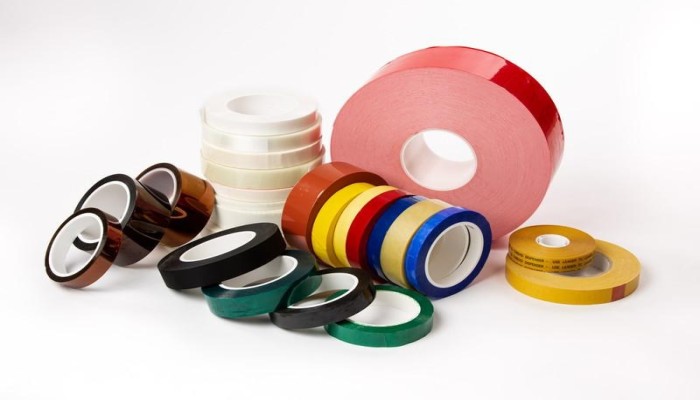
The global tapes market is projected to grow from USD 86,381.4 million in 2025 to USD 140,706.3 million by 2035, registering a compound annual growth rate (CAGR) of 5%. This momentum reflects a dynamic shift in how industries view bonding and protective solutions.
From holding packaging together to playing a critical role in automotive assembly and medical care, tapes are more than just sticky strips. These multifunctional products are becoming indispensable in sectors that demand precision, strength, and adaptability.
This growth is driven by multiple forces, including increased demand from sectors like automotive, healthcare, packaging, and construction, as well as rapid advancements in adhesive technologies and the ongoing push for lightweight materials across industries.
Subscribe for Year-Round Insights → Stay ahead with quarterly and annual data updates –https://www.futuremarketinsights.com/reports/sample/rep-gb-14350
Tapes are thin, flexible strips of material often made from paper, plastic films, fabric, or foil that are coated with adhesives on one or both sides. They are designed to bond, seal, insulate, protect, or mount surfaces across a wide range of applications. They fall broadly into categories such as:
- Pressure-sensitive tapes (commonly used in packaging and labeling),
- Double-sided tapes (for mounting or joining),
- Masking tapes (used in painting and surface protection), and
- Specialty tapes (such as those used in electronics and healthcare).
A Global Rise, but on What Foundation?
FMI paints a compelling growth story, but what they also hint at, and what few in the industry want to admit, is the fragile underbelly of this surge. The entire sector is tethered to volatile raw materials like acrylics, rubber, and petroleum-based substrates. These aren’t just ingredients, they’re ticking time bombs.
The supply chain is stretched thin. The moment shipping lanes falter, or oil prices spike, the ripple effect is instant. Input prices climb. Production stalls. Deadlines get missed. And when you’re building homes, shipping goods, or assembling EVs, tape isn’t optional. It’s critical.
US America’s Tape Obsession—And Its Blind Spot
In the U.S., the demand for industrial and specialty tapes is soaring. Every cardboard box that lands on your doorstep, every new electric vehicle rolling off the line, every sterile bandage in a hospital, there’s tape in the equation.
But while demand is booming, resilience isn’t. The American market is dangerously overexposed to supply disruptions. According to FMI, North American manufacturers are already facing headwinds from rising costs and regulatory pressure. But here’s what’s worse, they’re not adapting fast enough.
Construction Sector: Tapes as Integral Components in Modern Architecture
In construction, tapes serve as weatherproofing, sealing, insulating, and joining agents for materials used in infrastructure, residential, and commercial buildings. Energy efficiency regulations are pushing builders to use thermal insulation and vapor barrier tapes, especially in green buildings.
Additionally, the adoption of modular construction and prefabricated housing has increased the reliance on high-performance adhesive tapes that can handle mechanical stress and environmental exposure.
Automotive Industry: Lightweighting Strategies Create New Tape Applications
Vehicle manufacturers are shifting toward lightweight, fuel-efficient designs, and tapes are integral to this transformation. Automotive tapes are now used for wire harnessing, interior mounting, sensor protection, noise and vibration reduction, and thermal insulation.
Double-sided and foam tapes are increasingly replacing traditional fasteners such as screws and rivets, helping to reduce vehicle weight and enhance aerodynamics. As electric vehicles (EVs) become more mainstream, specialty tapes that offer electrical insulation and heat resistance will become vital components.
Key Company Offerings and Activities
- 3M Company – Launched VHB™ LSE Series for low surface energy bonding applications in 2024 , enhancing performance on plastics and composites.
- Nitto Denko Corporation – Released eco-friendly electrical insulation tapes with halogen-free adhesive systems in 2025 , targeting automotive wire harnesses.
- Tesa SE – Expanded its biodegradable packaging tape portfolio in 2024 , designed for sustainable logistics and e-commerce use cases.
- Intertape Polymer Group (IPG) – Introduced AquaMark™ water-activated tapes with fiber reinforcement in 2025 , offering superior tamper resistance for shipping.
- Avery Dennison Corporation – Developed durable double-sided tapes for wearables and flexible electronics in 2024 , emphasizing skin-safe adhesives and transparency.
Key Segmentation of the Tapes Market
By Tape Type:
- Pressure-Sensitive Tapes
- Masking Tapes
- Duct Tapes
- Filament Tapes
By Material Type:
- Paper
- Plastic
- Metal Foil
By End Use:
- Automotive
- Electric & Electronics
- Building & Construction
- Pharmaceutical & Medical Devices
- Food & Beverages
- Defense/Aerospace
- Others
By Region:
- North America
- Latin America
- Western Europe
- Eastern Europe
- Asia Pacific Excluding Japan (APEJ)
- Japan
- The Middle East & Africa (MEA)
Why FMI: https://www.futuremarketinsights.com/why-fmi
About Future Market Insights (FMI)
Future Market Insights, Inc. (FMI) is an ESOMAR-certified, ISO 9001:2015 market research and consulting organization, trusted by Fortune 500 clients and global enterprises. With operations in the U.S., UK, India, and Dubai, FMI provides data-backed insights and strategic intelligence across 30+ industries and 1200 markets worldwide.
Contact Us:
Future Market Insights Inc.
Christiana Corporate, 200 Continental Drive,
Suite 401, Newark, Delaware – 19713, USA
T: +1-347-918-3531
For Sales Enquiries: sales@futuremarketinsights.com
Website: https://www.futuremarketinsights.com
LinkedIn| Twitter| Blogs | YouTube