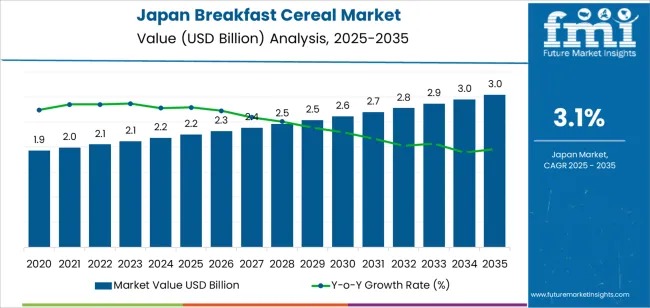
The demand for breakfast cereals in Japan is poised for steady expansion, rising from USD 2.2 billion in 2025 to USD 3.0 billion by 2035, at a projected CAGR of 3.1%. The shift reflects consumers’ increasing prioritization of quick, nutritious, and globally inspired breakfast solutions. Ready-to-eat cereals and fortified variants are gaining strong traction as households embrace convenient meal formats aligned with busy urban lifestyles.
Japan’s evolving breakfast landscape is being shaped by growing interest in nutritionally balanced, fortified, gluten-free, and organic cereals, alongside rising exposure to Western eating patterns. The expansion of e-commerce and modern retail formats continues to broaden product accessibility, accelerating adoption among younger and health-conscious consumers.
Explore trends before investing – request a sample report today! https://www.futuremarketinsights.com/reports/sample/rep-gb-28977
Market Outlook: 2025–2035 Growth Trajectory
From 2025 to 2030, the market is expected to climb from USD 2.2 billion to USD 2.6 billion, driven by an inflection point marked by:
- Rising demand for organic, high-protein, and plant-based cereals
- Introduction of on-the-go packaging formats
- Increasing consumption among working professionals and single-person households
Between 2030 and 2035, the market will mature, adding another USD 0.4 billion in value. Growth will remain steady despite rising competition from smoothies, snack bars, and meal-replacement kits. Manufacturers are projected to sustain demand with premium innovations, local flavors, and functional nutrition offerings.
Key Market Indicators
- Market Size 2025: USD 2.2 billion
- Market Size 2035: USD 3.0 billion
- CAGR (2025–2035): 3.1%
- Leading Product Type: Ready-to-eat cereals (72.8%)
- Leading Nature: Conventional cereals (69%)
- Key Growth Regions: Kyushu & Okinawa, Kanto, Kinki, Chubu, Tohoku
What’s Driving Japan’s Breakfast Cereal Demand?
Japan’s fast-paced lifestyle and rising emphasis on nutrition are central to market expansion. Dual-income families, longer workdays, and increased urbanization contribute to the surging preference for instant, wholesome breakfast options.
Key demand drivers include:
- Growing awareness of fortified, whole-grain, and high-fiber cereals
- Strong retail presence across online platforms, convenience stores, and modern grocery outlets
- Introduction of cereals tailored to local taste profiles such as matcha, azuki bean, and black sesame
- Sustained influence of Western breakfast culture
However, market expansion is moderated by price sensitivity, traditional rice-based breakfast customs, and competition from yogurt, bakery items, and ready-to-drink smoothies.
Product Insights: Ready-to-Eat & Conventional Cereals Dominate
Conventional Cereals Maintain Leadership (69% Share)
Conventional grain-based cereals continue to lead Japan’s breakfast aisle due to affordability, nutritional fortification, and wide flavor availability. Their familiarity and accessibility sustain their dominance across households.
Ready-to-Eat Cereals Account for 72.8% of Demand
RTE cereals are preferred for minimal prep time—ideal for workers, students, and urban families. Fortification with vitamins, minerals, and functional nutrients enhances their adoption among health-conscious consumers. The segment’s strong appeal is reflected in its market-leading position.
Regional Demand Outlook: Urban Centers Lead Growth
- Kyushu & Okinawa (CAGR: 3.8%) – Young demographics, health-focused consumers, and rising adoption of Western meal formats fuel the strongest growth nationally.
- Kanto (3.5%) – High concentration of professionals and students drives demand for quick, nutrient-rich breakfast options.
- Kinki (3.1%) – Gradual shift from traditional breakfasts toward convenience-oriented meals supports moderate growth.
- Chubu (2.7%) – Slow adoption persists due to strong traditional food culture, though urban pockets show rising openness to cereals.
- Tohoku (2.4%) & Rest of Japan (2.3%) – Growth remains conservative but steady, with younger consumers driving incremental gains.
Competitive Landscape: Innovation Anchors Market Leadership
Japan’s breakfast cereal category is dominated by global brands, supported by strong innovation pipelines and diverse flavor portfolios. Leading players include:
- Kellogg’s Company (approx. 25% share)
- General Mills Inc.
- Nestlé S.A. (Cereal Partners Worldwide)
- Post Holdings, Inc.
- PepsiCo (Quaker Oats)
Companies are differentiating through:
- Local flavor innovation (matcha, kinako, black sesame)
- Low-sugar, high-fiber, whole-grain, and fortified formulations
- Expansion via convenience stores, online retail, and smart packaging formats
These strategies help sustain competitive positioning in a market that balances traditional preferences with modern dietary trends.
Conclusion
Japan’s breakfast cereal demand is set for consistent long-term growth as consumers prioritize convenience, nutrition, and global-inspired food options. While traditional meals remain prevalent, accelerating adoption of fortified and ready-to-eat cereals ensures sustained market opportunity through 2035.
For businesses, manufacturers, retailers, and investors, the next decade presents a compelling window to capitalize on evolving breakfast preferences and rising health awareness across Japan’s diverse consumer landscape.