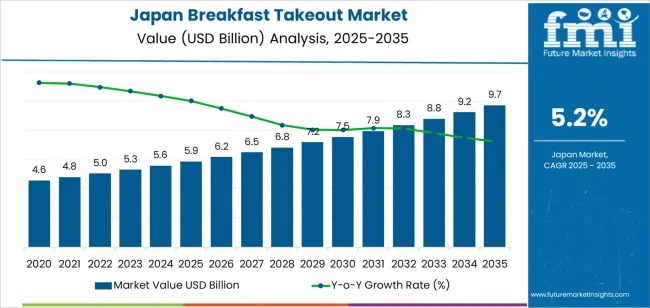
The demand for breakfast takeout in Japan is projected to grow from USD 5.9 billion in 2025 to USD 9.7 billion by 2035, registering a CAGR of 5.2%. Growth is fueled by time-pressed consumers seeking convenient, ready-to-eat morning meals that align with modern commuting habits, urban living, and rising professional workloads. As Japanese consumers increasingly choose grab-and-go formats such as bento boxes, sandwiches, smoothies, and specialty coffees, the sector is entering a decade of steady expansion.
Breakfast takeout is becoming deeply integrated into daily routines as digital ordering platforms, app-based delivery, and subscription-style breakfast services become mainstream. The popularity of premium, health-conscious offerings—such as protein bowls, organic smoothies, and low-sugar yogurt meals—supports evolving dietary habits. With workplace culture emphasizing productivity and short meal windows, operators who offer convenient, high-quality breakfast solutions are gaining a competitive edge.
Explore trends before investing – request a sample report today! https://www.futuremarketinsights.com/reports/sample/rep-gb-28949
Japan Breakfast Takeout – Quick Stats (2025–2035)
- 2025 Market Value: USD 5.9 billion
- 2035 Forecast Value: USD 9.7 billion
- CAGR: 5.2%
- Leading Nature: Non-Vegetarian (45%)
- Top Growth Regions: Kyushu & Okinawa, Kanto, Kinki
- Leading Companies: McDonald’s (28%), Starbucks, Dunkin’, Tim Hortons, Subway
Growth Outlook Through 2035
Between 2025 and 2030, the industry will expand from USD 5.9 billion to USD 7.5 billion, adding USD 1.6 billion in value as adoption accelerates across delivery apps, quick-service chains, and convenience stores. Urban markets—particularly Tokyo, Osaka, and Fukuoka—will fuel early growth due to dense commuter populations and fast-paced work environments.
From 2030 to 2035, the market will advance from USD 7.5 billion to USD 9.7 billion, generating an additional USD 2.2 billion. Growth will begin to moderate as urban areas approach saturation; however, menu innovation, loyalty programs, healthier alternatives, and personalization technology will help brands sustain momentum. Mature competition will shift the focus toward product differentiation, customer experience, and digital ecosystem integration.
Key Drivers Supporting Market Expansion
Japan’s breakfast takeout industry is accelerating due to:
- Growing commuter population and rising workplace attendance.
- Rapid expansion of mobile ordering and food delivery ecosystems across major cities.
- Menu innovation, including protein-rich bowls, Western-style sandwiches, smoothies, and specialty coffee pairings.
- Convenience store-led expansion, with early-morning shelves stocked with fresh, portable options.
However, challenges persist. Labor shortages, higher ingredient costs, and persistent consumer preference for homemade breakfasts limit the pace of adoption. Delivery inefficiencies in suburban and rural zones also increase operational strain, especially during early morning hours.
Market Breakdown: Nature & Breakfast Type Trends
Non-Vegetarian Leads with 45% Share
Non-vegetarian breakfasts—featuring eggs, bacon, chicken, sausage, and hearty sandwich formats—dominate due to their protein density, portability, and strong alignment with consumer preferences for filling, energizing morning meals. Fast-food chains and convenience stores continue to invest in wider meat-based offerings to meet morning demand.
Continental Breakfast Captures 28.7% of Demand
Light, quick options such as pastries, yogurt, bread, fruits, and coffee drive continental breakfast popularity. Urban consumers prefer these balanced, easily portable meals, reflecting rising focus on wellness and lighter morning eating habits. The segment benefits from widespread availability across cafés, bakeries, and convenience stores.
Regional Demand Outlook (CAGR 2025–2035)
- Kyushu & Okinawa: 6.5%
- Kanto: 6.0%
- Kinki: 5.2%
- Chubu: 4.6%
- Tohoku: 4.0%
- Rest of Japan: 3.8%
Kyushu & Okinawa lead the market due to urban growth, tourism expansion, and rising adoption of quick, healthier breakfast formats. Kanto, home to Tokyo’s dense working population, shows strong momentum driven by digital ordering and diverse food culture. Kinki, including Osaka and Kyoto, benefits from vibrant foodservice innovation, strong student populations, and rising demand for healthy convenience foods.
Meanwhile, Chubu and Tohoku show gradual adoption as traditional home-cooked breakfasts remain common. In the Rest of Japan, slower infrastructure development and cultural preferences for traditional meals temper takeout growth.
Competitive Landscape
Japan’s breakfast takeout industry is shaped by a mix of fast-food giants, coffee chains, and convenience store operators. Key players strengthening their early-morning presence include:
- McDonald’s Corporation (28% market share)
- Starbucks Corporation
- Dunkin’ (Inspire Brands)
- Tim Hortons (Restaurant Brands International)
- Subway
Competition centers on menu innovation, digital convenience, localized flavors, speed of service, and value pricing. Brands are increasingly adopting express pickup lanes, enhanced mobile ordering flows, drive-through formats, and loyalty-based promotions to secure repeat morning customers.
Japan’s breakfast takeout market is set for a decade of solid growth as convenience, digital integration, and evolving food preferences reshape the morning meal landscape. With rising consumer inclination toward portable, balanced, and customizable breakfasts, brands positioned at the intersection of speed, affordability, and quality stand to capture long-term value.