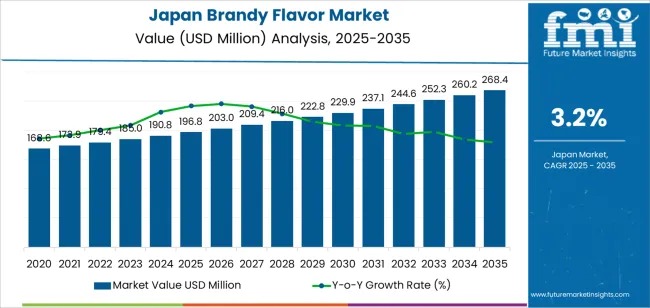
The demand for brandy flavor in Japan is projected to rise from USD 196.8 million in 2025 to USD 268.4 million by 2035, growing at a steady CAGR of 3.2%. This growth reflects Japan’s rapidly evolving taste preferences, especially the shift toward premium cocktails, flavored spirits, and high-quality bakery and confectionery products.
Japan’s beverage manufacturers are investing heavily in premium flavor systems to meet consumer demand for more sophisticated, layered taste profiles. Brandy flavor—known for its rich, aged-spirit notes—is emerging as a core ingredient in modern mixology and gourmet food applications. The market’s momentum aligns with Japan’s longstanding commitment to continuous innovation in the alcoholic, non-alcoholic, and culinary sectors.
Explore trends before investing – request a sample report today! https://www.futuremarketinsights.com/reports/sample/rep-gb-28948
Quick Market Snapshot
- Market Value 2025: USD 196.8 million
- Forecast Value 2035: USD 268.4 million
- CAGR (2025–2035): 3.2%
- Leading Product Type: Grape brandy (34.1%)
- Top Growth Regions: Kyushu & Okinawa, Kanto, Kinki
- Key Players: Givaudan SA, Firmenich SA, IFF, Symrise AG, Mane SA
Market Growth Outlook Through 2035
Between 2025 and 2030, the Japan brandy flavor market will increase by USD 33.1 million, reaching USD 229.9 million. This period marks heightened interest in premium cocktails, artisanal beverages, and sophisticated dessert formats. The trend peaks around 2027, driven by growing demand for spirit-inspired beverages, both alcoholic and zero-proof.
From 2030 to 2035, the market will expand by another USD 38.5 million, reaching USD 268.4 million. Growth during these years reflects market maturity, with brand innovation, premium product launches, and flavor authenticity driving continued expansion.
What’s Driving Demand for Brandy Flavor in Japan?
Several factors are accelerating national adoption:
- Rising preference for premium, spirit-inspired flavors in bakery, confectionery, RTD beverages, and desserts.
- Growth of syrup-based non-alcoholic cocktails and zero-alcohol mixers, where brandy flavors replicate aged spirit profiles without alcohol.
- Momentum of clean-label and natural flavoring trends.
- Rapid expansion of Japan’s cocktail culture, led by bars and restaurants experimenting with brandy-based profiles.
While regulatory scrutiny and higher costs of premium extracts present challenges, shifting consumer lifestyles favor long-term category expansion.
Bakery & Confectionery: Japan’s Leading Application
Bakery and confectionery applications account for 29% of Japan’s brandy flavor demand—the highest among all categories. Brandy flavor enhances cakes, pastries, chocolates, and premium sweets with rich, aromatic notes.
This segment’s growth is linked to:
- Increasing demand for gourmet, artisanal dessert formats
- Continued innovation in indulgent, premium bakery products
- Rising consumer interest in European-style confectionery
- Adoption of brandy flavor for holiday and festive product lines
As Japanese bakeries push toward more luxurious flavor layers, brandy flavor will continue to anchor premium product development.
Grape Brandy Dominates Product Demand
Grape brandy, representing 34.1% of total demand, remains the preferred flavor type due to its smooth, fruity, versatile profile. Its adaptability across both sweet and savory applications makes it a popular choice for formulators seeking depth and authenticity.
The demand also reflects broader consumer preference for natural, aged, spirit-derived notes in culinary products.
Key Market Dynamics & Trends
Japan’s brandy flavor industry is shaped by evolving consumer behavior, ingredient innovation, and clean-label priorities. Notable trends include:
- Expansion into desserts, sauces, premium bakery, cocktails, and functional beverages
- Growth of natural and alcohol-free brandy flavor extracts
- Increased use of micro-encapsulation for heat-stable, process-friendly formulations
- Co-creation of flavor systems blending brandy with Japanese traditional ingredients (e.g., yuzu, sakura, matcha)
These innovations position the category for stable, long-term growth.
Regional Demand Outlook
Regional CAGR highlights from 2025–2035:
- Kyushu & Okinawa: 3.9% (fastest-growing region)
- Kanto: 3.6%
- Kinki: 3.2%
- Chubu: 2.8%
- Tohoku: 2.5%
- Rest of Japan: 2.3%
Regional performance varies due to differences in consumer demographics, hospitality industry sophistication, and exposure to global beverage trends.
Competitive Landscape
Japan’s brandy flavor market is dominated by global flavor houses specializing in premium aged-spirit notes. Leaders include Givaudan, Firmenich, IFF, Symrise, and Mane. These companies compete on:
- Authenticity of aged-spirit profiles (oak, caramel, vanilla)
- Clean-label, natural, and alcohol-free solutions
- Encapsulation technologies
- Regulatory compliance and Japan-specific formulations
Their focus on innovation, flavor precision, and processing stability keeps them at the forefront of Japan’s evolving flavor ecosystem.