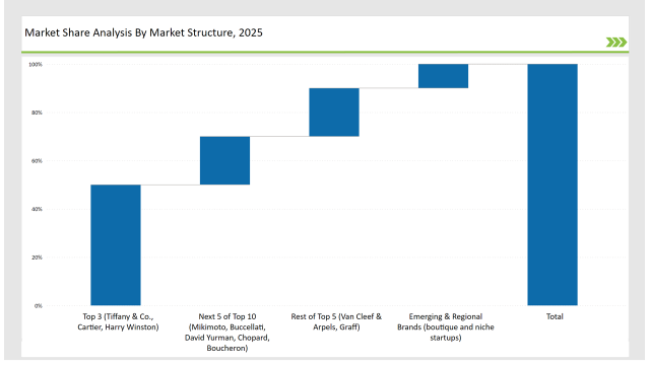
The USA luxury fine jewelry market is entering a dynamic phase of transformation as leading heritage brands, boutique jewelers, and eco-centric newcomers reshape consumer expectations. According to Future Market Insights (FMI), iconic brands including Tiffany & Co., Cartier, and Harry Winston together command nearly 50–60% of the market, while emerging sustainable brands and regional jewelers widen the competitive spectrum. With rising demand for high-craftsmanship pieces, ethical sourcing, and AI-powered retail experiences, the luxury fine jewelry sector is set for robust growth through 2035.
Subscribe for Year-Round Insights → Stay ahead with quarterly and annual data updates – https://www.futuremarketinsights.com/reports/sample/rep-gb-21354
Market Trends Highlighted
- Sustainability at the forefront: Consumers increasingly favor ethically sourced stones, recycled metals, and lab-grown diamonds.
• Digital transformation: Virtual try-on tools, AI-driven recommendations, and enhanced online shopping interfaces are reshaping the luxury buying experience.
• Customization & bespoke craftsmanship: Rising demand for personalized bridal jewelry and made-to-order designs fosters deeper brand loyalty.
• Experiential luxury retail: Brick-and-mortar stores evolve into immersive spaces offering tailored consultations and heritage storytelling.
• Cultural & regional design adaptation: Brands adopt localized collections to appeal to diverse U.S. consumer groups.
Recent Developments in the Industry
- Tiffany & Co. unveiled a renewed bridal line integrating ethically sourced diamonds and contemporary settings.
• Cartier expanded its Panthère collection with bolder, design-forward interpretations.
• Harry Winston strengthened leadership in the engagement ring category through superior diamonds and intricate craftsmanship.
• Van Cleef & Arpels refined its iconic Alhambra series, blending heritage identity with modern elegance.
• Graff delivered ultra-luxury one-of-a-kind pieces crafted with large, rare gemstones.
• Sustainable innovators such as Vrai and Diamond Nexus accelerated category disruption through accessible lab-grown diamond offerings.
Key Takeaways of the Report
- Top three brands—Tiffany & Co., Cartier, and Harry Winston—hold 50% of the U.S. market share.
• Boutique and regional jewelers together capture 30%, focusing on personalized services and bespoke craftsmanship.
• The lab-grown diamond jewelry category is expanding rapidly at a 15% CAGR.
• Brick-and-mortar retail remains dominant at 65% of sales, while e-commerce captures a growing 25%.
• High-jewelry contributes 55% of product sales, making it the most lucrative segment.
• Bridal jewelry maintains steady traction with 30% share, driven by rising engagement ring demand.
Market Drivers
- Sustainability & Ethical Sourcing
The shift toward responsible luxury—ethical mining, recycled metals, and carbon-neutral diamonds—is shaping purchasing decisions among millennials and Gen Z.
- Digital Shopping Evolution
AI personalization, mobile shopping, virtual store tours, and digital consultations are now standard expectations within the luxury buying process.
- Bridal Jewelry Demand
Weddings and proposals remain critical sales drivers, ensuring consistent growth for engagement rings, wedding bands, and personalized bridal collections.
- Growing Affinity for Customization
Consumers increasingly seek unique pieces aligned with personal stories, resulting in higher adoption of made-to-order and bespoke jewelry services.
- Rising Ultra-Luxury Consumption
A segment of affluent consumers continues to invest in high-jewelry with rare gemstones and heritage craftsmanship, supporting strong premium market momentum.
Regional Insights
- Northeast USA remains the top market, supported by major retail hubs like New York City and a high concentration of luxury buyers.
• West Coast leads in demand for sustainable jewelry, tech-enabled shopping, and lab-grown diamonds.
• Southern states see rising adoption of bridal collections and personalized fine jewelry.
• Midwest customers are increasingly drawn to boutique jewelers offering regional designs and custom services.
Country-Wise CAGR Analysis (2025–2035)
- United States Overall Market CAGR: Steady, driven by sustainability, technology adoption, and bridal demand.
• Top Growth Categories:
– Lab-grown & sustainable jewelry: ≈15% CAGR
– E-commerce luxury jewelry sales: 8–10% CAGR
– Bespoke jewelry segment: ≈7% CAGR
Competition Outlook
The market remains highly concentrated, with the top three players securing more than half the share.
Tier-Wise Breakdown (2025)
- Tier 1 (50% share): Tiffany & Co., Cartier, Harry Winston
• Tier 2 (20% share): Van Cleef & Arpels, Graff
• Tier 3 (30% share): Regional jewelers, boutique brands, independent designers
Emerging eco-centric brands are attracting environmentally conscious consumers and gradually reshaping competitive dynamics. Virtual selling strategies, limited-edition drops, and exclusive online collections amplify market differentiation.
Key Segments of the Market Report
By Sales Channel
- Individual Jewelry Stores
• Specialty Stores
• Online Retailers
• Exclusive Showrooms & Auction Platforms
By Product Type
- Rings
• Necklaces
• Earrings
• Bracelets
• Pendants
• Brooches
• Anklets
• Others
Future Outlook
The USA luxury fine jewelry market is primed for strong expansion as sustainability, digital innovation, and the timeless allure of bridal jewelry redefine the next decade. Brands investing in AI-powered personalization, ethical sourcing, immersive in-store experiences, and region-specific collections will capture the strongest growth trajectory. As consumer preferences evolve, the merger of heritage craftsmanship and modern retail technology will shape the future of American luxury jewelry.
Why FMI: https://www.futuremarketinsights.com/why-fmi
About Future Market Insights (FMI)
Future Market Insights, Inc. (FMI) is an ESOMAR-certified, ISO 9001:2015 market research and consulting organization, trusted by Fortune 500 clients and global enterprises. With operations in the U.S., UK, India, and Dubai, FMI provides data-backed insights and strategic intelligence across 30+ industries and 1200 markets worldwide.
Contact Us:
Future Market Insights Inc.
Christiana Corporate, 200 Continental Drive,
Suite 401, Newark, Delaware – 19713, USA
T: +1-347-918-3531
For Sales Enquiries: sales@futuremarketinsights.com
Website: https://www.futuremarketinsights.com
LinkedIn| Twitter| Blogs | YouTube