The global rubber track market for defense and security applications is set to experience significant growth, expanding from USD 147.6 million in 2025 to an estimated USD 261.8 million by 2035, at a compound annual growth rate (CAGR) of 5.9%, according to the latest analysis from Future Market Insights, an ESOMAR-certified analytics firm. The market’s growth reflects increasing defense budgets, modernization of armored vehicle fleets, and heightened geopolitical tensions worldwide.
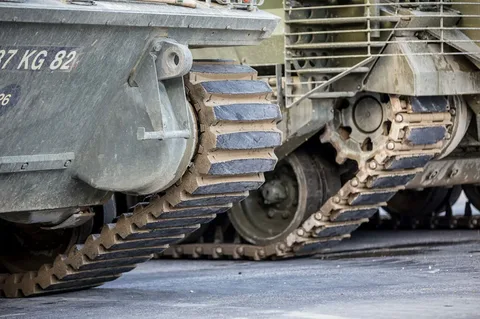
Rubber tracks, preferred for their reduced weight, lower acoustic signature, and improved traction across diverse terrains, are increasingly replacing steel tracks in light and medium armored vehicles, including infantry fighting vehicles (IFVs), armored personnel carriers (APCs), and reconnaissance platforms. These vehicles, representing approximately 70% of total demand, rely on rubber tracks to enhance mobility, stealth, and operational efficiency.
Get access to comprehensive data tables and detailed market insights – request your sample report today!
https://www.futuremarketinsights.com/reports/sample/rep-gb-6470
Market Dynamics and Growth Drivers
The rubber track market demonstrates moderate to high elasticity relative to macroeconomic and geopolitical indicators. Between 2025 and 2030, growth is expected to be particularly responsive to government defense spending and procurement cycles. Regions with active modernization programs, including China, India, South Korea, and the United States, are driving significant demand for both new vehicle production and replacement track systems. From 2030 to 2035, growth will stabilize as key defense programs mature, though ongoing retrofitting, maintenance, and spare parts requirements will sustain steady expansion.
Rising global defense expenditures are a primary growth driver. Countries across Asia-Pacific, the Middle East, and Eastern Europe are investing heavily in modern tracked vehicles, replacing legacy Soviet-era and outdated platforms with advanced IFVs and APCs. The global tracked military vehicle fleet, exceeding 200,000 vehicles, generates substantial ongoing demand for replacement rubber tracks, which are typically replaced every 3,000-5,000 kilometers depending on terrain and operational conditions.
Rubber tracks offer clear operational advantages: they are 20-40% lighter than steel alternatives, generate lower noise critical for reconnaissance missions, reduce ground pressure for soft terrain maneuverability, and eliminate frequent track pad replacements. These benefits make rubber tracks the preferred solution for diverse combat and peacekeeping environments, from deserts to urban centers and mountainous regions.
Technological Advancements Boosting Market Appeal
Innovation in materials and design is enhancing performance while lowering lifecycle costs. Composite rubber tracks reinforced with carbon fibers or aramid compounds extend service life to 5,000-8,000+ kilometers, while modular designs enable rapid field replacement, improving operational availability. Sensors integrated into rubber tracks allow real-time monitoring, predictive maintenance, and lifecycle management, creating additional operational efficiencies for military operators.
The leading product type, rubber pin tracks, accounts for 45.3% of the market, favored for light and medium armored vehicles due to flexibility, superior traction, and reduced vehicle weight. The 15-45 ton vehicle payload category, representing 48.7% of demand, includes major IFV and APC platforms such as the M2/M3 Bradley, CV90, Puma IFV, and BMP-3, which require durable, high-performance rubber track systems.
Regional Insights
Asia-Pacific: The region leads global growth with China at a 6.2% CAGR and India at 6.0%, driven by expansive modernization programs. China’s PLA is adopting rubber tracks for new IFVs and APCs, emphasizing mobility, stealth, and deployability. India’s Future Infantry Combat Vehicle (FICV) program and indigenous manufacturing initiatives are expanding domestic rubber track production to support high-altitude operations and strategic autonomy.
North America: The U.S. market is projected to grow at 5.9% CAGR, underpinned by the sustainment of the M2/M3 Bradley fleet. Each vehicle requires regular rubber track replacement, supporting operational readiness and ongoing modernization programs. U.S. defense procurement favors advanced, high-performance tracks incorporating state-of-the-art materials and smart monitoring technologies.
Europe: Europe’s rubber track market is expected to grow from USD 38.4 million in 2025 to USD 64.8 million by 2035, at a 5.4% CAGR. Germany, the U.K., France, and Poland dominate demand, with Puma and Ajax IFVs and K21 imports from South Korea contributing significantly. German and British defense programs emphasize quality, technological sophistication, and lifecycle support, while emerging procurement in Poland and Sweden drives additional demand.
Middle East: Rising defense budgets in Saudi Arabia and neighboring countries fuel demand for modern armored platforms specifying rubber tracks, particularly in peacekeeping, border security, and counterinsurgency operations.
Competitive Landscape
The market is highly competitive, with established players including Diehl Defence, Soucy International, DST Defence Service Tracks, Mack Defense (Michelin), Ocean Rubber Factory, Intertrac, William Cook Defence, and Rheinmetall leading the industry. Companies focus on advanced materials, composite reinforcement, smart monitoring, and global support networks to maintain operational readiness and capture market share. Strategic collaborations, long-term supply contracts, and technology licensing strengthen competitive positions in key regional markets.
Purchase Full Report for Detailed Insights
For access to full forecasts, regional breakouts, company share analysis, and emerging trend assessments, you can purchase the complete report here: Buy Full Report – https://www.futuremarketinsights.com/checkout/6470
Market Outlook
The rubber track market for defense and security is poised for steady growth through 2035, supported by increasing armored vehicle procurements, modernization initiatives, and evolving operational requirements. Technological advancements in materials, modular design, and predictive monitoring enhance performance and operational efficiency, while geopolitical tensions and regional conflicts ensure sustained defense spending. Suppliers capable of delivering high-quality, technologically advanced rubber tracks with comprehensive lifecycle support are well-positioned to capture global growth opportunities.
Quick Facts:
• Market Value (2025): USD 147.6 million
• Forecast Value (2035): USD 261.8 million
• Forecast CAGR: 5.9%
• Leading Product Type: Rubber Pin Track (45.3%)
• Leading Vehicle Payload: 15-45 Tons (48.7%)
• Key Growth Regions: China, India, USA
The global rubber track market continues to evolve, balancing operational requirements with technological innovation to support modern defense forces worldwide. As militaries prioritize mobility, stealth, and lifecycle efficiency, rubber tracks are set to become a cornerstone of next-generation armored vehicle fleets.
About Future Market Insights (FMI)
Future Market Insights, Inc. (FMI) is an ESOMAR-certified, ISO 9001:2015 market research and consulting organization, trusted by Fortune 500 clients and global enterprises. With operations in the U.S., UK, India, and Dubai, FMI provides data-backed insights and strategic intelligence across 30+ industries and 1200 markets worldwide.