The global Automotive Anti-lock Braking System (ABS) and Electronic Stability Control (ESC) market is set for unprecedented growth, projected to surge from USD 1,636.0 million in 2025 to USD 3,467.1 million by 2035, expanding at a robust CAGR of 7.8%. This growth is fueled by stringent safety regulations, technological advancements, and rising consumer demand for enhanced road safety, alongside the accelerating adoption of electric and autonomous vehicles (EVs and AVs).
Driving Safety and Innovation
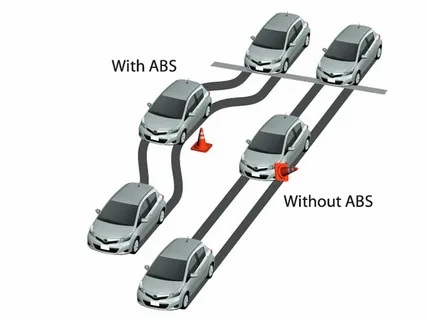
The core of ABS technology lies in preventing wheel lock during emergency braking, reducing skidding and maintaining vehicle control. ESC, on the other hand, ensures steering stability by selectively braking individual wheels to prevent spin-outs. Combined, these systems have become essential across passenger and commercial vehicles, particularly as governments worldwide mandate their inclusion under stricter safety laws.
The market growth is further propelled by innovations in AI-driven braking, sensor fusion, and predictive safety algorithms, enabling smarter, faster, and more energy-efficient braking systems. Vehicle manufacturers increasingly integrate ABS and ESC with Advanced Driver Assistance Systems (ADAS), such as lane-keeping, collision avoidance, and adaptive cruise control, to enhance driving safety and support autonomous vehicle operations.
Get access to comprehensive data tables and detailed market insights – request your sample report today!
https://www.futuremarketinsights.com/reports/sample/rep-gb-5292
Regional Insights
North America:
North America has emerged as a mature market due to strict safety regulations from the NHTSA, mandating ESC on all new passenger vehicles. Rising SUV and EV sales are boosting ABS and ESC adoption, with manufacturers incorporating advanced braking systems into ADAS platforms.
Europe:
Europe leads the market with its stringent EU regulations requiring ABS and ESC on all passenger and commercial vehicles. Automakers such as Volkswagen, BMW, and Mercedes-Benz deploy these systems as standard, complemented by growing EV and hybrid vehicle adoption. The combination of technological innovations and regulatory mandates makes Europe a highly competitive market.
Asia-Pacific (APAC):
APAC is set for the fastest growth, driven by rising vehicle production, increasing household incomes, and stricter safety regulations in countries like China, India, and Japan. The expansion of EV manufacturing in China and South Korea, alongside government initiatives promoting vehicle safety, is creating a robust demand for advanced braking systems.
Rest of the World (RoW):
Markets in Latin America, the Middle East, and Africa are gradually adopting ABS and ESC due to urbanization, infrastructure development, and evolving safety regulations. Brazil and South Africa have notably increased focus on vehicle safety, though cost remains a barrier in price-sensitive regions.
Challenges and Opportunities
Challenges:
High installation costs and affordability remain key challenges, particularly in emerging markets. Integrating ABS and ESC with ADAS also demands advanced algorithms and precise sensor calibration, creating technical and financial hurdles for small and medium manufacturers.
Opportunities:
The rise of EVs and autonomous vehicles presents enormous growth potential. AI-powered braking solutions and sensor fusion technologies are enabling predictive and real-time accident prevention, creating opportunities for automakers to integrate cutting-edge ABS and ESC systems. Governments’ push for zero-emission mobility and connected vehicles further amplifies market growth.
Market Evolution (2020-2035)
Between 2020 and 2024, the ABS and ESC market saw significant adoption due to mandatory regulations and technological advancements, including integration with traction control and real-time diagnostics. From 2025 to 2035, AI integration, predictive braking, V2X communication, and regenerative braking for EVs are set to drive rapid expansion.
Country-Level Insights:
United States: Growth driven by EV and SUV demand, NHTSA regulations, and ADAS integration. CAGR: 7.2%
United Kingdom: Adoption fueled by Euro NCAP standards, EV incentives, and autonomous vehicle trials. CAGR: 7.5%
European Union: UNECE R13H regulation mandates ESC; EV growth supports regenerative braking adoption. CAGR: 7.9%
Japan: Strong hybrid and EV market, JNCAP safety regulations, and lightweight car trends support ABS and ESC integration. CAGR: 7.4%
South Korea: Rapid EV and autonomous vehicle development, government backing for smart mobility. CAGR: 8.1%
Segmentation Trends:
Technology Type: Four-Channel ABS dominates premium and luxury vehicles, while ESC adoption is widespread across all vehicle segments, particularly in EVs and sports cars.
Vehicle Type: Mid-sized cars lead due to cost-performance advantages, while commercial vehicles drive ESC adoption for fleet safety and regulatory compliance.
For access to full forecasts, regional breakouts, company share analysis, and emerging trend assessments, you can purchase the complete report here: Buy Full Report – https://www.futuremarketinsights.com/checkout/5292
Competitive Landscape:
Leading companies in the ABS and ESC space include:
Robert Bosch GmbH (18-22% market share): Pioneering AI-driven braking systems and electrified components.
Continental AG (15-19%): Specializes in ADAS-compatible stability controls and software-driven safety solutions.
ZF Friedrichshafen AG (12-16%): Innovates brake-by-wire technology for EVs and autonomous vehicles.
Hyundai Mobis (9-13%): Offers cost-effective braking modules for EVs and hybrids.
Denso Corporation (7-11%): Focuses on compact, energy-efficient ABS/ESC systems.
Aisin Corporation (5-9%): Develops sensor-driven, lightweight braking technologies.
Other notable players include Hitachi Astemo, Knorr-Bremse, WABCO (ZF division), and Brembo S.p.A. These companies drive market growth through R&D investments, AI integration, and global expansion, addressing the evolving needs of safety-conscious consumers and regulatory mandates.
Market Outlook:
The global Automotive ABS and ESC market is entering a decade of accelerated transformation, fueled by safety mandates, electrification, autonomous driving, and AI-powered innovations. Manufacturers that strategically integrate advanced braking and stability solutions will remain at the forefront of a market projected to nearly double in value by 2035, redefining vehicle safety standards worldwide.
About Future Market Insights (FMI)
Future Market Insights, Inc. (FMI) is an ESOMAR-certified, ISO 9001:2015 market research and consulting organization, trusted by Fortune 500 clients and global enterprises. With operations in the U.S., UK, India, and Dubai, FMI provides data-backed insights and strategic intelligence across 30+ industries and 1200 markets worldwide.