As demand for safe, efficient, and eco-conscious containment solutions continues to rise across chemicals, food, pharmaceuticals and general industrial sectors, the global drum liner market is poised for significant expansion. According to the latest market analysis, the industry is projected to reach a valuation of USD 809.1 million by 2035, growing at a steady CAGR of 4% between 2025–2035.
This global uptick reflects a broader shift in industries toward contamination-free storage, durable containment, and sustainable packaging — creating fertile ground for both long-established manufacturers and ambitious new entrants to scale their operations.
Established Leaders Reinforce Their Dominance — and Lead Innovation
At the forefront of the industry are stalwarts such as Berry Global, Greif, and CDF Corporation, recognized as the top three players in the global drum liner market. Together, these companies currently hold about 18% of the market share.
-
Berry Global continues to set benchmarks through its high-performance, eco-friendly drum liners — increasingly popular among chemical and industrial companies that demand leak-proof, durable, and reliable containment.
-
Greif has carved a niche with industrial-grade liners that meet the rigorous needs of sectors handling aggressive chemicals, lubricants, and other sensitive materials, earning credibility for robustness and safety.
-
CDF Corporation remains known for flexible and customizable liner solutions — offering adaptable designs that meet varied drum sizes and application-specific requirements with precision.
These established players are not just resting on past success: they are actively investing in material research and innovative product design to meet evolving industry demands.
New & Emerging Participants — Accelerating Growth Through Innovation
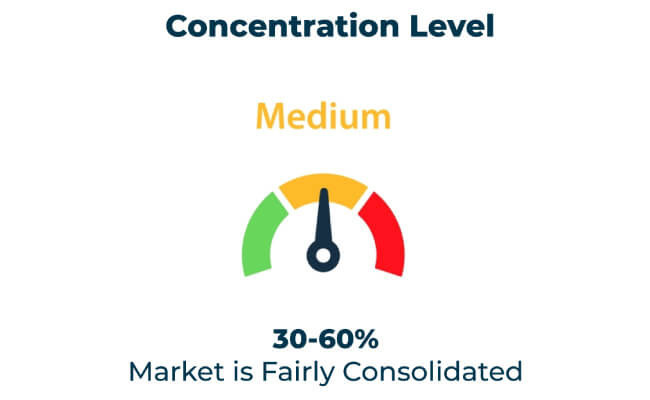
Beyond the heavyweights, the market’s broad base remains fertile for newer and smaller players seeking to stake their claim. According to the market breakdown, industry concentration remains moderate: while the top 10 players account for roughly 38% of the market, the next 20 players represent another 26%, and remaining smaller manufacturers contribute about 36%.
This landscape offers real opportunity for rising manufacturers to expand — by focusing on niches underserved by larger firms: specialized applications (food-grade, pharmaceuticals), region-specific demand (fast-growing Asia-Pacific markets), and eco-conscious clients demanding recyclable or biodegradable liners.
Emerging players are increasingly experimenting with next-generation drum liners, incorporating technologies such as:
-
Biodegradable liners, designed to decompose under appropriate environmental conditions, addressing growing global pressure for sustainable packaging.
-
High-barrier liners with enhanced resistance against moisture, chemical permeation, and oxygen — critical for industries where product integrity and shelf-life are non-negotiable.
-
Customizable, tailor-made liners that can be fitted to non-standard drum sizes or used for specialized applications (chemicals, pharmaceuticals, food).
-
Emphasis on recyclable mono-material solutions, which simplify recycling workflows and align with circular-economy goals.
These innovations not only help emerging firms differentiate themselves but also meet increasingly stringent regulatory and environmental standards across major markets.
Demand Drivers — Why the Market Is Expanding Now
Several converging trends are fueling the market’s momentum:
-
Contamination prevention and product safety: With chemicals, pharmaceuticals, food and beverages — industries that cannot compromise on purity — drum liners play a vital role in avoiding cross-contamination and maintaining product integrity during storage and transit.
-
Sustainability and regulatory compliance: Growing environmental awareness globally has pushed corporations and regulators toward eco-friendly, recyclable, or biodegradable packaging solutions. Drum liner manufacturers responding with sustainable innovations are gaining traction.
-
Customization and flexibility: As industries diversify in terms of materials handled (liquids, powders, corrosives, food ingredients), there’s increased demand for liners that can be custom-fitted to drum types and sizes — offering operational flexibility.
-
Industrial growth, especially in emerging economies: Faster industrialization in regions like Asia-Pacific means higher demand for secure containment and packaging, boosting demand for both standard and advanced drum liners.
Challenges and Opportunities — What Lies Ahead
While the outlook is broadly positive, the market does face hurdles. Advanced liners — especially those with high-barrier properties or biodegradable materials — typically require greater investment in R&D and manufacturing. For smaller players, scaling such operations may be capital-intensive. There is also the challenge of recycling infrastructure, particularly in regions where waste management systems remain underdeveloped.
Yet, in these challenges lie opportunities: manufacturers that can deliver cost-effective, high-performance, and sustainable liners will likely secure a competitive edge. Customization services, regional manufacturing to reduce logistics costs, and partnerships with industrial clients looking for turnkey containment solutions can also drive growth.
Conclusion — A Market in Transition, Open for Innovation
The global drum liner market stands at an inflection point. With a projected value nearing USD 809.1 million by 2035, there’s clear room for both legacy players and ambitious newcomers to grow.
For established companies — the name recognition and existing footprints give them a strong foundation. For newer and smaller manufacturers — the evolving demands of industries, the appetite for sustainable packaging, and the need for customized solutions create a landscape rife with opportunity. The future belongs to those who can combine robust performance, regulatory compliance, and environmental responsibility.
Manufacturers that embrace innovation, invest in sustainability, and stay responsive to customer needs are likely to shape the next generation of drum liner industry — a generation defined by resilience, adaptability, and responsible growth.