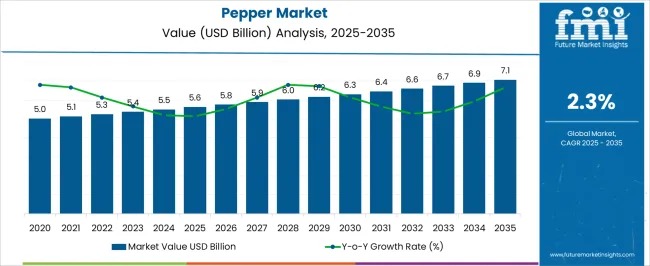
The global pepper market is set for steady expansion, rising from USD 5.6 billion in 2025 to USD 7.1 billion by 2035, reflecting a 2.3% CAGR over the forecast period. This growth is supported by rising household consumption, advanced processing technologies, and increasing integration of pepper in processed foods, nutraceuticals, and ready-to-use spice formulations.
Pepper remains one of the most commercially significant spices worldwide, accounting for 6.8% of the global spice industry and maintaining strong dominance across household, industrial, and foodservice channels. With black pepper alone capturing 46.9% of the product share in 2025, the market continues to benefit from its culinary versatility and established role in both traditional and modern cooking systems.
Explore trends before investing – request a sample report today! https://www.futuremarketinsights.com/reports/sample/rep-gb-26038
Cost Structure and Value Chain Snapshot
The market’s cost framework is shaped predominantly by raw material procurement, where climate conditions, yield fluctuations, and labor-intensive harvesting drive production variability. Post-harvest activities—including drying, cleaning, grinding, and standardization—form the second major cost tier, supported by investments in machinery, food safety compliance, and quality testing.
Distribution and logistics costs, especially for export-oriented players, further influence pricing. Retail and wholesale margins reflect packaging innovation, brand positioning, and quality differentiation. Markets with mechanized processing and integrated supply networks report higher profitability and lower wastage across the value chain.
Key Market Stats
- Market Size 2025: USD 5.6 billion
- Market Size 2035: USD 7.1 billion
- CAGR (2025–2035): 2.3%
- Largest Segment: Black pepper (46.9%)
- High-Growth Regions: North America, Asia-Pacific, Europe
- Leading Brands: McCormick, Bart Ingredients, British Pepper & Spice, Everest Spices, Frontier Co-op, MDH, Olam, Synthite, Catch Foods, The Spice Hunter
Why the Pepper Market is Growing
Steady global demand for natural flavor enhancers, clean-label ingredients, and aromatic seasonings remains the primary growth engine. Pepper benefits from rising adoption of ethnic cuisines, growing preference for organic spices, and increasing health awareness, with studies highlighting pepper’s antioxidant and digestive benefits.
Innovation in pepper-based extracts, oil blends, and nutraceutical formulations is opening new opportunities outside traditional culinary usage. At the same time, consumers and food manufacturers are prioritizing transparency and sustainability, pushing suppliers to adopt traceable sourcing models, climate-resilient farming practices, and advanced grading technology.
Segmental Highlights
- Product Type: Black Pepper Dominates
Black pepper accounts for 46.9% of market share in 2025, driven by strong global usage and robust aroma retention. Its versatility across seasoning mixes, cuisines, and medicinal applications reinforces its long-term leadership.
- Form: Whole Pepper Holds 35.2% Share
The whole pepper category benefits from longer shelf life and premium positioning. Consumer preference for freshly ground pepper—and the rising popularity of artisanal cooking—continues to support this segment.
- Application: Food & Beverages Lead with 58.4%
Pepper is widely used in processed foods, snacks, sauces, ready-to-eat meals, and beverages due to its antimicrobial properties and ability to enhance flavor complexity. Clean-label demand and natural preservative trends will sustain segment dominance.
Country-Level Market Outlook
Growth across major economies underscores rising demand for high-quality, traceable, and organic pepper products.
- China (3.1% CAGR): Strong food processing industry, retail expansion, and partnerships with global exporters.
- India (2.9% CAGR): Driven by packaged spices, ready-to-cook mixes, and export-oriented production.
- Germany (2.6% CAGR): High demand for premium, certified, and sustainably sourced pepper.
- UK (2.2% CAGR): Growth supported by gourmet cooking trends and packaged spice innovation.
- USA (2.0% CAGR): Preference for organic, ready-to-use blends, and specialty formats.
Industry Trends Shaping the Future
- Increasing demand for organic, single-origin, and sustainably grown pepper.
- Integration of pepper extracts into supplements, functional foods, and wellness products.
- Supply chain transparency improving traceability and reducing contamination risks.
- Packaging innovations focused on aroma preservation and moisture control.
- Mechanized post-harvest processes improving grading accuracy and product uniformity.
Competitive Landscape
The market is shaped by global leaders and regional specialists:
- Global Majors: McCormick, Olam, Bart Ingredients emphasize large-scale sourcing, traceability, and high-efficiency processing.
- Regional Champions: MDH, Everest, Catch Foods focus on localized blends, flavor authenticity, and household convenience formats.
- Specialty & Organic Brands: Frontier Co-op, The Spice Hunter lead in certified organic, single-origin, and premium variants.
- Industrial Processors: Synthite Industries strengthens its position through integrated processing for industrial clients.
Competition centers on flavor profile, sourcing transparency, aroma strength, and packaging functionality.