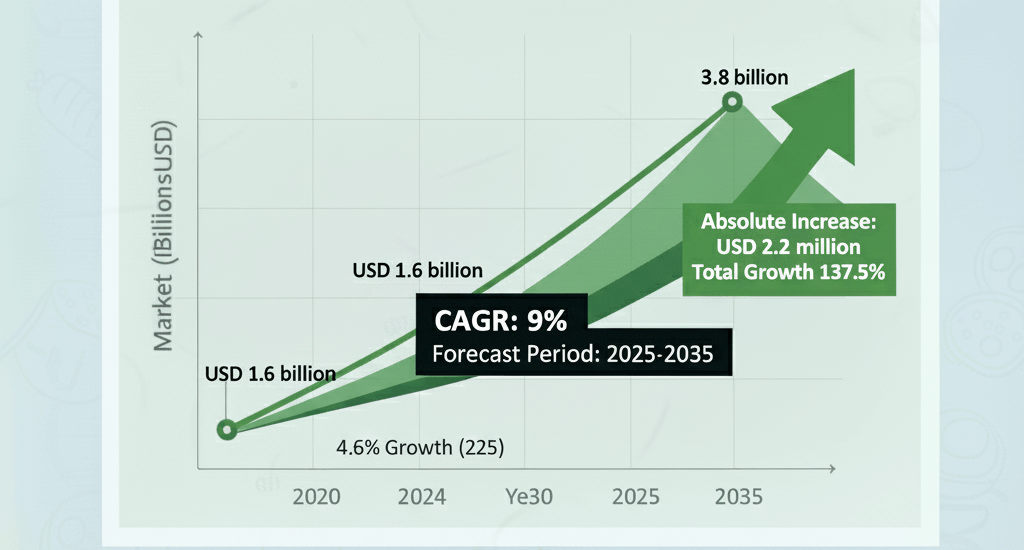
The Korea building automation system (BAS) market is poised for robust expansion through 2035, propelled by AI-driven climate control, IoT integration, and national carbon neutrality goals. According to Future Market Insights (FMI), the market is valued at USD 1.6 billion in 2025 and is projected to hit USD 3.8 billion by 2035, growing at a compound annual growth rate (CAGR) of 9.0%.
The FMI report, “Building Automation System Industry Analysis in Korea,” reveals revenues will increase by USD 2.2 billion over the decade, driven by widespread adoption of predictive analytics, renewable energy-linked systems, and regulatory compliance in commercial real estate.
A Decade of Growth Anchored by HVAC Dominance and Smart Infrastructure:
The shift toward integrated, AI-enhanced BAS platforms is accelerating, with HVAC and commercial applications leading the charge. From 2025 to 2030, the market is expected to grow by USD 1.0 billion, supported by urbanization and green building certifications.
From 2030 to 2035, FMI anticipates an additional USD 1.2 billion in expansion, reflecting deeper IoT deployment, cybersecurity enhancements, and alignment with Korea’s Smart City Act and Energy Use Rationalization Act.
“AI-based predictive maintenance and energy optimization are redefining building performance,” said Nikhil Kaitwade, FMI research analyst. “As regulations tighten and smart tourism expands, BAS is becoming essential for cost savings and sustainability.”
Korea Building Automation System Key Market Insights at a Glance:
Metric- Korea Estimate
Market Value (2025)- USD 1.6 billion
Forecast Value (2035)- USD 3.8 billion
CAGR- 9.0%
Top System- HVAC (40% share)
Dominant Application- Commercial (65% share)
Fastest-Growing Region- Jeju (9.3% CAGR)
Jeju: Korea’s Fastest-Growing BAS Market:
Jeju emerges as the standout growth engine, with its market expanding at a 9.3% CAGR through 2035. Valued within the national USD 1.6 billion baseline in 2025, the region targets automating 80% of new commercial buildings via IoT systems. This surge is backed by the Carbon-Free 2030 Initiative, renewable energy integration in hotels and resorts, and eco-tourism infrastructure.
Government incentives for solar/wind-linked BAS and smart grid compatibility are key accelerators, positioning Jeju as a model for sustainable automation.
Korea Building Automation System Five Forces Driving Market Expansion:
AI-Driven HVAC Optimization: Predictive analytics reduce energy costs by up to 30% in commercial spaces.
IoT and Smart Lighting Integration: Occupancy/daylight sensors enable real-time efficiency in offices and malls.
Regulatory Push: G-SEED certification and BEMS mandates enforce energy management in new builds.
Urbanization and Commercial Boom: Rising smart offices, hotels, and retail drive centralized control systems.
Cybersecurity Investments: Interconnected platforms demand robust data protection amid growing risks.
Korea Building Automation System Market Segment Overview:
By System: HVAC commands 40% of revenue in 2025, fueled by temperature control in offices, malls, and hotels; followed by security & surveillance, lighting solutions, and BEMS.
By Application: Commercial segment dominates with 65% share, prioritizing operational efficiency and compliance; residential and government trail.
By Region: Jeju leads growth at 9.3% CAGR; South Gyeongsang (9.1%), South Jeolla (9.2%), North Jeolla (8.9%), and Rest of Korea provide steady demand via industrial, port, and agri-tech projects.
Korea Building Automation System Market Regional Overview:
South Gyeongsang: 9.1% CAGR, driven by manufacturing hubs and AI-HVAC in logistics parks.
North Jeolla: 8.9% CAGR, supported by agri-tech climate control and public facility upgrades.
South Jeolla: 9.2% CAGR, boosted by port expansions and hotel automation.
Jeju: 9.3% CAGR, leading with renewable-integrated smart tourism infrastructure.
Rest of Korea: Consistent growth from nationwide urbanization and energy regulations.
Subscribe for Year-Round Insights → Stay ahead with quarterly and annual data updates: https://www.futuremarketinsights.com/reports/brochure/rep-gb-18622
Request for Discount: https://www.futuremarketinsights.com/reports/sample/rep-gb-18622
Korea Building Automation System Market Competitive Landscape:
* LG CNS
* Samsung SDS
* Hyundai E&C
* LS Electric
* POSCO ICT
* SK C&C
* KT Corporation
* Lotte E&C
* GS E&C
* Doosan Robotics
Domestic leaders like LG CNS and Samsung SDS hold significant sway through IoT/AI integrations, while Hyundai E&C and POSCO ICT focus on sustainable large-scale projects. Recent moves include LG CNS’s U.S. smart building entry (December 2024) and KT’s AI-cloud partnership with Microsoft (September 2024).
Korea Building Automation System Market Outlook: Pioneering Sustainable Intelligence:
Over the decade, BAS will transition from efficiency tools to intelligent ecosystems, with 5G, facial recognition, and renewable synergies setting new benchmarks.
“BAS is evolving into a core pillar of Korea’s carbon-neutral future,” Kaitwade added. “Players mastering AI interoperability and green compliance will lead the USD 3.8 billion landscape.”
Explore More Related Studies Published by FMI Research:
Electrical Steel Market- https://www.futuremarketinsights.com/reports/electrical-steel-market
Flame Proof Lighting Market- https://www.futuremarketinsights.com/reports/flame-proof-lighting-market
Hydrodesulphurization Catalyst Market- https://www.futuremarketinsights.com/reports/hydrodesulfurization-catalyst-market
Cold Gas Spray Coating Market- https://www.futuremarketinsights.com/reports/cold-gas-spray-coating-market
Permethrin Market- https://www.futuremarketinsights.com/reports/permethrin-market
About Future Market Insights (FMI)
Future Market Insights, Inc. (FMI) is an ESOMAR-certified, ISO 9001:2015 market research and consulting organization, trusted by Fortune 500 clients and global enterprises. With operations in the U.S., UK, India, and Dubai, FMI provides data-backed insights and strategic intelligence across 30+ industries and 1200 markets worldwide.
Why FMI: Decisions that Change Outcomes- https://www.futuremarketinsights.com/why-fmi
Contact Us:
Future Market Insights Inc.
Christiana Corporate, 200 Continental Drive,
Suite 401, Newark, Delaware – 19713, USA
T: +1-347-918-3531
Website: https://www.futuremarketinsights.com
LinkedIn| Twitter| Blogs | YouTube
Have a specific Requirements and Need Assistant on Report Pricing or Limited Budget please contact us – sales@futuremarketinsights.com