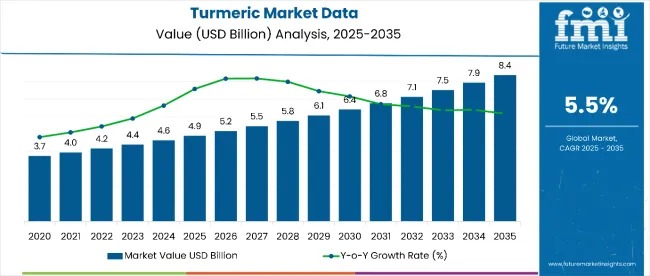
The global turmeric market is projected to expand from USD 4.9 billion in 2025 to USD 8.4 billion by 2035, reaching a 5.5% CAGR, powered by rising adoption of natural, clean-label, and functional ingredients. Demand for turmeric in dietary supplements, functional beverages, and personal care continues to accelerate, supported by clinical validation of curcumin’s anti-inflammatory and antioxidant benefits.
Increasing preference for botanical extracts in preventive healthcare and nutrition-focused formulations is driving market innovation. By 2030, turmeric revenues are expected to grow steadily to USD 6.4 billion, aligning with expanding applications in packaged foods, nutraceuticals, and natural cosmetics. Processed turmeric formats, particularly powders and concentrated curcumin extracts, are reshaping product development strategies across global brands.
Explore trends before investing – request a sample report today! https://www.futuremarketinsights.com/reports/sample/rep-gb-1855
Market Structure and Growth Drivers
Research-backed wellness benefits, improved bioavailability technologies, and sustainable sourcing are influencing producer strategies. The market is expected to gain USD 3.5 billion in absolute growth between 2025 and 2035, supported by value-added products positioned for premium health segments.
Key growth enablers include:
- Rising use of turmeric in functional foods, beverages, and dietary supplements
- Investments in extraction technologies (nanoemulsion, water-based, supercritical CO₂)
- Expansion of turmeric-derived bioactive formulations for skin care, pharma, and sports nutrition
- Growing clean-label and organic transitions in food manufacturing
Processed Turmeric Leads with 78% Share in 2025
Processed turmeric remains the most profitable category, accounting for 78% of the total market, led by powdered turmeric and high-purity curcumin derivatives. Advanced extraction methods are increasing curcumin concentration, enhancing shelf life and bioavailability. Formulations combining turmeric with piperine, probiotics, or botanical blends are driving new consumer segments.
Food and Beverage Accounts for 33% of Market Demand
Turmeric’s significant role in natural colorants and functional flavoring makes food and beverage processing (33% share) the largest end-use segment. Rapid growth is observed in:
- Golden milk, fortified juices, herbal infusions
- Snacks, sauces, bakery, and dairy innovations
- Clean-label processed food launches in Asia-Pacific, Europe, and North America
Market Share Positioning across Complementary Industries
Turmeric’s influence spans multiple categories:
- 38% of the herbal extracts market
- 33% of curcumin-based nutraceuticals
- 27% of natural colorants
- 22% of digestive health supplements
- 29% of clean-label ingredients
These cross-industry roles underscore turmeric’s strategic importance as manufacturers diversify into high-value functional and medicinal formats.
Country-Level Outlook: India Leads at 9.2% CAGR
India remains the world’s largest turmeric hub with a 9.2% CAGR, driven by extensive organic cultivation and government export support. Japan follows at 7.3% CAGR, driven by premium nutraceuticals and strict quality standards. The U.K. (6.1%), China (6.0%), Germany (4.7%), the U.S. (4.5%), and France (4.2%) report continued expansion fueled by clean-label consumption and e-commerce penetration.
Competitive Landscape
The market is moderately consolidated, with leading firms investing in advanced extraction technologies and supply chain optimization. Key players include Naturex S.A. (Givaudan), Sabinsa Corporation, Chr. Hansen A/S, McCormick & Company, and Archer Daniels Midland (ADM). Their focus areas include:
- High-curcumin extracts and natural colorants
- Standardized oleoresin and turmeric oils
- Sustainable sourcing and traceability programs
- Premium turmeric ingredients for pharmaceuticals and wellness beverages
Regional manufacturers are differentiating through authentic varietal sourcing (Alleppey, Madras, Rajapore), local processing capabilities, and organic certifications to meet rising international quality demands.