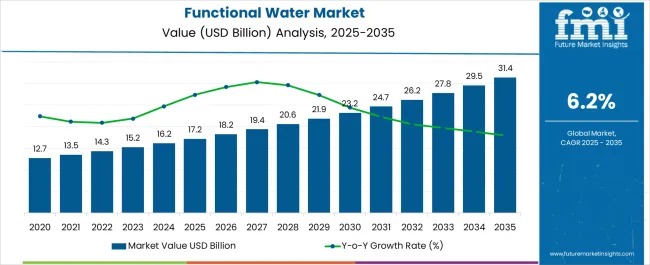
The global functional water market continues to witness a notable transformation as consumers increasingly seek healthier hydration alternatives over carbonated and sugary beverages. Positioned as a premium yet accessible wellness drink, functional water is projected to expand from a valuation of USD 17.2 billion in 2025 to USD 31.4 billion by 2035, registering a CAGR of 6.2%. Growing demand for fortified drinks that offer immune support, minerals, energy enhancement, and clean-label ingredients is at the core of this shift.
As consumer lifestyles become more fast-paced, hydration choices are evolving to meet rising expectations for preventive nutrition. From vitamins to electrolytes, added functional ingredients are driving a new era of beverage innovation. Strengthened by urbanization, higher wellness consciousness, and the pursuit of convenient nutrition, functional water brands are rapidly scaling their portfolios across regions and channels.
Explore trends before investing – request a sample report today! https://www.futuremarketinsights.com/reports/sample/rep-gb-1941
Consumer Demand Driving Market Evolution
Improving awareness about hydration and nutritional enrichment is pushing consumers to switch from conventional aerated drinks to healthier beverages. Post-pandemic behavioral shifts have also accelerated preference toward clean, zero-sugar and immune-enhancing drink formats. Price sensitivity remains relevant, but consumers are more willing to pay for premium offerings backed by strong functional claims and nutritional benefits.
Packaging innovation remains a decisive market differentiator, with eco-friendly and travel-friendly formats gaining traction. Manufacturers are investing in advanced bottling technologies to extend shelf life while keeping flavor and nutrient density intact.
Rapid Growth in Vitamin-Enriched Functional Water
The vitamin segment leads the functional water market with a 54.7% share in 2025, driven by surging demand for beverages that deliver added health benefits without altering daily routines.
Key drivers supporting segment dominance include:
- Growing preference for immune and energy-boosting hydration
- Increased adoption of fortified and ready-to-drink wellness beverages
- Flavor innovation combined with value-added functional blends
As consumers continue prioritizing wellness, vitamin-infused water is emerging as an essential everyday product among urban buyers, fitness enthusiasts, and health-conscious consumers.
Specialty Stores Lead in Functional Water Distribution
With 41.8% revenue share in 2025, specialty stores remain the most influential distribution channel for premium and functional beverages. These outlets enable curated product visibility, brand discovery, and consumer education through demonstrations and sampling programs. Shoppers exploring niche brands and wellness-focused beverages often rely on store experts, strengthening this channel’s dominance.
However, online channels are accelerating rapidly post-2020, and the convenience of e-commerce, subscription offerings, and targeted digital marketing is expected to fast-track market expansion beyond physical retail.
Regional Highlights
North America dominates the functional water market with a 33.7% share in 2025, supported by booming demand in the U.S. where bottled water sales have already surpassed carbonated drinks. Innovation-led offerings such as flavored, low-sugar functional waters infused with magnesium, herbal extracts, and zinc are motivating strong consumer uptake.
Europe, holding 40.6% market share, benefits from high disposable incomes and a rising shift away from artificially flavored drinks. Consumer willingness to invest in premium hydration products, especially across Western Europe, is expected to further accelerate growth.
Asia Pacific is emerging as the most lucrative future market as rapid urbanization, booming e-commerce platforms, and expanding wellness adoption encourage widespread consumption. Global brands are expanding aggressively across China and India, aided by strong digital retail ecosystems.
Key Market Challenges and Opportunities
Although the industry shows promising growth trends, rising PET bottle pricing and stringent food safety standards may constrain market momentum temporarily. Additionally, competition from sports and energy drinks, which offer overlapping benefits, could influence purchase decisions.
On the other hand, innovative flavor development, protein-infused hydration, herbal blends, exotic fruit extracts, and sugar-free variants open lucrative pathways for both global and regional players. Startups are leveraging these trends by launching differentiated products with clean-label claims and convenient packaging formats.
Competitive Landscape
Leading companies are focusing on portfolio expansion, sustainable packaging, and fortified ingredient innovation. Major brands and emerging competitors include:
- Danone
- Coca-Cola
- PepsiCo
- Dr. Pepper Snapple / Vitamin Well AB
- Triamino Brands LLC
- Herbal Water
- Vichy Catalan Corporation
- Unique Foods (Canada)
- San Benedetto
- New York Spring
Rising startup entries such as Ugly Drinks, Focus Water, OSHEE, Viwa Vitamine Water, Funkthedrink, Diva’s Drink, and Miami Bay Beverage LLC are intensifying competition with protein and herbal-infused formulations that target niche wellness segments.