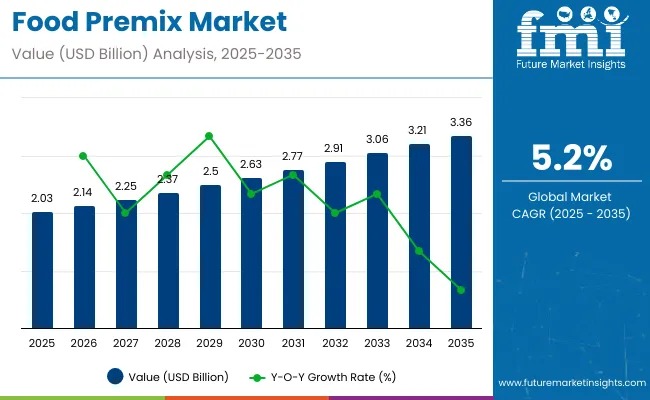
The global food premix market is valued at USD 2.03 billion in 2025 and is projected to reach USD 3.36 billion by 2035, expanding at a CAGR of 5.2%. Rising attention toward nutrient deficiencies, immunity needs, and chronic health risks is accelerating demand for fortified foods and dietary supplements.
Fortification standards promoted by public health agencies, coupled with expanding functional beverage and dietary supplement markets, are lifting adoption across industries. Micronutrient premixes—combinations of vitamins, minerals, amino acids, botanicals, and specialty ingredients—have become integral to improving nutritional density in everyday foods.
The United States remains the world’s largest market due to its strong supplement culture and premium nutrition spending. Meanwhile, China is the fastest-growing market, driven by fortified clinical nutrition, infant formulas, and rapid digital commerce penetration.
Explore trends before investing – request a sample report today! https://www.futuremarketinsights.com/reports/sample/rep-gb-895
Core Growth Drivers Shaping the Market
The shift toward proactive health management is prompting manufacturers to innovate beyond traditional multivitamins. Clean-label, plant-based, sustainable, and tailor-made blends are gaining traction, particularly in developed economies.
Key demand accelerators include:
- Nutritional fortification mandates targeting malnutrition
- Growth in functional beverages and medical nutrition
- Increasing preference for personalized, condition-specific blends
- Rising consumer trust supported by stricter regulatory validation
Rising Per Capita Spending on Fortified Nutrition
Consumers worldwide are allocating a greater share of their food budgets to products offering immune support, cognitive wellness, digestive health, and athletic performance. Developed markets such as the U.S., Canada, Germany, Japan, and the UK show higher spending due to premium pricing and brand-driven product innovation.
Emerging markets including India, Brazil, Indonesia, South Africa, and Vietnam are witnessing strong growth because of improving purchasing capacity, mandatory fortification of staples, and growing awareness of micronutrient deficiencies.
Global Trade Dynamics Supporting Market Expansion
International trade is expanding rapidly as food and nutraceutical manufacturers partner with specialty ingredient suppliers to source tailored premixes.
The United States, Germany, Switzerland, the Netherlands, and China dominate exports, offering high-performance formulations, R&D-driven blends, and economically competitive solutions. Major import markets, including India, Brazil, Indonesia, Mexico, and South Africa, rely on premixes to scale fortified food production and comply with public health regulations.
Application Trends: Food & Beverages Lead Market Share
Food and beverages account for the largest share of global revenue, representing 40% of the market in 2025. Premixes enhance bakery goods, dairy products, medical nutrition drinks, infant foods, and sports beverages. Beverage manufacturers increasingly use premixes to enrich products with electrolytes, probiotics, vitamins, and functional botanicals, driving strong segment expansion.
Functional Shift: Immunity-Focused Premixes Gain Priority
Immunity-focused formulations hold 30% share of demand in 2025, led by vitamin C, vitamin D, and zinc-rich blends. The rise of preventive healthcare, especially in urban markets, is encouraging adoption across gummies, functional powders, fortified snacks, and clinical beverages. Immunity applications are expected to remain dominant due to continued public health concerns and lifestyle risks.
Competitive Landscape: Innovation & Sustainability Lead Strategy
Tier 1 global leaders control nearly 70% of the market through expansive manufacturing capacity, diversified product portfolios, and deeper regulatory expertise. Mid-scale Tier 2 players influence regional markets through targeted innovation, while Tier 3 companies cater to niche local needs with affordable formulations.
Manufacturers are leveraging joint ventures, localized production, digital retail channels, and clean-label ingredient sourcing to compete more effectively. Sustainability initiatives and vegan ingredient lines are particularly attractive to eco-conscious consumers.
Leading Players Include:
Glanbia, B&H Biotechnology, Archer Daniels Midland, Koninklijke DSM, Farbest Brands, Jubilant Life Sciences, Fenchem, Prinova Group, Lycored, Watson Inc., SternVitamin, Hexagon Nutrition, Barentz