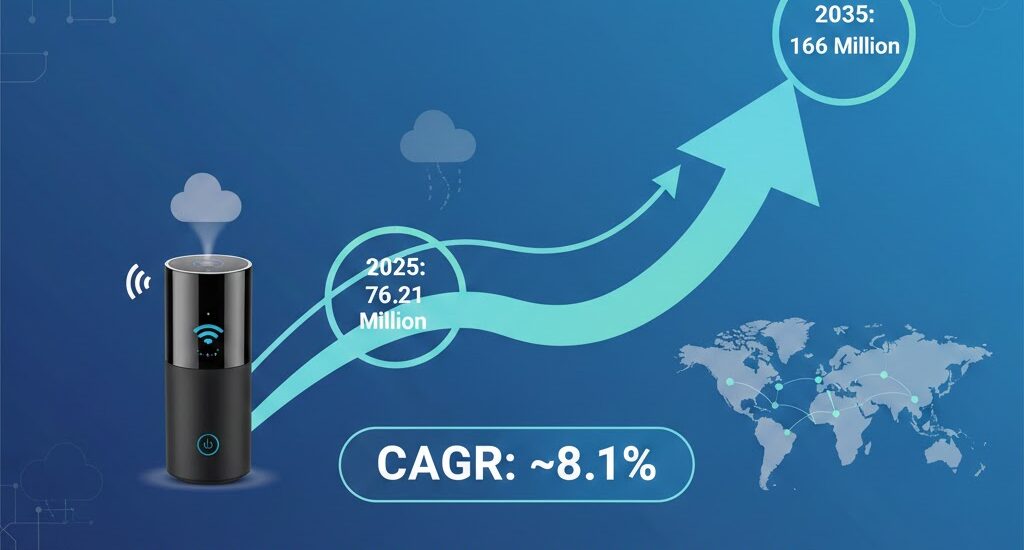
The global Smart Fragrance Box Market is entering a transformative decade marked by rapid technological innovation, increasing wellness adoption, and rising consumer demand for personalized multi-sensory environments. Valued at USD 76.21 million in 2025, the market is projected to expand at a CAGR of 8.1%, reaching USD 166 million by 2035. This strong outlook reflects increasing interest in smart home ecosystems, stress-relief solutions, and automated ambient scenting systems.
Smart fragrance boxes—wirelessly connected devices enabling scent scheduling, remote intensity adjustment, and wellness enhancement—are gaining mass-market visibility as manufacturers, both established and emerging, invest in intelligent scent technologies, AI-powered customization, and eco-friendly refill systems.
Subscribe for Year-Round Insights → Stay ahead with quarterly and annual data updates – https://www.futuremarketinsights.com/reports/sample/rep-gb-13087
Market Momentum Strengthened by Rapid Smart Home Adoption
Between 2025 and 2035, global demand for automated scenting solutions will accelerate as consumers shift toward immersive home environments combining fragrance, lighting, and wellness features. Once considered niche luxury décor, smart fragrance systems are now viewed as essential lifestyle devices across residential, hospitality, retail, and wellness sectors.
Key drivers include:
- Rising demand for stress-reducing home technologies
- Growth of AI-driven personalization in smart homes
- Surge in eco-conscious fragrance packaging
- Expansion of e-commerce fragrance tech brands
- Entry of electronics and wellness giants into the scent-tech space
Regional Market Outlook
North America
North America leads the global market, driven by high smart home penetration and strong décor culture. U.S. consumers increasingly embrace connected scenting devices integrating with Alexa, Google Home, and Apple Home ecosystems.
Europe
The European market remains stable, boosted by demand for premium fragrances, sustainable materials, and minimalist home tech. The UK, Germany, and France lead adoption, supported by eco-friendly consumer habits and wellness trends.
Asia-Pacific
Asia-Pacific stands as the fastest-growing region as urbanization, rising disposable incomes, and higher smart home adoption fuel expansion. China, Japan, and India are witnessing substantial demand for app-controlled fragrance systems across homes, offices, and wellness centers.
Key Challenges & High-Growth Opportunities
Challenges
- High product cost limiting mass-market adoption
- Limited consumer awareness about AI-driven scent customization
- Battery dependency, restricting portability and placement
Opportunities
- Wellness integration through aromatherapy and mood enhancement
- Smart home compatibility with leading IoT platforms
- AI-based scent personalization and biometric-triggered scent dispersion
- Subscription-based fragrance refills enabling recurring brand revenue
These opportunities pave the way for emerging players to collaborate with fragrance houses, hospitality chains, and interior tech companies to capture new market share.
Industry Shifts: 2020–2024 vs. 2025–2035
From 2020 to 2024, the industry was led primarily by luxury décor brands and early adopters. Limited product variety and app-dependent operation restricted large-scale penetration.
The next decade, however, will bring:
- AI-enabled scent switching
- Emotion-sensing fragrance delivery
- Multi-scent sequencing technologies
- Biometric-trigger diffusion
- Sustainable, biodegradable cartridge systems
As fragrance becomes a functional wellness tool rather than a décor add-on, both established and new manufacturers are investing aggressively in scent-as-a-service platforms, smart refill mechanisms, and sensor-based scent systems.
Country-Wise Growth Highlights (2025–2035 CAGR)
- USA: 8.2%
- UK: 8.0%
- EU: 8.1%
- Japan: 8.1%
- South Korea: 8.2%
Segmentation Outlook
By Product Type
- Sprays
- Diffusers
- Candles
- Unscented
- Scented
- Essential Oils
- Incense Sticks
By Material
- Plastic
- Wooden
- Steel
- Glass
- Metal
By End-Use
- Residential
- Commercial
- Hotels
- Restaurants
- Hospitals
- Malls
- Others (Salons, Cafés, Spas)
By Distribution Channel
- Supermarkets/Hypermarkets
- Specialty Stores
- Gift Stores
- Multi-brand Stores
- Online Retail
- Other Channels
Sprays & Diffusers Lead the Next Wave of Innovation
Spray-Based Smart Fragrance Boxes
Sprays hold the largest market share due to their instant scent dispersion and programmable schedules. With motion sensors, voice activation, and automated scent bursts, this segment appeals strongly to hospitality and residential users. Innovations in micro-mist technology and eco-friendly cartridges are further accelerating growth.
Diffuser-Based Smart Fragrance Boxes
Diffusers offer sustained ambient scenting, making them ideal for wellness centers, spas, offices, and premium homes. AI-based scent rotation, mood-specific libraries, and multi-zone control are transforming diffusers into highly intelligent ambient fragrance systems.
Material Trends: Plastic & Wood Drive Market Preferences
Plastic Smart Fragrance Boxes
Lightweight, affordable, and travel-friendly plastic designs dominate mass adoption. Recycled plastics, flame-retardant materials, and customizable finishes are helping manufacturers appeal to cost-sensitive and eco-conscious consumers.
Wooden Smart Fragrance Boxes
Wood-based designs appeal to premium buyers seeking natural aesthetics. FSC-certified materials, handcrafted designs, and hybrid wood-tech innovations are amplifying demand among luxury wellness brands and boutique hospitality players.
Competitive Landscape: A Mix of Giants & New Innovators
Key players are integrating IoT, AI, and personalized scent technologies to strengthen market presence:
- Moodo (Agan Aroma): 16–20% share
- Prolitec Inc.: 12–16%
- Pura: 10–14%
- Cyrano (Aromyx Inc.): 8–12%
- NINU Smart Perfume: 6–9%
- Other manufacturers: 30–40% combined
Emerging brands such as Aera, Scentee Machina, Scentys, and Inhalio are introducing eco cartridges, emotion-driven scent engines, and automotive scent personalization solutions—pushing innovation across the sector.
Key Market Insight
The Smart Fragrance Box Market is transitioning from luxury décor to mainstream wellness technology. With AI integration, eco-refill innovations, and multi-sensory home environments, both established companies and new entrants are positioned for substantial growth over the next decade.
Why FMI: https://www.futuremarketinsights.com/why-fmi
About Future Market Insights (FMI)
Future Market Insights, Inc. (FMI) is an ESOMAR-certified, ISO 9001:2015 market research and consulting organization, trusted by Fortune 500 clients and global enterprises. With operations in the U.S., UK, India, and Dubai, FMI provides data-backed insights and strategic intelligence across 30+ industries and 1200 markets worldwide.
Contact Us:
Future Market Insights Inc.
Christiana Corporate, 200 Continental Drive,
Suite 401, Newark, Delaware – 19713, USA
T: +1-347-918-3531
For Sales Enquiries: sales@futuremarketinsights.com
Website: https://www.futuremarketinsights.com
LinkedIn| Twitter| Blogs | YouTube