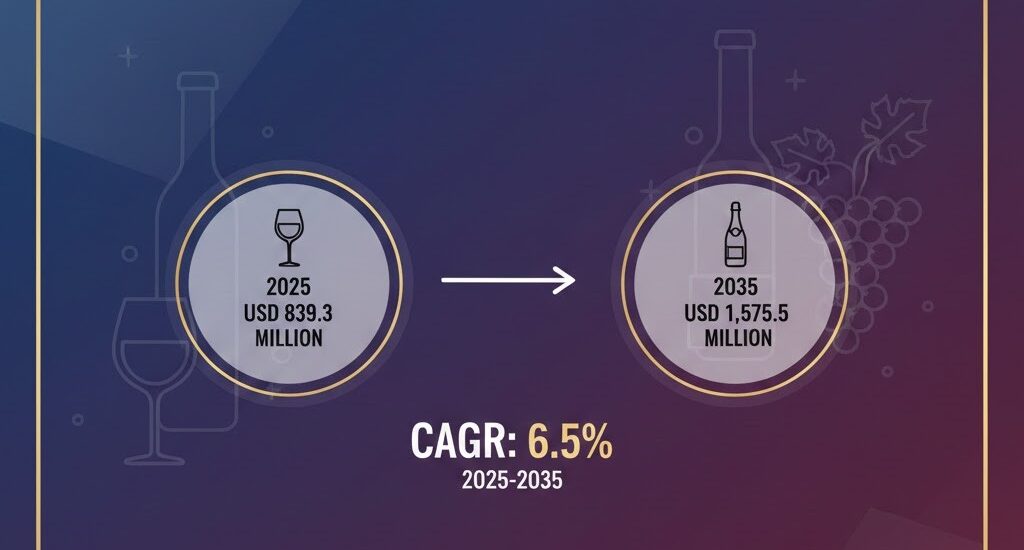
The Premium Wine Cooler Market is on an exciting growth trajectory from 2025 through 2035, expected to nearly double in value from USD 839.3 million in 2025 to USD 1,575.5 million by 2035, at a healthy CAGR of 6.5%. This surge is propelled by increasing consumer sophistication around wine preservation, rising disposable incomes, and an expanding base of wine enthusiasts worldwide.
Both established players and new manufacturers are seizing opportunities to innovate and expand, leveraging advancements in smart technology, sustainability, and stylish design to captivate consumers and commercial buyers alike.
Subscribe for Year-Round Insights → Stay ahead with quarterly and annual data updates – https://www.futuremarketinsights.com/reports/sample/rep-gb-13875
Market Drivers and Opportunities: A Blend of Tradition and Technology
Wine lovers today demand more than just a cool place to store bottles—they seek premium wine coolers that ensure optimal aging conditions by regulating temperature, humidity, and UV exposure. The growing trend toward luxury home appliances, especially among urban consumers and collectors, is a major growth driver. Hospitality sectors, including upscale restaurants and hotels, are increasingly adopting high-end wine storage systems to elevate customer experience.
Moreover, technological innovation is reshaping the market. Smart, AI-powered wine coolers offering remote control, predictive analytics, and precise climate management are revolutionizing wine storage. Sustainability is also taking center stage, with energy-efficient compressors, eco-friendly refrigerants, and solar-powered refrigeration becoming key product differentiators.
Key Segments Driving Market Growth
- By Installation Type:
- Freestanding Wine Coolers: Leading with 45% market share in 2025, these offer maximum storage capacity, installation flexibility, and cutting-edge cooling tech. Ideal for both residential and commercial use, their rise is fueled by innovations such as vibration dampening and UV-resistant glass.
- Countertop Wine Coolers: Gaining popularity for their compact size and integration into modern kitchens and bars, countertop units are favored in urban settings for saving space without sacrificing style or functionality.
- Built-in Wine Coolers: Preferred for seamless kitchen integration but with slower adoption compared to freestanding models.
- By Bottle Capacity:
- 10 to 30 Bottle Segment: Dominating demand, this size appeals to casual drinkers, urban dwellers, and those with moderate collections due to its balance of cost, space efficiency, and performance.
- Larger capacity units serve collectors and hospitality venues but face challenges in space-constrained homes.
- By Technology:
- Compressor-Based Cooling: Preferred for large capacity and commercial use.
- Thermoelectric Cooling: Popular in compact and countertop models due to silent, vibration-free operation and energy efficiency.
- By End Use:
- Residential homes continue to dominate, but commercial demand is rising sharply in fine dining, luxury hotels, and wine bars.
- By Sales Channel:
- Online retail is growing rapidly, alongside traditional wholesalers and specialty appliance stores.
Regional Insights: Diverse Growth Across Continents
- North America: Home to major wine-producing regions like Napa Valley, the U.S. leads in premium wine cooler adoption, buoyed by growing wealth, smart home integration, and environmental regulations promoting energy-efficient products.
- Europe: With a deep-rooted wine culture across France, Italy, Spain, and Germany, demand is fueled by both consumers and upscale hospitality venues. Strict EU energy standards have spurred innovation in eco-friendly, quiet, and highly precise cooling systems.
- Asia-Pacific: Rapid urbanization, rising disposable incomes, and increasing wine appreciation in markets like China, Japan, South Korea, and Australia are driving growth. However, awareness and price sensitivity remain challenges, pushing manufacturers to innovate affordable, space-saving models.
Challenges and Growth Catalysts
Challenges:
- High cost of advanced wine coolers limits adoption in price-sensitive markets.
- Space constraints in urban apartments challenge large cooler installations.
- Limited consumer awareness, particularly in emerging regions.
Opportunities:
- Integration of AI and IoT to enhance user convenience, predictive maintenance, and personalized storage conditions.
- Increasing consumer preference for sustainable products driving development of green refrigerants and solar-powered cooling.
- Expansion into hospitality and commercial sectors offering premium solutions to enhance customer experience.
Competitive Landscape: Innovators and Market Leaders
The premium wine cooler market is fiercely competitive, with both legacy brands and new entrants innovating to capture market share.
- Allavino Company (12-15% Market Share): A market leader known for dual-zone digital control, UV-resistant glass, and energy-efficient models. Their 2023 launch of advanced dual-zone coolers continues to set benchmarks.
- Avanti Products, Inc. (10-13%): Offers a diverse range from compact to large units with a focus on energy efficiency and intuitive touch controls.
- Electrolux AB (8-11%): Through the Vintec brand, provides premium wine cellars emphasizing high-quality storage for connoisseurs, expanding in North America.
- Danby Appliances, Inc. (6-9%): Specializes in space-saving, smart-connected freestanding coolers blending style with functionality.
- Marvel Refrigeration (5-8%): Renowned for precise humidity control and customizable shelving, catering to both casual drinkers and serious collectors.
Other key players include Haier Group, LG Electronics, Vinotemp, and Perlick Corporation, collectively accounting for nearly half the market share, each advancing innovations in connectivity, customization, and commercial-grade refrigeration.
Looking Ahead: Innovation and Expansion to Define the Next Decade
The Premium Wine Cooler Market is primed for a dynamic decade marked by:
- Wider adoption of AI-powered wine coolers that personalize storage conditions based on wine type and user preferences.
- Sustainability-driven designs with eco-friendly materials, reduced energy consumption, and innovative solar cooling options.
- Expansion in commercial spaces such as hotels, upscale restaurants, and wine bars adopting advanced preservation technologies.
- Increased online sales and direct-to-consumer channels improving accessibility and customization.
Why FMI: https://www.futuremarketinsights.com/why-fmi
About Future Market Insights (FMI)
Future Market Insights, Inc. (FMI) is an ESOMAR-certified, ISO 9001:2015 market research and consulting organization, trusted by Fortune 500 clients and global enterprises. With operations in the U.S., UK, India, and Dubai, FMI provides data-backed insights and strategic intelligence across 30+ industries and 1200 markets worldwide.
Contact Us:
Future Market Insights Inc.
Christiana Corporate, 200 Continental Drive,
Suite 401, Newark, Delaware – 19713, USA
T: +1-347-918-3531
For Sales Enquiries: sales@futuremarketinsights.com
Website: https://www.futuremarketinsights.com
LinkedIn| Twitter| Blogs | YouTube