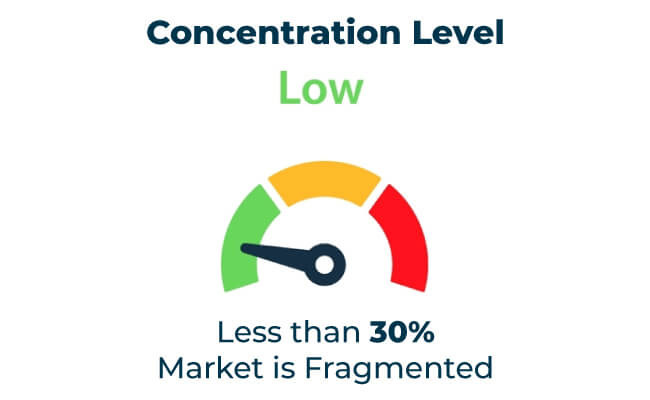
The global smart label market is entering a period of unprecedented expansion, driven by surging demand across retail, logistics, healthcare, and food sectors. A detailed market share analysis reveals not just the dominance of long-standing players, but also an exciting influx of new manufacturers and technologies that promise to reshape the industry’s future.
Market Leaders Powering the Smart Label Boom
At the heart of this growth are well-established companies such as Avery Dennison, Zebra Technologies, and Sato Holdings — names synonymous with reliability, innovation, and large-scale deployment. These leaders currently command a significant share of the market, thanks to their strong capacity in RFID inlay manufacturing, advanced IoT-enabled label solutions, and durable, high-performance smart label technologies.
Avery Dennison, for instance, continues to push the envelope with eco-friendly and recyclable smart labels. Zebra Technologies is leveraging its strengths in enterprise tracking and mobile computing to integrate smart labels into sophisticated supply chain ecosystems. Sato, meanwhile, is extending its footprint by offering customizable, rugged labels designed for specialized industrial and healthcare applications.
Emerging Innovators Bring Disruptive Energy
What’s especially thrilling for the market is the momentum among newer companies challenging the status quo. Players like Thinfilm and Smartrac (now aligned with established brands) are injecting fresh energy through advanced research into sensor-enabled, battery-free, and digitally printed smart labels. These companies are developing flexible, energy-efficient inlays with real-time temperature, humidity, and location tracking — offering entirely new value propositions for clients dealing with perishables, pharmaceuticals, or high-value assets.
Other up-and-coming names are exploring biodegradable materials, cloud-connected smart labels, and miniaturized chips that further reduce cost and size. Their innovations are unlocking possibilities not just for large enterprises but also for niche players seeking to scale.
Next-Generation Technologies Take Center Stage
The smart label market’s rapid transformation is being fueled by a convergence of multiple technology trends. Key among these are:
- RFID and NFC Expansion: These remain the bedrock of smart label applications, enabling accurate, long-range item-level tracking, while also supporting customer engagement via mobile devices.
- Sensing Labels: Environmentally responsive labels can monitor temperature, humidity, or even tampering, making them invaluable for cold-chain logistics and highly regulated sectors such as pharmaceuticals.
- Sustainable Smart Labels: With stakeholders increasingly prioritizing eco-conscious solutions, manufacturers are innovating with recyclable, biodegradable materials that minimize environmental impact without compromising functionality.
- Digital Printing and Miniaturization: Advances in printing and chip design are lowering costs, improving readability, and enabling highly customized labels tailored to specific end-use requirements.
Market Dynamics: Growth Drivers and Strategic Outlook
Several factors are converging to create a favorable growth environment:
- IoT-Enabled Supply Chains: Companies are aggressively digitalizing their operations, seeking real-time visibility across inventory, shipments, and assets.
- Transparency & Traceability: Consumers now demand more information about products, spurring adoption of interactive smart labels (e.g., NFC/QR) that provide origin, ingredients, and authenticity data.
- Sustainability Goals: As governments and brands commit to greener practices, eco-friendly labels are fast becoming a competitive edge.
- Regulatory Pressure: Particularly in pharmaceuticals and food, traceability mandates are nudging businesses toward smart labeling solutions.
At the same time, companies face certain obstacles: the high up-front cost of advanced labels, challenges in integrating new systems into legacy infrastructure, and limited awareness in some regional markets. However, the opportunities greatly outweigh these hurdles. Retailers and logistics providers are increasingly turning to item-level tagging to reduce losses, improve inventory accuracy, and drive efficiency.
A Global Canvas for Innovation
Geographically, the smart label market is witnessing robust expansion. While North America continues to lead adoption due to strong regulatory focus and technological maturity, regions such as Asia-Pacific are rapidly catching up — powered by booming e-commerce, expanding retail infrastructure, and rising demand for connected supply chains. Other markets in Latin America, Africa, and the Middle East are emerging as fertile ground for both established players and agile newcomers.
Strategic Moves: What’s Next for Manufacturers
To capitalize on this momentum, technology suppliers and manufacturers should:
- Foster Integration: Build smart label solutions that seamlessly plug into existing IoT and enterprise systems, making adoption frictionless.
- Go Green: Accelerate R&D around sustainable materials and low-power label designs.
- Collaborate Across Verticals: Forge partnerships with sectors such as cold-chain logistics, pharmaceuticals, and retail to co-develop application-specific labels.
- Educate the Market: Invest in building awareness among potential adopters about the long-term value and ROI of smart labels.
Looking Ahead
The smart label market’s trajectory is unmistakably upward. As established leaders continue to refine their offerings and emerging players push the boundaries of innovation, the industry is poised for a transformative decade. Manufacturers that combine advanced technology, sustainability, and strategic partnerships will lead the charge — driving smarter, greener, and more connected global supply chains.