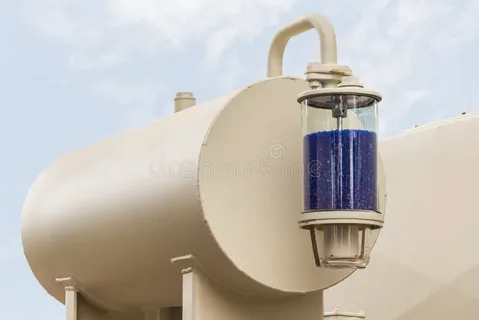
The global Oil Breather Tank Market is set for robust expansion over the next decade, supported by stringent crankcase emission requirements, rising adoption in high-performance and forced-induction engines, and growing penetration across motorsport and aftermarket applications. Valued at USD 1,947.3 million in 2025, the market is forecast to reach USD 3,389.9 million by 2035, reflecting an impressive 5.7% CAGR.
Breather tanks—essential components designed to manage oil mist, reduce crankcase pressure, and enhance engine durability—are witnessing increasing integration in turbocharged, supercharged, and endurance-focused powertrains. Their role in controlling emissions, improving throttle response, and protecting intake and intercooler systems is gaining marketplace visibility across both OEM and aftermarket channels.
Performance Engines and Emission Regulations Propel Market Expansion
The transition toward higher engine loads, downsized turbocharged powertrains, and long-duration high-RPM operation is driving rapid adoption of advanced oil breather tank systems. Motorsport suppliers such as Demon Tweeks now offer engineered breather tanks with internal baffles and high-efficiency filtration systems tailored for thermal stability and vapor separation under extreme conditions.
Similarly, JEGS Performance has expanded its breather tank portfolio, offering both aluminum and stainless-steel variants rated up to 10 psi and optimized for forced-induction platforms. Customer-reported gains include reduced intercooler oil fouling and enhanced throttle response consistency, particularly during track applications.
Regulatory pressure is an equally powerful growth catalyst. Markets in Europe and North America are implementing stricter crankcase emission protocols. Euro 6 and proposed Euro 7 standards, for example, mandate improved oil mist filtration efficiency and vapor recovery. As a result, automakers and equipment manufacturers are integrating breather tanks to maintain compliance while sustaining performance output.
Subscribe for Year-Round Insights → Stay ahead with quarterly and annual data updates
https://www.futuremarketinsights.com/reports/sample/rep-gb-13264
Industry Value Snapshot
| Metric | Value |
| Industry Size (2025E) | USD 1,947.3 million |
| Industry Value (2035F) | USD 3,389.9 million |
| CAGR (2025–2035) | 5.7% |
Patent activity also underscores technological advancements. China’s utility model patent CN212708938U introduces a breather design with an oil-air separation chamber and integrated drain valve to improve separation efficiency under variable flow conditions—an indicator of growing innovation in geometrical optimization and maintenance-friendly designs.
Top Investment Segment: 10 AN Inlet Size Leads Market Demand
The 10 AN inlet breather tank segment is projected to capture 46% of global share in 2025, growing at 5.8% CAGR through 2035. Its leadership is attributed to broad compatibility with both mid-range and high-performance engines, making it a preferred option for motorsport builds, off-road vehicles, and turbocharged street modifications.
Key advantages include:
- Optimized flow rates for controlled crankcase pressure
- High thermal resistance and structural rigidity
- Compatibility with compact and high-output engine platforms
- Availability of universal and model-specific fitment kits
Manufacturers are refining precision threading, anti-vibration mounts, and flexible hose routing systems to further enhance adoption.
1-Liter Capacity Tanks Dominate Global Market Share
The 1-liter breather tank category is expected to hold 38% market share in 2025 and record the highest CAGR at 5.9%. This size offers an ideal volume-to-space ratio for sports cars, tuner vehicles, and compact performance platforms.
Demand is being fueled by:
- Growing track-day and enthusiast markets
- Higher blow-by rates in turbocharged engines
- Preference for compact designs with high storage efficiency
- Integrated baffling and washable filtration modules
With aftermarket customization rising across Japan, North America, and Europe, the 1-liter segment is expected to remain the industry’s most commercially scalable product category.
Challenges and Opportunities
Key Challenge: Tightening Emission Norms
Global emission rules for crankcase ventilation are becoming more stringent. Manufacturers must now invest in:
- High-efficiency filtration media
- Multi-stage oil vapor separators
- Enhanced vapor recovery assemblies
These requirements increase production costs but also raise the technical barrier for new entrants.
The long-term shift toward electric vehicles poses an additional challenge. Market participants are diversifying toward hybrid cooling and thermal management components to sustain growth.
Opportunity: Filtration and Smart Monitoring Innovations
Significant growth opportunities exist in:
- Multi-stage, high-efficiency filter designs
- Self-cleaning filtration technologies
- Vapor recovery systems for industrial applications
- Smart sensors that measure pressure, oil vapor density, and flow stability
Real-time diagnostics can reduce maintenance, prevent engine damage, and improve fleet performance—an attractive value proposition for commercial operators.
Country-Level Market Outlook
United States (CAGR: 7.2%)
A strong automotive and industrial machinery sector drives demand. With over 10 million vehicles produced annually, the U.S. relies heavily on advanced crankcase ventilation solutions to support engine longevity and emissions compliance.
United Kingdom (CAGR: 7.2%)
Growth is supported by the automotive and aerospace industries, alongside rising EV sales. The country’s push for carbon reduction is prompting OEMs to deploy advanced breather solutions for fuel economy and thermal efficiency.
European Union (CAGR: 7.3%)
The EU’s stringent emissions regulations and world-leading automotive manufacturing base—valued at nearly €400 billion—fuel strong demand for high-efficiency oil breather systems.
Japan (CAGR: 7.4%)
Japan’s automotive sector, producing more than 9 million cars annually, prioritizes precision-engineered breather tanks for performance and emissions compliance.
South Korea (CAGR: 7.8%)
South Korea’s automobile and machinery production sectors are expanding, supported by environmentally conscious industrial policies and high adoption of next-gen crankcase ventilation systems.
Personalize Your Experience: Ask for Customization to Meet Your Requirements
https://www.futuremarketinsights.com/customization-available/rep-gb-13264
Competitive Landscape
The market includes strong global manufacturers and fast-growing niche specialists. Key companies include:
- Peterson Fluid Systems
- Morryde International
- Elite Engineering USA
- JLT Performance
- SpecFab Industries
- Provent Systems
- Mishimoto Racing Division
These players are investing in:
- Advanced filtration media
- High-temperature-resistant materials
- Compact, lightweight designs
- Improved vapor separation architectures
Market Segmentation
- By Inlet Size: 8 AN, 10 AN, 12 AN
- By Capacity: 0.75 L, 1 L, 1.25 L, Above 1.25 L
- By Vehicle Type: Passenger, Commercial
- By Region: North America, Latin America, Europe, South Asia & Pacific, East Asia, Middle East & Africa
Why Choose FMI: Empowering Decisions that Drive Real-World Outcomes:
https://www.futuremarketinsights.com/why-fmi
About Future Market Insights (FMI)
Future Market Insights, Inc. (FMI) is an ESOMAR-certified, ISO 9001:2015 market research and consulting organization, trusted by Fortune 500 clients and global enterprises. With operations in the U.S., UK, India, and Dubai, FMI provides data-backed insights and strategic intelligence across 30+ industries and 1200 markets worldwide.