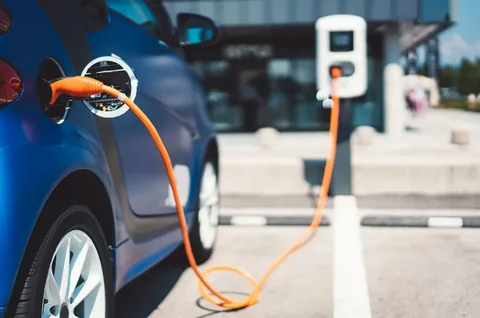
The global vehicle electrification market continues its strong upward trajectory, expanding from USD 66.3 billion in 2020 to USD 99.3 billion in 2025. According to the latest industry assessment, the market is projected to reach USD 222.4 billion by 2035, growing at a CAGR of 8.3% over the forecast period. This growth is supported by breakthroughs in automotive electrical architecture, stringent emissions regulations, and the accelerated integration of energy-efficient systems across passenger and commercial vehicle platforms.
Innovation Momentum Strengthens Market Outlook
Technological advancements remain central to the expansion of vehicle electrification. In 2024, Nissan announced an affordable vehicle-to-grid (V2G) platform, planned for rollout in 2026. The system enables electric vehicles to operate as bi-directional energy storage units, supporting grid balancing and offering owners reduced energy costs. By democratizing V2G access, Nissan aims to improve EV economics while strengthening energy resilience in residential and commercial environments.
In parallel, STMicroelectronics unveiled its Stellar microcontroller series featuring an extensible xMemory architecture, tailored for next-generation electrified vehicles. These microcontrollers integrate zonal control, advanced motor management, and real-time power conversion capabilities—making them foundational building blocks for future EV and hybrid ECU platforms.
Further improvements in power delivery infrastructure are reinforcing the market’s growth. Vicor Corporation reported increased adoption of its compact, high-density power modules across premium EV platforms. Designed to improve battery-to-drivetrain power conversion, these solutions tackle key challenges including thermal management, packaging constraints, and electromagnetic interference (EMI) compliance in modern EV systems.
Meanwhile, an in-depth report from Automotive Technology emphasized OEM prioritization of 48V subsystems, advanced battery management technologies, and integrated e-axles. These systems increasingly employ predictive software and OTA (over-the-air) update capabilities to deliver higher performance, seamless upgrade cycles, and reduced lifecycle costs.
Subscribe for Year-Round Insights → Stay ahead with quarterly and annual data updates
https://www.futuremarketinsights.com/reports/sample/rep-gb-542
Segment Insights: Strong Demand for EPS and Hybrid Systems
Electric Power Steering Leads Product Demand
Electric Power Steering (EPS) accounted for 29% of the global product-type market share in 2025, expanding at a projected CAGR of 8.6% through 2035. EPS continues to replace hydraulic steering due to its enhanced efficiency, lower parasitic load, and compatibility with ADAS features such as lane-keeping and steering assist.
Suppliers are focusing on lightweight designs, improved steering response, and integration with electronic stability systems. Adoption is particularly strong in Asia-Pacific and North America, where production volumes and regulatory standards align closely with EPS requirements.
Hybrid Electric Vehicles Maintain Dominance
Hybrid Electric Vehicles (HEVs) captured 38% of the market share by degree of hybridization in 2025, with growth expected at 8.7% CAGR through 2035. HEVs remain preferred in regions where charging infrastructure is limited, including Japan, South Korea, and select European markets.
Demand is especially strong for electrified auxiliary components such as:
- Electric oil pumps
- Integrated Starter Generators (ISG)
- Liquid heater PTC systems
Widespread adoption of 48V mild hybrid systems across commercial and passenger vehicles continues to expand the market for electric actuators, electric thermal systems, and power management modules.
Semi-Annual Update: Market Growth Trends
The sector is projected to maintain consistent growth between 2024 and 2025:
| Period | Value CAGR |
| H1 2024 | 7.9% |
| H2 2024 | 8.1% |
| H1 2025 | 8.2% |
| H2 2025 | 8.3% |
Market performance continues to strengthen in the second half of each year, supported by OEM production cycles, regulatory updates, and increased EV component sourcing.
Key Growth Drivers
- Rising Adoption of Electric Vacuum Pumps
As EVs lack engine-driven vacuum generation, electric vacuum pumps (EVPs) have become critical for braking and steering performance. Advances including dual-function pumps and regenerative braking integration are improving EV efficiency and safety. The growth in EV sales—up 35% in 2023—continues to drive EVP demand.
- Government Incentives Boosting Electrification
Global governments invested USD 14 billion in EV incentives in 2020, a 25% increase from the prior year. European EV adoption surged due to aggressive policy support, while China reduced incentives but maintained price competitiveness through cost-efficient manufacturing.
Price declines—3% for BEVs in China and 8% for PHEVs in Europe—are accelerating mainstream adoption.
- EPS as a Foundational Electrification Technology
EPS systems enhance fuel economy by 1–3%, according to the U.S. Department of Energy. The IEA reports that over 60% of all new vehicles globally are now equipped with EPS, reinforcing the shift toward fully electrified steering systems.
- Accelerated Adoption of Electric Air-Conditioner Compressors
Electric AC compressors (e-ACC) eliminate belt-driven systems, reducing vehicle weight and complexity. With EVs dependent on battery power, e-ACCs improve driving range while maintaining climate comfort. Rapid EV sales growth has made e-ACCs a standard requirement for electrified platforms.
Country-Level Analysis
| Country | CAGR (2025–2035) |
| China | 20% |
| India | 15% |
| Germany | 12% |
| USA | 10% |
| UK | 8% |
China leads due to government mandates, manufacturing scale, and rapid EV adoption—accounting for 60% of global EV sales in 2023. Meanwhile, Germany is advancing through adoption of ISGs and electric oil pumps, and the USA is accelerating integration of electric vacuum pumps.
Personalize Your Experience: Ask for Customization to Meet Your Requirements
https://www.futuremarketinsights.com/customization-available/rep-gb-542
Competitive Landscape
Tier-1 players account for 50–55% of the market, including:
Robert Bosch GmbH, Continental AG, Denso Corporation, Hitachi Ltd., Magna International, and Valeo SA.
Tier-2 suppliers—such as Aisin, JTEKT, and Marelli—account for the remaining 45–50% share.
Recent developments include:
- Bosch (Dec 2023): Enhanced eAxle and connected e-mobility solutions.
- Continental (Sept 2024): Launch of scalable 48V systems for hybrid and electric vehicles.
Why Choose FMI: Empowering Decisions that Drive Real-World Outcomes:
https://www.futuremarketinsights.com/why-fmi
About Future Market Insights (FMI)
Future Market Insights, Inc. (FMI) is an ESOMAR-certified, ISO 9001:2015 market research and consulting organization, trusted by Fortune 500 clients and global enterprises. With operations in the U.S., UK, India, and Dubai, FMI provides data-backed insights and strategic intelligence across 30+ industries and 1200 markets worldwide.