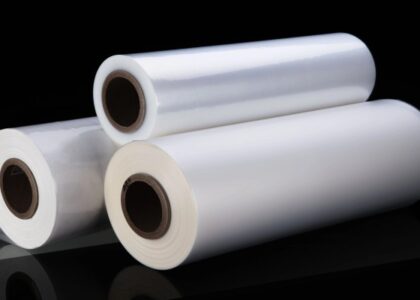
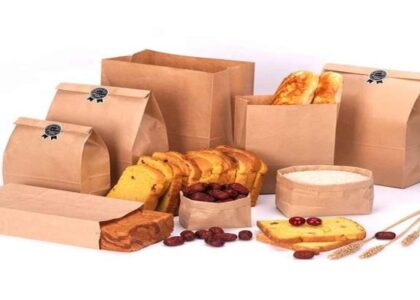
The non-barrier bag market is entering a phase of dynamic expansion, driven by both industry stalwarts and new entrants who are leveraging cutting-edge materials, sustainable practices, and advanced manufacturing technologies. According to the latest report by Future Market Insights, the global non-barrier bag market is projected to grow from around USD 14.3 billion in 2025 to USD 20.6 billion by 2035, posting a steady compound annual growth rate (CAGR) of 3.7%.
This surge reflects growing demand from sectors such as food & beverage, retail, e-commerce, and logistics, all of which are increasingly prioritizing flexible, cost-efficient packaging that aligns with sustainability goals.
Powerhouses Setting the Pace
Leading firms are not merely riding the wave — they are shaping it. The report identifies Berry Global, Mondi Group, and Amcor as Tier-1 market leaders, together commanding roughly 31% of market share. These incumbents are investing heavily in research and development to push the boundaries of non-barrier packaging.
- Berry Global is increasing its production of recyclable-content non-barrier bags and reinforcing its global supply chain to scale sustainable packaging fast.
- Mondi Group is deepening its footprint in eco-friendly solutions by expanding its compostable and fiber-based bag portfolio, catering to brands seeking cleaner, plant-based formats.
- Amcor is innovating with ultra-lightweight, high-strength flexible bags — a design trend that promises to minimize material use while maximizing performance.
These players are also exploring advanced resin formulations and mono-material structures to support circular economy objectives, while offering high-speed production and global distribution.
Rising Contenders: Mid-Tier and Regional Innovators
Against this backdrop, a host of Tier-2 and Tier-3 companies are making their mark. Sealed Air, Coveris, and Huhtamaki represent the mid-tier challengers, together holding approximately 27% of the market. Their strategies emphasize regional customization, operational flexibility, and niche innovation.
- Sealed Air is creating recyclable non-barrier bags that combine strength with environmental responsibility, appealing to premium packaging customers.
- Coveris is launching water-resistant, reusable bags tailored for specialty and branded packaging applications.
- Huhtamaki is pushing lightweight, efficient bag formats optimized for e-commerce and logistics use.
On the more agile end, Tier-3 players — including smaller regional manufacturers and disruptive start-ups — are capturing the remaining 42%. These companies are nimble, responsive to local demands, and often pioneering materials like biodegradable plastics and paper-based formats.
Innovation & Technology: The Heart of Transformation
Sustainability is not the only theme driving growth. Technological advancements are redefining what non-barrier bags can achieve:
- Material innovation: Companies are refining polyethylene (PE) resin grades, such as LLDPE and LDPE, to produce bags that offer better clarity, sealing, and recyclability without sacrificing strength.
- Circular design: There’s growing adoption of mono-material structures and recyclable polymers which simplify recycling and support closed-loop systems.
- Printing & customization: Enhanced printing technologies are enabling more vibrant branding on non-barrier bags, opening doors for tailored marketing and premium packaging.
- Automation & advanced manufacturing: Shrinking production costs through automation, predictive analytics, and AI-driven process optimization is empowering new players to enter and scale.
Why the Momentum Is Accelerating
The demand for non-barrier bags is being fuelled by multiple factors:
- Sustainability push: As consumers and regulators demand greener packaging, manufacturers are turning to recyclable, compostable, and mono-material solutions.
- E-commerce boom: Lightweight, robust, and easily customizable, non-barrier bags are ideal for online retail and last-mile delivery.
- Cost efficiency: By eliminating barrier layers, brands benefit from lower material and production costs.
- Supply chain simplicity: Non-barrier formats reduce complexity in recycling, disposal, and logistics — a win for both companies and the environment.
Strategic Implications for Manufacturers
- For established players, doubling down on R&D in sustainable polymers and scalable automation will be key to maintaining leadership.
- For new entrants, agility and innovation are powerful differentiators — localizing production, targeting niche segments, and embracing closed-loop models can accelerate growth.
- Collaborations across the value chain, including resin suppliers, brand owners, and waste-management companies, will be critical in turning sustainability ambitions into commercial reality.