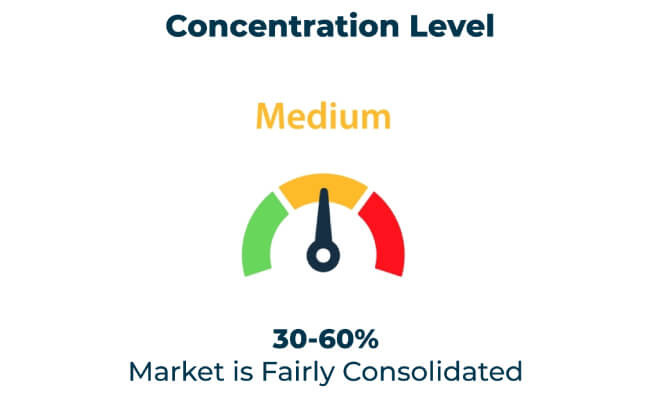
The global industrial printer market is poised for a transformational leap, as revealed in the comprehensive “Industrial Printer Market Share Analysis” report by Future Market Insights. With a projected compound annual growth rate (CAGR) of 3.1%, the market is set to surge toward US$ 32.68 billion by 2035 — underscoring not just strong momentum but also rich opportunity for both established giants and emerging manufacturers.
Bridging Legacy Strengths and New-Age Momentum
Traditional leaders in the industrial printing space — Epson, Zebra Technologies, and HP Inc. — are already making their mark thanks to their deep expertise, broad product portfolios, and global service networks. These seasoned players hold roughly 15% of the market, according to the report, demonstrating their continued relevance even as the industry matures.
- Epson continues to impress with its energy-efficient inkjet technologies and strong R&D pipeline.
- Zebra Technologies remains a go-to provider for reliable barcode and labeling solutions that serve manufacturing, logistics, and packaging.
- HP Inc., known for high-resolution and multi-functional industrial printers, is pushing the envelope with innovation and customization support.
Meanwhile, the next tier of market leaders — including Canon, Honeywell, SATO, Bixolon, and others — are leveraging their manufacturing depth and global reach to make meaningful inroads. These companies are expanding investment into more sustainable designs, smarter connectivity, and broader application use-cases.
New Players, New Technologies: Disruption is the Name of the Game
The industrial printer landscape is not just shaped by long-standing titans — a batch of ambitious, newer manufacturers is shaking things up too. These fresh entrants are bringing disruptive technologies and agile business models, which is helping to redefine what industrial printing can achieve.
Some of the key technological trends reshaping the market include:
- Smart, IoT-Enabled Printers: Printers that connect to factory systems, generate real-time diagnostics, and support predictive maintenance are fast becoming the norm.
- High-Resolution, Variable-Data Printing: Advanced printheads and ink systems allow for sharper graphics, complex graphics, and serial data, opening doors for highly customized applications.
- Energy Efficiency & Sustainability: There is a growing push toward low-power machines, recyclable components, and eco-inks — reflecting both regulation and consumer preferences.
- Industry 4.0 Integration: Printers are increasingly being designed to integrate seamlessly with MES/ERP systems, enabling automation along with production traceability.
Emerging Market Players Gaining Traction
Newer or niche companies — some regional, some global — are seizing the opportunity created by evolving customer demands. These manufacturers bring fresh energy, leaner operations, and a sharper focus on specialized applications. Whether it’s a startup focused on smart inkjet systems, or a regional firm offering low-cost rugged thermal printers, these players are establishing themselves as credible challengers.
These companies are not just chasing market share — they’re partnering strategically with automation providers, logistics firms, and major production houses to co-develop solutions that are tailor-made for today’s connected, green factories.
Why Both Established & Emerging Manufacturers Should Take Notice
- For established brands, the path forward lies in doubling down on R&D and deepening integration with factory-floor software. By embracing IoT, sustainability, and custom printing needs, they can sustain and expand their leadership.
- For newer players, the moment is ripe to scale. Whether through regional wins or niche differentiation, they can carve out space by aligning with evolving production paradigms and automation trends.
The report also highlights that growth is not limited to traditional markets: regions like Asia-Pacific, Latin America, and parts of Africa are emerging as key battlegrounds, offering high-growth potential for manufacturers willing to invest in local operations or partnerships.
Strategic Directions & Opportunities
According to the report, the most promising opportunities lie in:
- Eco-innovation: Developing printable inks and components that are biodegradable, energy-efficient, and low-waste.
- Workflow integration: Building printers that plug directly into smart factory systems to boost productivity and reduce downtime.
- Customized deployments: Offering modular solutions tailored for textile, packaging, automotive, or electronics — leveraging variable data and high resolution.
- Collaborations: Partnering with logistics, automation, and manufacturing companies to deliver end-to-end identification, coding, and labeling modules.
A Future Built on Innovation
As the industrial printer market charts its course toward US$ 32.68 billion by 2035, the story is clear: success will go to those who balance trusted legacy with bold innovation. Whether established or new, manufacturers that invest in sustainability, smart connectivity, and high-performance printing are best placed to ride the wave of growth.
With its well-researched insights, the Future Market Insights report serves as a powerful guide for business leaders, investors, and technology providers who are ready to scale, differentiate, and lead in a rapidly evolving industrial printing landscape.