The global ceramic paper market is gaining strong traction as industries increasingly prioritize energy efficiency, fire safety, and lightweight insulation. According to Future Market Insights (FMI), the ceramic paper market is projected to rise from USD 1.8 billion in 2025 to USD 3.7 billion by 2035, expanding at a CAGR of 7.5% during the forecast period. This impressive growth is being propelled by surging demand from industrial, automotive, and aerospace sectors—particularly across Asia-Pacific (APAC), Europe, the USA, and Saudi Arabia.
Industrial Insulation and Energy Efficiency at the Core of Growth
Industrial insulation remains the dominant driver of ceramic paper demand, accounting for over 42% of total market share. The material’s high thermal resistance, low thermal conductivity, and flexibility make it indispensable for lining furnaces, boilers, kilns, and reactors operating in extreme conditions.
With energy costs rising and regulatory norms tightening across major economies, manufacturers are investing in non-combustible, asbestos-free insulation. Ceramic paper’s lightweight structure and reusability make it an ideal solution for reducing heat loss and enhancing equipment longevity. As industries focus on sustainability, the material’s low outgassing and inert composition align with global goals for cleaner production and reduced emissions.
Subscribe for Year-Round Insights → Stay ahead with quarterly and annual data updates: https://www.futuremarketinsights.com/reports/sample/rep-gb-22986
Regional Market Outlook: APAC Leads Global Expansion
Asia-Pacific (APAC) dominates the ceramic paper market, spearheaded by China (CAGR 10.1%) and India (CAGR 9.4%).
- China is investing heavily in high-temperature insulation for steel, aluminum, and energy infrastructure, supported by government-led industrial efficiency programs. The use of ceramic paper in electric vehicle battery compartments and export-grade furnace insulation is expanding rapidly.
- India’s market growth is fueled by the booming cement, metallurgy, and renewable energy industries. The country’s “Make in India” initiative and green building policies are encouraging adoption of fire-resistant and lightweight insulation materials in industrial and construction projects.
Saudi Arabia and the broader GCC region are emerging as strategic growth centers for ceramic paper, driven by investments in energy diversification, industrial safety, and petrochemical insulation solutions. The region’s refinery and power generation projects increasingly rely on ceramic fiber-based products for their high heat endurance and non-corrosive performance in desert environments.
In Europe, demand remains robust in Germany (CAGR 8.6%), France (7.9%), and the United Kingdom (7.1%), supported by EU directives mandating fire-safe and recyclable insulation materials. Germany leads the region’s innovation front, integrating advanced ceramic fiber papers into EV battery modules, industrial reactors, and hydrogen energy systems. France’s aerospace and energy sectors are driving next-generation applications in thermal shielding and renewable storage. Meanwhile, the UK’s infrastructure modernization projects are increasing ceramic paper usage in building fireproofing and marine insulation.
In the United States, steady adoption in aerospace, electronics, and automotive thermal systems positions the market for sustained long-term growth. The ongoing shift toward electric mobility and industrial decarbonization is reinforcing domestic demand for lightweight, flame-resistant, and thermally stable materials.
Advanced Ceramic Paper Dominates with 53.6% Market Share
The advanced ceramic paper segment represents 53.6% of the total market value in 2025. Its superiority lies in the ability to operate at temperatures exceeding 1200°C while maintaining dimensional stability and flexibility. The absence of organic binders ensures purity, low shrinkage, and enhanced thermal efficiency, making it the preferred choice in aerospace, cleanroom, and semiconductor applications.
The market’s transition from conventional refractory materials to binder-free, low-density refractory papers reflects a structural shift toward engineered insulation. Advanced ceramic paper’s expanding role in battery insulation for EVs and electronics heat shielding further cements its position as a critical enabler in modern industrial ecosystems.
Industrial Applications Driving Market Penetration
By 2025, the industrial segment will account for 42.9% of total revenue, underscoring the material’s pivotal role in metallurgical, petrochemical, and power generation operations. Its use in furnace linings, ducts, and heat shields contributes to measurable energy savings and operational safety.
As industries transition toward circular manufacturing and green energy, ceramic paper’s recyclability and low environmental footprint strengthen its appeal. In addition, fire protection and filtration segments—collectively holding around 20–25% share—continue to grow with heightened safety standards across aerospace, transport, and construction sectors.
Product Form and Composition Trends
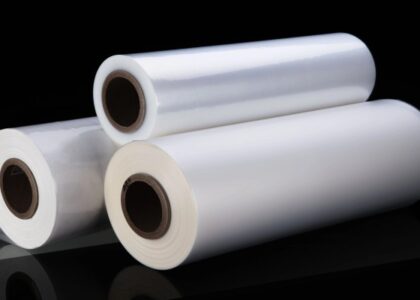
Among product forms, rolls dominate with 45.1% of global market share in 2025, valued for their ease of installation, reduced thermal leakage, and compatibility with automated systems. The uniform fiber distribution achieved in rolled ceramic paper enhances insulation performance and allows for cost-efficient installation in continuous industrial applications.
On the composition front, alumina and zirconia-based ceramic papers are witnessing high demand due to superior thermal stability and chemical resistance. These compositions are particularly favored in electronics, metal processing, and clean energy applications, where purity and consistent density are critical.
Challenges and Innovation Outlook
While the market is expanding rapidly, manufacturers face hurdles in maintaining thickness consistency and fiber orientation across batches. Such variations can impact performance in precision applications like gasket seals or high-voltage insulation. However, the integration of industrial automation, slurry homogenization, and inline quality control systems is expected to minimize variability and improve production efficiency.
Innovation remains central to the market’s growth trajectory. Advancements in binder chemistry, fiber engineering, and eco-friendly manufacturing are paving the way for new high-density grades with improved tear resistance and reduced dust generation. These next-generation ceramic papers are enabling more compact thermal systems in electric vehicles, hydrogen energy storage, and aerospace applications.
Global Competitive Landscape
The ceramic paper market features a balanced mix of global leaders and regionally specialized manufacturers. Tier 1 players emphasize research-driven product innovation, serving complex industrial applications with high-performance ceramic fiber papers. Tier 2 and Tier 3 suppliers focus on cost-effective and customizable solutions, targeting localized needs across refractory, glass, and construction industries.
FMI notes that the industry’s future will hinge on manufacturing standardization, regional production hubs, and collaborations in clean energy and electrification technologies. With strong growth in Asia-Pacific, robust innovation in Europe, stable adoption in the USA, and accelerating industrial investment in Saudi Arabia, the global ceramic paper market is on track for a twofold expansion by 2035.
About Future Market Insights (FMI)
Future Market Insights, Inc. (FMI) is an ESOMAR-certified, ISO 9001:2015 market research and consulting organization, trusted by Fortune 500 clients and global enterprises. With operations in the U.S., UK, India, and Dubai, FMI provides data-backed insights and strategic intelligence across 30+ industries and 1200 markets worldwide.
Why Choose FMI: Empowering Decisions that Drive Real-World Outcomes: https://www.futuremarketinsights.com/why-fmi