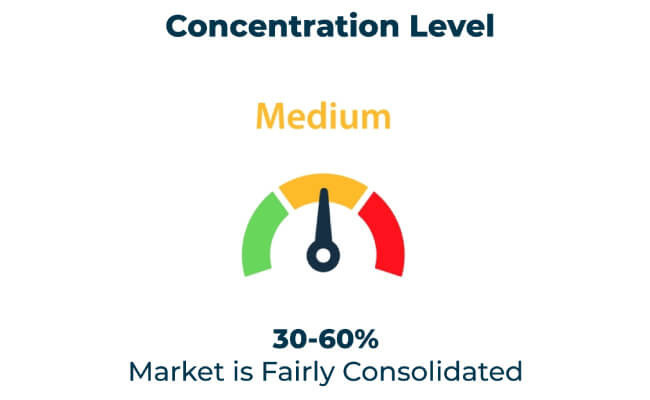
The global canvas and muslin bags market is entering a phase of dynamic expansion as both established manufacturers and innovative newcomers gear up to scale operations and embrace breakthrough technologies. According to a recent market analysis, the sector is witnessing strong momentum as sustainability continues to drive demand across retail, food and beverage, and fashion industries.
Eco-Leaders Redefining the Landscape
At the forefront, leading names such as Baggu, Enviro-Tote, and ToteBagFactory continue to dominate, holding nearly 38 percent of the market. These Tier-1 players are widely recognized for championing eco-friendly materials, advanced customization options, and far-reaching distribution networks that cater to environmentally conscious consumers.
In the past year, Baggu launched a line of high-durability canvas bags made from organic cotton and plant-based dyes. Meanwhile, Enviro-Tote introduced exceptionally lightweight yet robust tote bags, and ToteBagFactory significantly expanded its manufacturing capacity, incorporating AI-driven defect detection to streamline quality control.
Mid-Tier Players Driving Broad Appeal
A strong cohort of Tier-2 companies — including Custom Earth Promos, EcoBags, and Greenleaf Bags — jointly command around 40 percent of the market. These firms specialize in cost-effective, customizable offerings tailored to retail promotions, corporate branding, and packaging. Their design teams are embracing techniques like laser-cut detailing, embossing, and reinforced stitching, responding to user demands for both beauty and function.
EcoBags, in particular, has made headlines by launching fully compostable muslin pouches, ideal for breathable food storage that aligns with zero-waste packaging trends. Greenleaf Bags, on the other hand, has doubled down on performance, crafting rugged canvas variants that combine longevity with sustainability.
Startups & Regional Innovators: Tier-3 on the Rise
Meanwhile, agile Tier-3 players — from regional manufacturers to design-driven startups — are carving out a niche with artisanal fabric blends, small-batch sustainability solutions, and flexible production. This diverse group holds approximately 22 percent of the market and is uniquely positioned to adapt quickly to evolving trends, such as handcrafted finishes and eco-certified raw materials.
Companies like Simply Custom Bags have expanded their North American footprint to tap into rising demand for locally made, eco-conscious bags. Their move underscores how even smaller players are capitalizing on customization and regional authenticity, rather than sheer scale.
Innovation at the Core: Technology Meets Sustainability
Across all tiers, manufacturers are investing in advanced manufacturing and smart production processes. Automation, AI-based quality control, and eco-friendly dyeing methods are becoming standard, allowing brands to scale without compromising sustainability. Digital-first features like QR-coded reusable bags are emerging, enabling brands to tell their green story, engage customers, and track circular packaging metrics.
Industry experts forecast that compostability, bespoke design, and performance-enhancing fabrics will continue shaping the market’s future. As a result, technology suppliers — especially in printing, dyeing, and precision stitching — are uniquely positioned to support this green transformation.
Market Drivers & Growth Trajectory
Several interconnected factors are fueling the surge in canvas and muslin bags:
- Growing regulatory pressure against single-use plastics
- Shifting consumer preferences toward reusable, biodegradable packaging
- Retailers and brands leveraging custom tote programs as a sustainable marketing tool
- Expansion of reusable bag applications into food packaging, gifting, and promotional merchandise
From a market perspective, the canvas and muslin bags industry is projected to grow strongly in the coming years, driven by increasing adoption in retail and rising environmental awareness globally.
Strategic Outlook & Future Roadmap
Looking ahead, manufacturers aiming to differentiate will focus on:
- Expanded use of recycled and organic fabrics — reinforcing circular economy credentials.
- Smart production techniques — using AI, robotics, and automation to boost quality and reduce waste.
- Brand engagement tools — integrating digital features such as QR codes for consumer interaction and traceability.
- Regional diversification — scaling production in Asia-Pacific, Europe, and North America to meet localized needs.