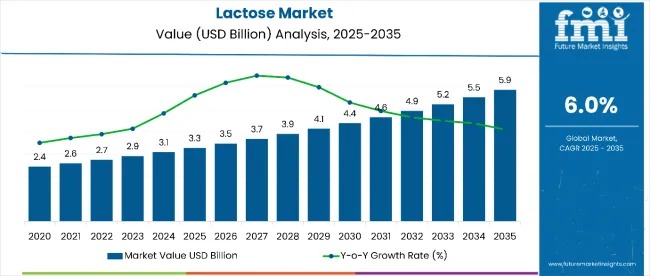
The global lactose market is entering a phase of accelerated expansion, projected to grow from USD 3.27 billion in 2025 to USD 5.86 billion by 2035, supported by a 6% CAGR. Growth is being driven by increasing demand for natural dairy ingredients, gut-health solutions, pediatric nutrition, lactose-derived prebiotics, and pharmaceutical excipients.
The popularity of minimally processed dairy products remains a major catalyst, especially in emerging markets where consumption of fluid milk, yogurt, ice cream, and cheese is growing. Manufacturers are making greater use of lactose’s natural functionality as consumer preferences shift strongly to clean-label products.
To Explore Detailed Market Data, Segment-Wise Forecasts, and Competitive Insights, Request Sample Report! https://www.futuremarketinsights.com/reports/sample/rep-gb-12375
Functional Foods and Infant Nutrition Continue to Lead Consumption
The surge in functional nutrition products is redefining lactose utilization. Lactose now plays a key role in fortified dairy beverages, superfood bars, functional mixes, and protein powders. Brands favor lactose for its natural sweetness, nutrient absorption benefits, and texture-enhancing properties.
One of the most influential growth drivers remains infant formula, where lactose closely resembles human milk composition. As parents globally prioritize gut development, immunity, and cognitive growth, demand for lactose-rich infant nutrition continues to rise. China, in particular, has witnessed escalating lactose utilization due to pro-birth policies and increased awareness of infant nutritional science.
Pharmaceutical Industry Drives High-Grade Lactose Consumption
Lactose remains a preferred ingredient in pharmaceutical formulations due to its compressibility, flowability, inert nature, and compatibility with active compounds. Its widespread use as an excipient in tablets and capsules is expected to accelerate further as pharmaceutical companies emphasize stability, purity, and bioavailability.
In nutraceuticals, lactose-derived prebiotics are gaining popularity in digestive health supplements, immune-support beverages, and microbiome-focused wellness products. These formulations leverage lactose’s ability to break down into fermentable sugars that nourish beneficial gut bacteria.
Sustainability and By-Product Valorization Strengthen Market Growth
The dairy sector’s commitment to sustainability is transforming lactose from a low-value by-product into a high-performance commercial ingredient. Dairy facilities increasingly extract and purify lactose from whey to reduce waste and diversify revenue.
This trend is particularly advanced in India, where dairy producers are investing in purification technology to supply lactose for food, beverage, pharmaceutical, and nutraceutical applications. Such initiatives improve economic value while supporting circular production models.
Global Trade and Usage Trends in 2025
International trade shows a clear escalation in pharmaceutical-grade and infant-nutrition lactose. Germany currently supplies high-purity lactose to more than 30 global destinations, while the United States continues to expand shipments to Southeast Asia and Mexico. New Zealand’s lactose production is directed largely to China’s pediatric nutrition sector due to rising formula demand. In contrast, Australia has limited its export availability this year as domestic demand outpaces internal supply.
At the consumer end, South Korea is seeing a sharp rise in lactose-based adult functional beverages, while Singapore’s dessert chains are embracing lactose blends. In Japan, lactose is increasingly being used in restaurant-grade seasoning formulations.
Semi-Annual Growth Shifts Reflect Strong Market Momentum
Recent semi-annual assessments show a temporary slowdown in early 2025, followed by a rebound in the second half of the year. While the first half of 2025 saw a modest dip in growth rate as industries stabilized post-capacity expansion, the second half displayed accelerated adoption, especially in pharmaceutical and functional nutrition sectors. The late-year rebound underscores strong downstream demand and enhanced manufacturing capabilities globally.
Derivative and End-Use Trends: Lactulose and Food & Beverage Dominate
The derivative segment continues to be driven by lactulose, a compound now holding the largest share due to its value as a pharmaceutical laxative and functional prebiotic. Rising digestive health awareness and aging populations are expanding lactulose utilization across healthcare systems.
Meanwhile, food and beverages remain the largest end-use sector, accounting for the majority of lactose consumption. It remains indispensable in dairy standardization, bakery mixes, confectionery, flavor carriers, and infant nutrition products. Its role as a bulking agent and natural sweetener ensures rising use across both processed and clean-label categories.
Country Growth Dynamics Show Emerging Market Leadership
India, China, and the United States are projected to lead future demand. India’s growth is supported by large-scale dairy by-product valorization; China’s demand is linked to infant nutrition; and the United States sees rising consumption in natural sports nutrition and clean-label supplements. These nations represent the fastest-growing lactose consumption hubs globally through 2035.
Competitive Outlook
The lactose landscape is moderately consolidated, dominated by multinational dairy leaders and specialized ingredient suppliers. Companies are investing heavily in R&D to refine lactose purity and produce advanced grades such as lactose monohydrate for pharma and nutraceutical uses. Mergers, acquisitions, and strategic technological partnerships are intensifying as global brands expand their lactose portfolios.
Key producers influencing the market include:
Glanbia Nutritionals, Fonterra Co-operative Group, Lactalis Ingredients, Arla Foods Ingredients, Kerry Group, Davisco Foods International, Leprino Foods, Agropur Ingredients, Hilmar Ingredients, and Lactose India Limited.