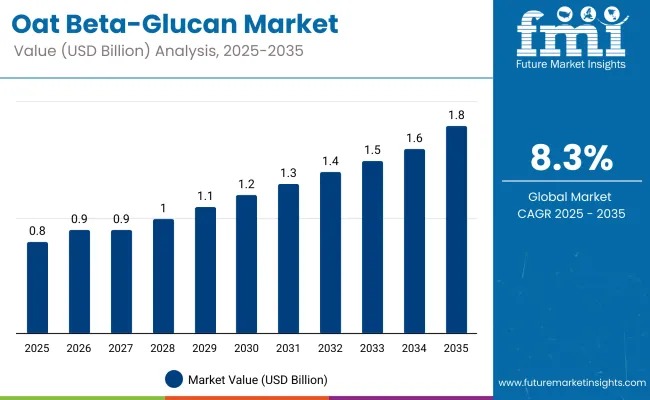
The global oat beta-glucan market is projected to grow from USD 0.8 billion in 2025 to USD 1.8 billion by 2035, registering a robust CAGR of 8.3% over the forecast period. Rising consumer awareness of heart health, cholesterol management, and gut wellness is fueling demand for this soluble dietary fiber across food, beverage, and nutraceutical applications.
Oat beta-glucan, naturally derived from oats, is celebrated for its scientifically backed health benefits. It has become a staple ingredient in functional foods, beverages, dietary supplements, and emerging cosmetic formulations due to its ability to:
- Support heart health and reduce cholesterol levels.
- Enhance immune system functionality.
- Improve digestive wellness.
The surge in lifestyle-related conditions such as cardiovascular disease and diabetes has intensified consumer interest in preventive and functional ingredients, positioning oat beta-glucan as a premium nutritional component.
Gain Preview Access to Methodology, Sample Charts, and Key Findings by Requesting Your Sample Report! https://www.futuremarketinsights.com/reports/sample/rep-gb-9771
Food and Beverage Applications Dominate Market Demand
The food and beverage segment is expected to account for the largest market share at 49.8% in 2025. Manufacturers are increasingly incorporating oat beta-glucan into bakery items, cereals, dairy alternatives, nutritional bars, and functional drinks to enhance fiber content, improve texture, and support clean-label initiatives.
Meanwhile, the pharmaceutical and cosmetic sectors are exploring oat beta-glucan for its immunomodulatory and skin health properties, broadening the ingredient’s application scope beyond traditional foods.
Powder Form Emerges as the Preferred Format
The powder form segment will dominate with a 60.7% share in 2025 due to its versatility and high concentration. Key advantages include:
- Seamless integration into a variety of products without altering taste or texture.
- Smaller usage quantities needed to achieve health benefits, making production cost-efficient.
- Simplified labeling and marketing claims for cholesterol reduction and heart health.
These benefits make powdered oat beta-glucan a preferred choice for food developers and nutraceutical manufacturers, supporting innovation across multiple product categories.
Market Drivers: Health Consciousness, Clean Labels, and Regulatory Support
Growing preference for plant-based, natural, and clean-label products is a key driver. Consumers are increasingly prioritizing ethical sourcing, sustainability, and transparency in ingredient sourcing. Regulatory endorsements, such as those from the European Food Safety Authority, affirm the health benefits of consuming at least 3 g of oat beta-glucan daily, further legitimizing its inclusion in functional foods.
Notable product launches, such as DSM Nutritional Products’ OatWell™ Pro in March 2025, exemplify innovation in this market. Designed to support heart health and blood sugar management, OatWell™ Pro offers a neutral taste, making it compatible with a variety of food and beverage applications.
Global Consumption Patterns Reveal Growth Opportunities
Per capita intake of oat beta-glucan varies widely:
- Finland: Approximately 0.7 g per person per day due to a strong cultural preference for oat-based foods.
- USA: Only 0.05–0.10 g per person per day, highlighting significant underpenetration relative to clinical benchmarks.
This gap presents substantial opportunities for functional food and fortified product developers, particularly in regions dominated by wheat or rice staples.
Regional Insights
- USA & China: Both markets are projected to grow at a CAGR of 8.4% from 2025 to 2035, driven by rising health consciousness and expanding functional food segments.
- Japan: Increasing demand for dietary supplements and functional foods is boosting market growth at a CAGR of 8.3%.
Competitive Landscape
The oat beta-glucan market is dominated by tier-1 global manufacturers, including OatWell, DSM, and Kerry Group, who leverage strong distribution networks, R&D investments, and brand loyalty. Tier-2 regional players, such as GrainsCanada and MGP Ingredients, cater to localized demand, while smaller niche players like NutraBlast, Oatsome, and Finnish Oat Fiber focus on organic and gluten-free segments.
Recent initiatives underscore market innovation:
- COSCIENS Biopharma (2024): Advanced diagnostic applications combining oat beta-glucan and botanical research for biopharma innovation.
- GRDC Australia (2024): USD 3.76 million investment in the Oat Grain Quality Consortium to enhance beta-glucan content in oats.
Outlook and Future Trends
Market expansion will be driven by:
- Rising functional food consumption and fiber-focused dietary trends.
- Increasing R&D investments to develop new applications and enhanced formulations.
- Sustainability efforts emphasizing responsible oat cultivation and eco-friendly extraction methods.
With regulatory backing, growing consumer awareness, and ongoing innovation, the oat beta-glucan market is set for sustained growth through 2035, offering manufacturers and investors significant opportunities in the global functional ingredient space.
About the Report
This report provides comprehensive market sizing, regional analysis, competitive landscape insights, and projections for 2025–2035.