The global fermented food and beverage market is on a strong upward trajectory, expected to expand from USD 300.6 Billion in 2025 to USD 666.1 Billion by 2035, reflecting a CAGR of 8.2%. The market is being reshaped by rising consumer interest in functional health, particularly gut, immune, and metabolic wellness, alongside a renewed global fascination with traditional fermentation techniques.
Urbanization, heightened health consciousness, and dietary shifts toward plant-based and naturally preserved foods are key growth drivers. Fermented dairy products, soy-based foods, vegetables, and beverages are experiencing widespread adoption. Innovations in non-dairy probiotics, alcoholic kombucha, and fermented sauces are gaining traction, while prebiotics and probiotics are increasingly integrated into supplements, infant formula, and fortified bakery products.
Leading industry participants are investing heavily in fermentation biotechnology, optimizing strain selection, and scaling aerobic and anaerobic fermentation platforms to meet both high-value nutrition needs and mass-market demand. The international popularity of K-beauty, J-wellness, and Mediterranean diets is further embedding fermented ingredients into mainstream nutrition.
Gain Preview Access to Methodology, Sample Charts, and Key Findings by Requesting Your Sample Report! https://www.futuremarketinsights.com/reports/sample/rep-gb-15280
Strategic Investments and Market Expansion
Mergers, acquisitions, and portfolio expansions are accelerating, particularly in fermented plant-based foods, aligning with sustainability and health trends. Regulatory support for functional claims, along with favorable consumer sentiment toward natural preservation, has established fermentation as a cornerstone of food innovation. Asia and Western Europe lead cultural adoption, while North America drives growth through clinical-grade probiotic product launches.
Operational Challenges and Supply Chain Insights
Producing fermented foods requires precise coordination across ingredient sourcing, culture suppliers, raw material procurement, and cold chain logistics. Maintaining culture viability, ingredient traceability, and shelf life are critical for quality and inventory management. Restaurant and foodservice operators face additional hurdles, including staff training, flavor consistency, and allergen management, particularly when integrating fermented ingredients into menus.
The rise of precision fermentation and engineered culture development demands seamless collaboration between traditional food manufacturing and biotechnology teams. Companies must ensure regulatory compliance, manage technology transfer, scale-up validation, and quality verification to meet both innovation and commercial viability goals.
Per Capita Consumption Trends
Globally, per capita consumption of fermented foods and beverages is rising as consumers prioritize gut health, immunity, and wellness. Yogurt, kimchi, sauerkraut, kombucha, and kefir are seeing broad adoption due to probiotic benefits and cultural appeal.
- Developed Countries: The United States, Germany, Japan, South Korea, and the UK show high consumption, driven by premium, organic, and health-enhancing products.
- Emerging Markets: India, Brazil, Indonesia, South Africa, and Mexico are experiencing steady growth as urbanization, technology, and health awareness reshape diets.
Trade Landscape Highlights
Global trade of fermented foods is expanding, shaped by regional production strengths and cultural preferences. Major exporters include South Korea, Germany, the Netherlands, China, and the United States, while leading importers are the US, Japan, UK, Canada, and Australia. Emerging markets in Latin America, the Middle East, and Southeast Asia are also boosting imports due to rising middle-class populations.
Segment Insights
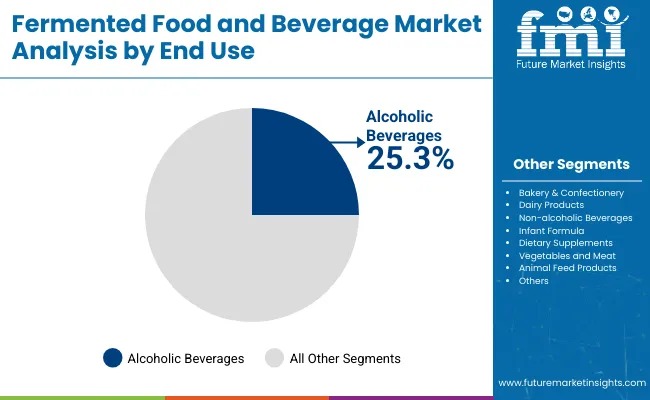
- Alcoholic Beverages: Projected to hold 25.3% of the market in 2025, driven by craft brews, low-alcohol, and probiotic-infused options.
- Probiotics: Represent 31.3% of the ingredient market, spanning yogurts, beverages, snacks, sauces, and meal replacements. Innovations include synbiotics, personalized mixes, and shelf-stable probiotic formulations.
Key Market Dynamics
Growth is supported by clean-label demand, natural preservation, and wellness nutrition. Challenges include probiotic stability, cold-chain dependency, and regulatory constraints on functional claims. Opportunities lie in personalized nutrition, fermented cosmetics, and beauty-from-within products.
Country-wise Growth Outlook
- USA: CAGR of 4.7%, driven by gut-friendly functional foods, kombucha, kefir, and plant-based fermented snacks.
- UK: CAGR of 8.2%, led by plant-based probiotics, low-alcohol ferments, and digestive health solutions.
- China: CAGR of 5.9%, fueled by functional drinks, probiotic yogurts, and traditional fermented staples.
- India: CAGR of 6.9%, powered by traditional staples, functional beverages, and Ayurvedic ferments.
- Japan: CAGR of 6.2%, supported by daily consumption of traditional ferments and beauty-oriented functional drinks.
Leading Players and Competitive Landscape
The market is moderately concentrated, with global leaders such as Danone, Nestlé, Yakult Honsha, Fonterra, and Cargill dominating probiotic yogurts, functional beverages, and dairy alternatives. AB InBev leads fermented alcoholic beverages, while BASF, ADM, DSM, and DuPont supply fermentation-based enzymes, acids, and bioactive components. Tier 2 players and startups emphasize localized kombucha, vegan ferments, and direct-to-consumer channels, focusing on strain stability, cold-chain optimization, and AI-based product personalization.
Halal, kosher, and clean-label certifications are increasingly essential for global expansion. Companies are exploring fermentation applications in cosmetics, baby food, and sports nutrition, balancing R&D, scalable production, and health-focused branding to capture both premium and high-volume market segments.