The global algae-based bioplastics sector is entering a dynamic new phase, with both long-standing industry stalwarts and fresh entrepreneurial entrants accelerating innovation, investment, and scale. According to the latest Algae-Based Bioplastics Market Share Analysis by Future Market Insights, the market is set for robust growth in the coming decade, as demand surges across packaging, automotive, agriculture, and medical sectors.
Growing from an estimated USD 110 million in 2024 to a projected USD 175.8 million by 2034, the algae-based bioplastics market is expected to expand at a compound annual growth rate (CAGR) of 4.8%. This strong momentum reflects a convergence of sustainability drivers, regulatory pressure, and novel manufacturing technologies that are reshaping how biopolymers are produced, tailored, and deployed.
Established Leaders Fuel the Charge
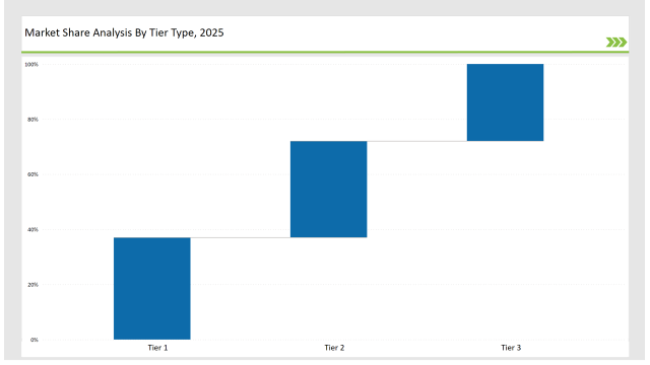
Tier-1 companies are leading the transformation, leveraging deep experience, robust supply chains, and broad market reach. Notpla Limited, Evoware, BZEOS, FlexSea, and BLOM are among the front-runners, dominating the top echelons of the market.
- Notpla Limited continues to innovate in seaweed- and algae-derived films and packaging, bringing compostable alternatives to disposable plastics.
- Evoware is scaling its algae-based resins and compostable materials for food packaging and more.
- BZEOS, a European pioneer, is proving how algae-derived polymers can work at industrial scale.
- FlexSea and BLOM are leveraging their strong R&D infrastructure to deploy formulations that are not only sustainable but also high-performance, meeting rigorous industry standards.
These companies’ continued investments in infrastructure, coupled with their commitment to sustainability, are solidifying their leadership in the global market and enabling rapid adoption in use-cases where traditional plastics still dominate.
Next-Gen Entrants Bring Disruptive Edge
Emerging firms are injecting fresh momentum into the sector with cutting-edge technologies and bold product visions. Among them:
- Eranova is working on large-scale algae cultivation and extraction, targeting not just packaging but specialty materials for industrial use.
- Sway Innovation Co., PT Seaweedtama Biopac, and similar startups are focused on tailored biopolymer solutions, combining algae with advanced composite design to deliver high-strength, biodegradable materials.
These upstarts are lean, agile, and deeply focused on R&D. Their strength lies in customizing algae-based molecules, tailoring polymer blends, and using innovative production methods — such as photobioreactors, enzyme-based extraction, and AI-driven quality control — to bring economically viable and eco-friendly bioplastics to a broader customer base.
Technology Trends Powering Growth
Across the ecosystem, technology is a key enabler:
- Scalable algae cultivation: Whether using macroalgae (seaweed) or microalgae, firms are optimizing biomass yield while minimizing water and land use.
- Advanced extraction methods: Companies are refining enzymatic, mechanical, and AI-optimized extraction processes to boost efficiency and reduce costs.
- Smart manufacturing: The use of AI and automated quality control enables consistent polymer properties, helping meet performance standards for different applications.
- Sustainable design: Emerging bio-resins and composite materials are being engineered for both biodegradability and durability, suited to packaging, automotive components, and even agriculture films.
In addition, traceability and transparency have become business priorities. By using blockchain-enabled supply chains and cloud-based monitoring, manufacturers are reinforcing trust and reducing environmental risk.
Market Drivers & Applications
Several macro forces are driving adoption:
- Regulatory tailwinds: Governments around the world are tightening rules on single-use plastics, favoring biodegradable alternatives.
- Sustainability demand: Brands are increasingly seeking ESG-compliant materials that contribute to circular economies.
- Versatile applications: Algae-based bioplastics are being used in packaging films, molded components, single-use items, composites, and coatings.
- Reduced carbon footprint: Algae cultivation sequesters CO₂, making the bioplastic lifecycle far greener than fossil-derived polymers.
Key application sectors leading demand include packaging and consumer goods, where the drive for compostability is strongest, as well as automotive, textiles, agriculture, and medical devices — all of which are exploring algae materials for their sustainable credentials.
A Call to Innovators, Investors, and Partners
The algae-based bioplastics market is no longer a fringe R&D playground — it’s a maturing ecosystem where bold investments and collaborations can yield real, scalable impact. Established manufacturers looking to diversify their portfolios can partner with agile startups to co-develop new materials. Venture capitalists and sustainability-minded investors have a unique opportunity to back the next wave of green polymer innovation. Meanwhile, brands and OEMs can engage early to shape materials that fit both performance and ecological needs.
As this market expands, the stage is set for a future where bioplastics are not just sustainable, but also robust, scalable, and commercially competitive with conventional plastics.