The global hardwood pulp market is entering a new phase of transformation and expansion, powered by both established leaders and rising innovators embracing advanced, sustainable production technologies. According to the Hardwood Pulp Market Share Analysis report by Future Market Insights, the industry is projected to grow steadily, underpinned by eco-friendly practices and rising demand from tissue, printing, and packaging sectors.
At the forefront are well-known industry players such as Suzano, Stora Enso, and UPM, whose combined market presence continues to define the hardwood pulp landscape. These companies are leveraging their integrated forestry operations and production capabilities to ramp up capacity, invest in low-waste process innovations, and champion responsible sourcing.
- Suzano continues to lead by marrying scale with sustainability: its advanced eucalyptus plantations and pulp mills prioritize forest management while minimizing energy use and waste.
- Stora Enso is driving differentiation by targeting premium applications — high-brightness pulp, specialized fiber grades — to serve quality-sensitive printing and packaging markets.
- UPM is pushing the envelope on circularity, enhancing product lines with biodegradable, recyclable pulp variants and advanced bleaching techniques.
While these veterans anchor the industry, an equally compelling story lies in the rise of new and mid-tier players aggressively expanding their footprint. Companies such as Sappi, Domtar, Metsä Fibre, and APRIL Group are scaling up production, investing in R&D, and introducing next-generation pulp grades to capture niche opportunities in specialty papers and dissolving pulp.
– Sappi, for instance, is tapping into its deep research capabilities to offer highly customized pulp tailored for specialty, high-quality paper markets.
– Domtar (part of the Paper Excellence group) is reinforcing its presence through capacity upgrades and operational efficiencies across its pulp and paper network.
– Metsä Fibre and APRIL Group are exploring sustainable forestry and energy-efficient processes, positioning themselves as environmentally conscious challengers.
Innovation is the name of the game in this rapidly evolving sector. According to the report, the hardwood pulp industry is accelerating the adoption of new processing and bleaching technologies that reduce environmental impact without compromising fiber quality. Key trends include:
- Sustainable Forestry Integration – Companies are strengthening forest management and supply chain traceability to ensure renewable sourcing and long-term viability.
- Process Optimization – Production lines are being modernized with advanced equipment to boost efficiency, reduce waste, and operate with lower energy input.
- Biodegradable & Recyclable Grades – Manufacturers are creating pulp that supports circular economy models, offering biodegradable solutions that align with global sustainability goals.
- High-Purity & Specialty Pulp – There is growing interest in dissolving pulp and ultra-high-brightness grades, enabling applications beyond traditional paper — such as textiles and high-performance materials.
This technological pivot not only strengthens the competitiveness of established firms but also empowers emerging manufacturers to differentiate and enter higher-value market segments.
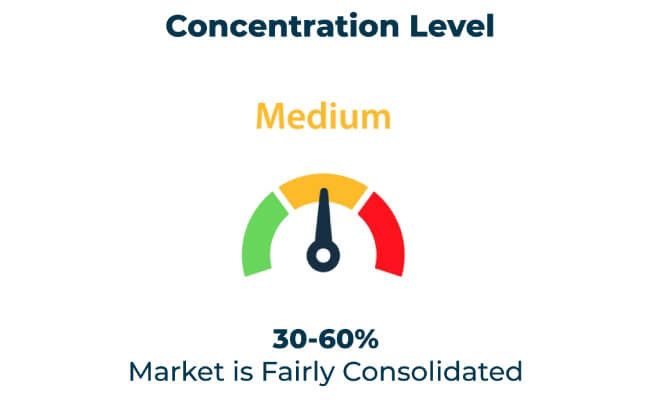
Market dynamics show that while the top three players — Suzano, Stora Enso, and UPM — account for a significant share, the next tier of 5–10 companies is closing the gap, thanks to focused investments and product diversification. According to Future Market Insights, the top 10 pulp producers currently represent around 31% of the global market, while the next 20 players already command more than a third of total industry share, signaling a healthy diffusion of capacity and growth potential.
Geographically, demand is diversifying. North America and Europe remain strongholds, especially for high-quality pulp grades. Meanwhile, the Asia-Pacific region is emerging as a hotspot, fueled by rapid industrialization, expanding paper mill capacity, and growing awareness of sustainable raw materials. These regions are particularly attractive to both established players and disruptive newcomers as they seek to deploy greener technologies and capture long-term demand.
From a sustainability standpoint, the hardwood pulp industry is aligning with global environmental priorities. Manufacturers are not only reducing carbon footprints through cleaner production but also promoting circularity — using renewable feedstocks, optimizing resource use, and designing products that fit into recycling streams.
Strategic priorities for companies in the hardwood pulp space are becoming clear:
- Invest in R&D for advanced pulping and bleaching technology.
- Strengthen forestry and raw-material traceability to support sustainability.
- Expand capacity selectively in high-growth geographies like Asia-Pacific.
- Develop differentiated pulp grades to serve specialty and technical markets.
As the market evolves, the interplay between established pulp giants and agile new entrants promises to reshape the hardwood pulp landscape in the years ahead. Those who balance scale, innovation, and sustainability are likely to emerge as the leaders of tomorrow.