Today marks an exciting moment for manufacturers across the packaging industry, as the recently released “Heavy Duty Corrugated Packaging Market Share Analysis (2025–2035)” reveals both robust growth and transformative technology trends. According to the report, the global heavy-duty corrugated packaging market is projected to reach USD 37,683.2 million by 2035, growing at a compound annual growth rate (CAGR) of 5% from 2025 to 2035.
This promising forecast signals significant opportunity not only for the established giants of the packaging world but also for new players and technology-driven start-ups seeking to carve out their space.
Established Players Anchoring Growth
Key incumbents such as DS Smith, International Paper and WestRock are continuing to lead the charge by investing in high-strength, sustainable corrugated solutions. DS Smith is advancing recyclable material applications and innovative design for heavy-duty usage, while International Paper is recognized for delivering durable, cost-efficient packaging solutions for industrial applications. WestRock is emphasising customised and eco-friendly materials.
These leaders highlight the ecosystem’s evolution: they are not just packaging providers, but partners in creating logistics-friendly, industrial-grade packaging systems that align with global sustainability mandates. Their experiences and strategies offer important lessons for both mature players and newcomers alike.
New Manufacturers and Technology-Driven Innovators Enter the Frame
Beyond the legacy firms, the landscape is widening. Emerging manufacturers and technology-oriented entrants are leveraging automation, smart packaging, and advanced material science to challenge traditional models. The report underscores four major technological trends:
- Recyclable and lightweight materials, including high-strength recycled fibres.
- Smart packaging with embedded RFID and QR tracking for inventory and logistics management.
- High-strength corrugated structural designs tailored for heavy loads and demanding transport conditions.
- Automation in manufacturing — advanced production methods enabling scalability and cost efficiency.
For new manufacturers, this is a clarion call to engage: whether you specialise in novel fibreboard design, collaborate on e-commerce logistics packaging, or build a plug-and-play production line, the heavy-duty corrugated segment is ripe for disruption.
Strategic Expansion & Collaboration Opportunities
The report points to several strategic areas where manufacturers — both established and new — can expand and innovate:
- Sustainability as a differentiator: Demand is growing for recyclable, renewable materials and circular economy models. Manufacturers investing early in energy-efficient production, closed-loop recycling, and plastic-replacement initiatives can gain outsized advantage.
- Customization and end-use segmentation: Heavy-duty corrugated packaging is increasingly used in logistics & transportation, consumer goods, automotive and machinery, and e-commerce retail. Providers who tailor solutions by segment (e.g., customized branded e-commerce shipping cases, industrial bulk packaging) will win.
- Regional growth and export opportunities: While North America leads in high-strength, recyclable solutions and Europe emphasizes eco-friendly production, the Asia-Pacific region is rapidly catching up—driven by industrialisation and urbanisation. Emerging markets in Africa, South America and beyond present untapped demand for affordable, heavy-duty transport packaging.
- Technology partnerships and smart-packaging integration: Both new and established firms can benefit from collaborating with logistics companies, e-commerce platforms, material innovators, and automation providers to build packaging ecosystems.
Why Now is the Time to Act
The market is actively evolving: despite abundant opportunity, manufacturers face headwinds including rising raw-material and energy costs, inconsistent regulatory frameworks across geographies, and limited recycling infrastructure in some regions. But these challenges also translate into openings. Firms that anticipate them—and build flexible, sustainable, and automated capabilities—will be positioned for leadership.
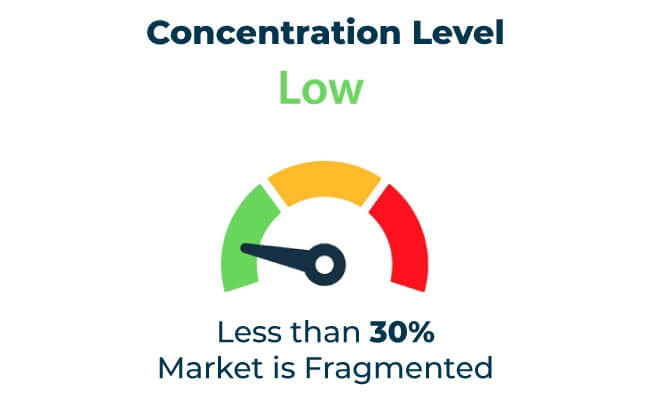
Moreover, the market’s fragmentation provides access for new entrants: with the top three players holding only around 13 % of share and the top ten about 25 %, the space remains highly competitive and open.
Call to Action for Manufacturers
For established manufacturers: now is the moment to deepen your focus on sustainability, scale automation, explore new regional markets, and invest in smart-packaging capabilities. For newer entrants: the time is ideal to join the industry’s transformation — whether by specialising in niche high-strength materials, offering tailored logistics packaging solutions, or building flexible manufacturing lines for regional markets.
In short: whether you’re a well-known player or a fresh innovator, the heavy-duty corrugated packaging market is shifting fast — and the reward is for those who act decisively.