As global supply chains and e-commerce infrastructure continue to evolve, the corrugated fanfold market stands at a pivotal stage of transformation. According to recent market analysis, the global market for corrugated fanfold is projected to grow at a compound annual growth rate (CAGR) of approximately 3.8% through 2035, reaching nearly USD 14.47 billion. The growth is being driven by the twin engines of sustainability and automation. In this period of transition, both established manufacturers and new entrants are positioning themselves to expand operations, adopt new technologies, and serve rapidly growing regions such as Asia-Pacific and Latin America.
Established market leaders: scaling up innovation
Major players such as International Paper, WestRock and DS Smith have long dominated the corrugated fanfold landscape. These firms are driving the market by introducing lightweight, sustainable designs, customizable formats and automation-ready packaging solutions. International Paper, for example, has focused on creating recyclable fanfold solutions tailored for high-volume e-commerce shipping. WestRock has emphasized customizable designs that cater to downstream automation and efficient warehouse operations; DS Smith has emphasized high-performance, recyclable fanfold systems across multiple industries.
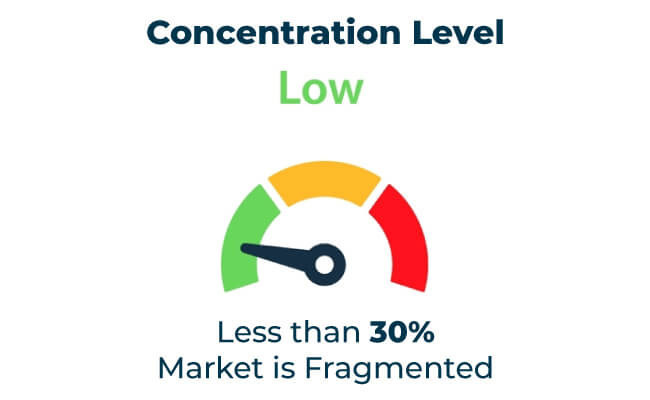
These manufacturers are not resting on their laurels. Rather, they are actively expanding processing capacity, broadening regional footprints and integrating advanced production technologies — including energy-efficient manufacturing, recycled fibre sourcing and digital workflow automation — to maintain leadership in a steadily growing market. With the top 3 players estimated to account for roughly 14 % of global market share and the top 10 about 29 %, there remains significant runway for growth.
New and emerging manufacturers: moving into the spotlight
Beyond the established players, the report identifies robust opportunity for mid-tier and emerging vendors — roughly 27 % of the market is held by the “next 20” players, and the remaining 44 % by smaller firms. These manufacturers are seizing the chance to carve out specialties in regional markets, niche end-use applications (such as high-end retail or bespoke warehousing) and advanced technology adoption.
These newer players are affluent in flexibility: they can adopt lighter materials faster, tailor production for e-commerce volumetrics, pivot quickly into recyclable formats and localize in high-growth markets like Asia-Pacific and Latin America. By aligning with sustainable-packaging mandates, and automating their production lines, they are able to position themselves as agile alternatives to legacy providers. The report underscores that firms focusing on automation-ready formats, recyclable fibre and lightweight board construction are increasingly favoured.
Technology & sustainability: the new competitive battleground
What unites both the established and the emerging firms is adoption of key technology trends. Lightweight materials that maintain durability are now central to design. Fully recyclable and circular-economy compliant structures are rapidly becoming the norm. Moreover, production systems that support automation and digitalised packaging workflows are gaining competitive advantage — particularly as e-commerce warehouses demand faster throughput and smaller footprint packaging.
One major technological shift is the trend toward automation-ready formats: fanfold boards designed to feed into robotic pick-and-pack lines, automated warehouse racking and AI-enabled sortation systems. Another critical trend is energy-efficient manufacturing, with firms reducing carbon emissions and complying with stricter regulatory requirements, especially in Europe and North America. These technology and sustainability priorities are becoming the foundation for growth and will shape which companies capture the lion’s share of the market in the decade ahead.
Regional expansion & untapped markets
While North America and Europe remain important markets — driven by strong sustainability mandates and supply-chain optimisation — the highest growth potential lies in regions such as Asia-Pacific (accounting for about 25 % of the market) and Latin America. Rapid industrialisation, booming e-commerce adoption and rising demand for customised packaging are creating fertile ground for both established and emerging manufacturers. For companies seeking to expand, region-specific strategies — such as local production, tailored fibre-sourcing and streamlined logistics — will be key.
A call to action for manufacturers
For established firms: double-down on research & development, accelerate automaton-integration into your fanfold lines, expand sustainable product portfolios and deepen regional footprints — especially across Asia-Pacific and Latin America.
For emerging manufacturers: seize the moment. Focus on niches like e-commerce warehousing, lightweight design for transit cost optimisation, and automation-friendly formats. Source recycled or alternative fibres, adopt energy-efficient production, and partner with logistics platforms in growth zones.
Across both groups: prioritise closed-loop recycling, invest in materials innovation and forge strategic partnerships across the supply chain — from fibre suppliers to distribution centres. The firms that combine scale, agility and technology will triumph in the next phase of the corrugated fanfold market.