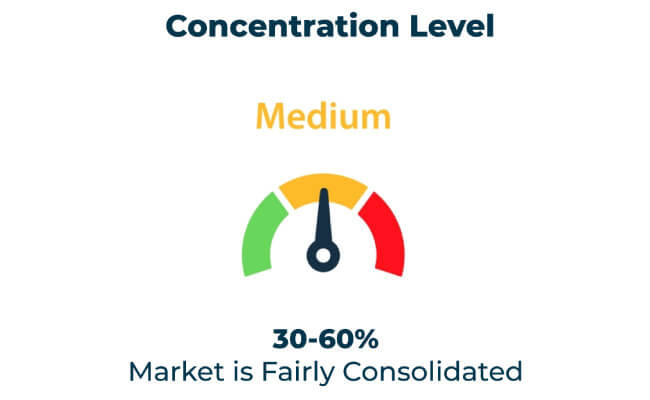
The global sanitizer filling machine market is accelerating rapidly, presenting an exceptional opportunity for both long-standing heavyweights and nimble newcomers to extend their reach. According to the latest industry insights, leading machine providers hold about half of the market through 2025, while mid-tier and niche players are carving out meaningful segments by harnessing new technologies and regional expansion.
Market Momentum and Opportunity
With hygiene and contact-free production becoming non-negotiable across manufacturing sectors, demand for filling machines designed for hand and surface sanitizers is booming. Automation, robotics, smart sensors and sustainable packaging solutions are now key differentiators, pushing machine makers to innovate or risk falling behind. As the report outlines, the push toward “contactless and efficient filling solutions” is gaining traction across regions.
For established manufacturers already versed in large-scale production, the path forward lies in doubling down on automation, scale, and global reach. For newer entrants and regional players, the moment is ripe to innovate rapidly, deliver targeted solutions, and penetrate rising markets with flexible, cost-effective machines.
Established Leaders: Scaling Innovation & Reach
The top tier of the market continues to be dominated by stalwarts with deep engineering prowess and global distribution networks. These organisations are investing in high-speed fill lines, aseptic and contamination-free systems, robotics integration and IoT-based monitoring platforms. By doing so, they are setting industry standards not just in output, but in hygiene, traceability and operational efficiency.
Their advantages are reinforced by their ability to serve large multinational clients, to standardise service offerings across geographies, and to support high-volume, high-speed production lines essential in a pandemic-responsive world. These players are leveraging their deep R&D and scale to stay ahead of technological shifts.
Emerging & Mid-Tier Players: Flexibility, Customisation, Regional Growth
Meanwhile, mid-tier machine manufacturers and smaller niche players are stepping into the spotlight. These companies are focusing on modular, compact, affordable filling solutions targeted at mid-sized sanitizer producers and regional markets. By emphasising cost efficiency, customisation and quicker deployment, they are unlocking new segments of demand.
Moreover, new technologies such as semi-automatic machines, inline systems and contactless filling setups are opening doors for these players to differentiate. For example, machines that offer rapid change-over between bottle sizes, or integrate sensors to monitor fill accuracy and downtime, are attractive to smaller producers looking for agility.
Technology Trends Shaping the Landscape
Across the board, technology is the thread binding opportunity with execution. Key trends include:
- Smart automation & AI integration: Machines that monitor fill performance, detect anomalies and optimise throughput in real time are increasingly essential.
- Contactless and hygienic design: As hygiene protocols tighten, machines that reduce human-machine interaction and enable self-cleaning or sealed systems are gaining preference.
- Sustainability & eco-packaging readiness: With pressure on reducing waste and adopting recyclable materials, machine makers who support sustainable packaging formats are gaining strategic advantage.
- Modular and scalable systems: For newcomers, the ability to deploy machines in smaller configurations and scale up quickly is a competitive edge.
These technological drivers are not just buzzwords—they are rapidly determining which manufacturers lead, which adapt, and which fall behind.
Strategic Implications for Manufacturers
For large established manufacturers, the strategy is clear: continue to expand automation capability, integrate IoT within machines, enhance global service networks and strengthen partnerships with large-scale sanitizer brands. They must also stay vigilant to smaller entrants disrupting niche or regional segments.
For newer manufacturers, the playbook is different: focus on customisable solutions for regional producers, leverage technology to offer smart and compact machines, build strong local support and service networks, and target growing markets where demand for hygienic, cost-effective filling machines is rising. By doing so, they can capture share in a market that is still fairly fragmented.
The region of Asia-Pacific, for instance, is emerging as a key growth frontier—driven by increasing sanitizer consumption and rising manufacturing activity. Producers and machine makers who are attuned to regional requirements (e.g., smaller volume lines, flexible change-over, localized service) will be best placed to capitalise.
Outlook and Call to Action
The sanitizer filling machine market is evolving fast. It is no longer just about speed and volume—it’s about intelligence, hygiene, flexibility and sustainability. For machine manufacturers looking to expand: the time is now. Whether you are an established player doubling down on tech-led growth, or a new entrant looking to seize niche opportunities, the roadmap is clear.
Invest in smart, sustainable machines. Align your product development with hygiene regulations and robotic automation. Build regional service capabilities and partnership networks. And most importantly, stay agile—because in this market, speed of innovation and deployment can determine success.