The global rotational molding machines market is entering a transformative phase, with demand projected to reach USD 1,420.6 million by 2035, growing at a healthy 3.7 % annual rate through 2025-2035. In this dynamic landscape, both long-standing industry leaders and ambitious new entrants are poised to leverage evolving technologies, shifting end-use demands, and global expansion opportunities.
Established Players: Leading the Charge
The market remains anchored by seasoned manufacturers who continue to invest heavily in innovation. Top companies—among them named industry frontrunners—are increasingly oriented around energy-efficient designs, smart automation systems, real-time monitoring capabilities, and support for advanced recyclable materials. These firms are not simply defending market share—they’re redefining it.
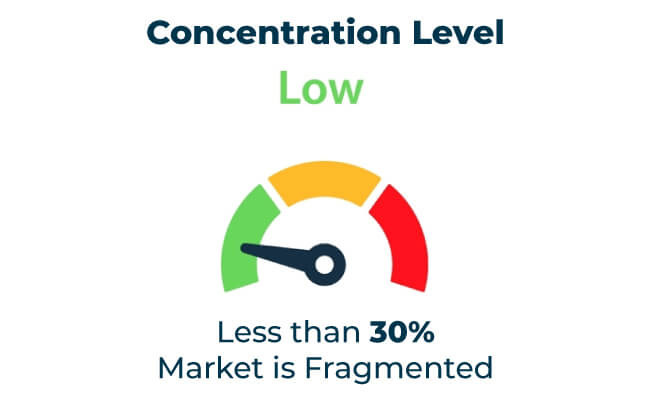
By focusing on cost-efficiency, faster production cycles, minimal waste, and high-customization equipment, these leaders are catering to a growing variety of sectors including automotive, construction, consumer goods and industrial applications. Their ability to anticipate end-user shifts and regulatory demands (such as sustainability and recyclable-material mandates) sets them apart in an otherwise fragmented market.
Importantly, while the top three players account for roughly 13 % of the market share and the next two about 8 %, a significant portion (43 %) is held by the next 20 players—highlighting both opportunity and competition. The remaining players command about 27 %, suggesting ample room for disruption and expansion.
New & Emerging Manufacturers: Seizing the Moment
For newer entrants and niche manufacturers, the timing has never been better. With automation systems becoming more accessible and global demand spreading into Asia-Pacific, Latin America and Africa, there is a rich landscape for agile companies to carve out meaningful footprint.
These newcomers can differentiate by offering specialized solutions—say bespoke molding machines for small-batch runs, smart-control integration for remote monitoring, or ultra-low energy consumption systems designed for sustainability-driven customers. They can also exploit regional cost advantages, localize service and spare-parts support, and partner with end-users for tailored applications.
Expansion into under-served geographies is another key route. Emerging markets are hungry for efficient hollow-plastic product-manufacturing solutions, and companies that can align product design with local regulatory demands and cost-sensitivities will gain traction quickly.
Technology & Sustainability: The Twin Engines of Growth
The heart of this market’s momentum rests on two interlinked themes: technological innovation and sustainable manufacturing. Automatic systems, smart controls, sensor-driven monitoring, and reproducible recyclable materials are rapidly becoming baseline expectations. Machines that can reduce energy consumption, minimize waste, and support lighter weight/high-strength plastic components are highly sought after.
Sustainability no longer represents merely “nice to have”—it is increasingly a competitive imperative. Customers in Europe and North America, in particular, demand equipment aligned with energy-efficiency standards and recyclable-material compatibility. Meanwhile, in Asia-Pacific, growth is fuelled by industrial expansion, cost-effective production lines and rising demand from evolving sectors.
Beyond sustainability, customization is a key driver. End-users want versatility—machines able to deliver complex molds, unique shapes, and shorter runs. As such, manufacturers that build modular systems, configurable automation, and flexible tooling options are sharply advantaged.
Global Expansion & Strategic Positioning
Regions vary in their pace of adoption and competitive intensity. North America and Europe together account for roughly 75 % of market share, buoyed by strong manufacturing bases, regulatory pressures and demand for high-end solutions. Asia-Pacific, while holding a smaller share, presents the fastest growth trajectory thanks to industrialization, increasing cost-sensitivity and rising local manufacturing of hollow-plastic parts.
For both established and emergent manufacturers, global expansion is vital. Export-oriented strategies, partnerships with regional service networks, and localization of machine design can unlock new revenue streams. A key challenge remains navigating varying standards, regulatory ecosystems and maintenance demands—but companies building agile, responsive models will win.
Why Now Is the Time to Act
Whether you’re a legacy machine-builder with decades of expertise or a newer outfit ready to scale up, the next decade in the rotational molding machine market is brimming with potential:
- Investment in advanced automation and smart controls is no longer optional—it’s central to competitiveness.
- Sustainability is a game-changer: manufacturers failing to provide low-waste, energy-efficient solutions risk losing relevance.
- Customization and agility are winning: end-users want flexible production, not one-size-fits-all equipment.
- Global expansion remains a huge lever: emerging markets hold volume growth, while mature markets value premium solutions.
For Manufacturers Ready to Grow
If you are a manufacturer with ambition—whether you have an established brand or you’re just setting your sights on machine-building excellence—now is the moment to accelerate. Align your roadmap with smart, flexible, sustainable machine design. Explore service-and-maintenance models, software-driven monitoring, and remote analytics. Expand your export footprint, localize your offering, and meet the rising demands of the automotive, construction and consumer-goods sectors.