The global egg packaging market is undergoing a remarkable transformation as both seasoned industry titans and newer innovators ramp up efforts to meet rising demand, driven by sustainability, innovation and evolving consumer expectations. According to the latest market analysis from Future Market Insights, the egg packaging industry is projected to reach US $12.3 billion by 2035, growing at a CAGR of 3.5 % from 2025 to 2035.
Established Players Take the Lead — With Purpose
Long-standing manufacturers are not resting on their laurels. Companies such as Huhtamaki, Hartmann and Tekni-Plex have already established solid reputations for sustainable packaging solutions and are now accelerating investment in next-generation technologies.
- Huhtamaki continues to invest in molded‐fiber technologies and designs that combine durability with environmental responsibility.
- Hartmann has set high benchmarks by launching 100 % biodegradable packaging offerings, aligning with consumer and regulatory expectations.
- Tekni-Plex is pushing forward with lightweight, recyclable and compostable packaging formats, optimizing cost-effectiveness while answering sustainability demands.
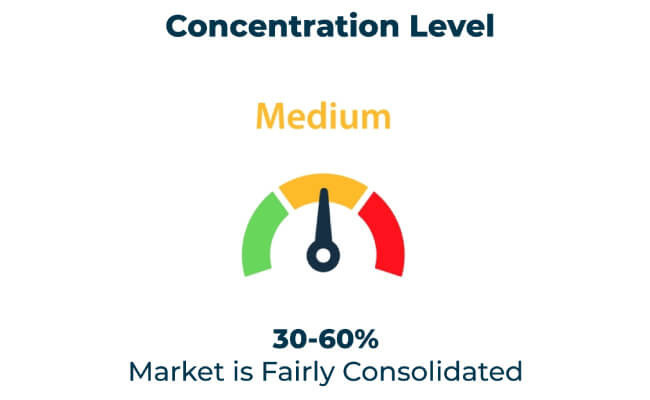
These manufacturers are leveraging their scale, global footprint and R&D capabilities to expand their packaging portfolios and capture larger share of the fast-evolving market. As of 2025, the top three companies account for roughly 20 % of the global egg packaging market, while the top five reach about 30 %—leaving a significant portion of the market for challengers and newcomers.
New Entrants and Emerging Manufacturers: Opportunity Abounds
Meanwhile, newer and smaller manufacturers are seeing a clear runway for growth. With the industry calling for fresh materials, smart packaging formats and circular-economy driven business models, there’s ample space for nimble players with bold ideas. These companies are pursuing:
- Biodegradable and compostable materials such as molded fiber, recycled paper pulp and bioplastics—choosing innovation over legacy plastics.
- Intelligent packaging systems incorporating QR codes, RFID tags and traceability features to meet transparency demands from retailers and consumers alike.
- Circular economy practices, where packaging supply chains are designed to loop rather than dispose: reclaiming, recycling or composting material at end-of-life.
For emerging manufacturers, the message is clear: the global packaging market is shifting, and those who adopt sustainable, scalable technologies now will be in a strong position when the next wave of growth accelerates.
Why Now is the Time to Expand
Several converging forces are fueling growth in this sector:
- Regulatory tailwinds: Governments worldwide are tightening rules around single-use plastics and packaging waste. This is compelling brand owners and packaging manufacturers alike to transition quickly.
- Consumer advocacy: Buyers are increasingly demanding sustainable and ethical packaging – especially for food products – making eco-friendly materials a competitive differentiator.
- Retail & e-commerce growth: While retail applications currently dominate with ~65 % of the sector, e-commerce and bulk industrial packaging segments are growing fast as supply chains evolve and new formats are needed.
- Regional growth hotspots: Emerging markets—particularly in Asia-Pacific (India, China, Japan, Southeast Asia)—offer high potential for expansion of sustainable packaging solutions as urbanization, consumption and regulatory pressure converge.
Strategic Imperatives for Manufacturers
Manufacturers looking to expand — whether established or emerging — should focus on several key strategic priorities:
- Material Innovation – Developing low-cost, high-performance biodegradable or compostable alternatives that still meet protection and transport needs.
- Collaborative Ecosystems – Partnering with governments, NGOs, brand owners and technology firms to scale adoption of sustainable packaging formats and meet regulatory goals.
- Consumer Education & Branding – Clearly communicating the value proposition of sustainable packaging (protection + environment) to build loyalty and trust, rather than simply “green-washing” messaging.
- Technological Integration – Embedding smart-traceability features (QR, RFID) and closed-loop supply chain systems to deliver transparency, reduce waste and create circular business models.
- Geographic and Segment Expansion – Targeting under-penetrated regions and burgeoning segments such as e-commerce or industrial bulk transport to diversify and grow.
Looking Ahead
The egg packaging market stands at a crossroads between legacy materials and future-proof solutions. In this shift, companies that align business strategy, material science and sustainability mindset will emerge as winners. Whether an established manufacturer scaling up or a new entrant carving out a niche, the pathway is now defined: innovate boldly, act sustainably and scale smartly.
As demand grows and regulations tighten, the next decade will reward those who move beyond packaging simply as a vessel — and treat it as a strategic product in its own right. With an industry value projected at 12.3 billion dollars by 2035, the global stage is set and the opportunity for both new players and legacy firms has never been greater.