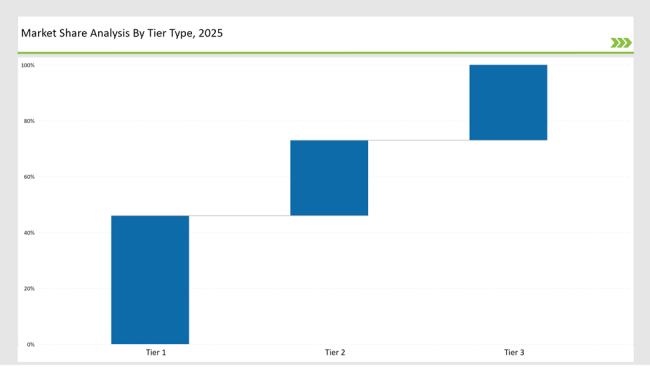
The global packaging industry is undergoing a strategic evolution driven by the rising demand for advanced monitoring technologies, and at the forefront of this shift is the thriving market for oxygen indicator labels. According to the recently released report “Oxygen Indicator Labels Market Share Analysis,” the industry landscape is dynamic, with both established manufacturers and new entrants charting fresh paths of growth and innovation.
A Mature Market with Fresh Momentum
For years, major players have dominated the oxygen indicator labels market, leveraging robust manufacturing operations, extensive distribution networks and strong reputations for reliability. These established manufacturers are now applying their scale, expertise and R&D capabilities to shape the next generation of products—embracing smart sensors, sustainable materials and digital connectivity. Meanwhile, smaller and emerging manufacturers are carving out niches and pursuing growth trajectories of their own, taking advantage of the evolving technologies and growing market opportunities.
Spotlight on the Market Leaders
Among the tier-one firms, industry stalwarts have captured a significant share of the market thanks to their early moves into sensor-enabled labels and integrated packaging solutions. These companies are not only supplying large-scale food, pharmaceutical and industrial packaging providers, but also investing in next-gen technologies. Their advantages lie in global reach, strong brand trust and the ability to scale innovation quickly.
New and Upcoming Players Fueling Innovation
Simultaneously, a wave of newer companies is energizing the ecosystem. These manufacturers specialise in flexible, cost-effective oxygen-monitoring labels and are often more nimble in their development of custom solutions for specific sectors — such as cold-chain logistics, food safety or medical packaging. By focusing on niche needs, they are forging partnerships, building reputations and expanding across geographies.
Technology Drives the Future
Central to the future of this market is a clear emphasis on technology-driven transformation:
- Smart and IoT-integrated labels: Oxygen indicator labels are moving beyond simple color-change indicators to embrace digital connectivity, real-time monitoring and remote tracking.
- Sustainability and eco-friendly substrates: Manufacturers are increasingly adopting biodegradable or recyclable materials, aligning with global regulatory pressures and consumer demand for greener packaging.
- Customization and modularity: Tailored solutions for food & beverage, pharmaceuticals, and industrial use cases are becoming more common, enabling manufacturers to address diverse packaging formats and environmental conditions.
- Global expansion and scalability: With regions such as Asia-Pacific, North America and Europe showing high growth potential, both established and emerging manufacturers are actively expanding their footprint and distribution channels.
Opportunities for Expansion & Growth
For manufacturers looking to scale or enter this market, the scenario is compelling:
- High growth end-uses: Alongside traditional industrial and pharmaceutical applications, growth in food & beverage packaging—especially in fresh or sealed-oxygen-sensitive products—is driving demand for oxygen-indicator labels.
- Cross-industry adoption: Industries such as healthcare logistics, cold-chain life sciences, chemicals and high-precision electronics are increasingly leveraging oxygen-monitoring labels for enhanced safety and compliance.
- Partnering across the value chain: Packaging converters, sensor-technology providers, label manufacturers and logistics firms can collaborate to create end-to-end smart-packaging solutions.
- Regions underserved: Emerging markets in Asia-Pacific and parts of Latin America and Africa show lower current penetration but rapidly rising demand—presenting a strong opportunity for manufacturers willing to scale or localise operations.
Call to Action for Manufacturers
Whether you are an established player or a newly emerging manufacturer, now is the time to act. Consider the following strategic imperatives:
- Invest in R&D to develop smart oxygen indicator labels that integrate digital tracking, IoT sensors or remote monitoring capabilities.
- Pursue sustainability credentials by designing labels using biodegradable, recyclable or compostable materials.
- Segment your offering to serve diverse end-use verticals—from high-end pharmaceutical packaging to mass-market food & beverage labels—tailoring your solution for each.
- Expand geographically. Countries in Asia-Pacific, North America and Europe are highlighted as high-growth markets ripe for expansion.
- Collaborate across the ecosystem—partnering with packaging houses, cold-chain logistics firms, food manufacturers and technology providers to build integrated solutions rather than stand-alone labels.
Looking Ahead
In the coming years, the oxygen indicator labels industry is poised for meaningful transformation. With growing demand for intelligent packaging, real-time monitoring and eco-friendly materials, the stage is set for manufacturers to scale rapidly, innovate boldly and differentiate strongly. Established brands will anchor the market, but nimble new players will continue to push boundaries and capture niche opportunities.
For those manufacturers ready to seize the moment—expanding into new technologies, broadening their partnerships and entering new geographic markets—the future looks bright. The oxygen indicator labels market isn’t just about a small adhesive strip on a package anymore—it’s about delivering assurance, safety and intelligence in packaging at scale.