The global thermal-inkjet-printer market is entering a transformative phase, presenting a standout opportunity for both long-standing industry leaders and ambitious newcomers. According to the latest analysis from Future Market Insights, the segment is projected to soar past US$4.2 billion by 2035, registering a compound annual growth rate (CAGR) of 4.1% from 2025 to 2035.
At the heart of this momentum lies a potent combination of market dynamics: manufacturing sectors such as packaging, pharmaceuticals, retail and e-commerce are driving demand for high-resolution, fast-turnaround, eco-friendly printing solutions. Established players with deep portfolios and global reach are reinforcing their positions—while newer manufacturers are stepping up, leveraging agile business models and cutting-edge technologies to gain ground.
Established Players Position for Leadership Through Innovation
Market leaders such as HP Inc., Domino Printing Sciences and Videojet Technologies have demonstrated why they remain at the forefront. HP continues to push the envelope in thermal inkjet printing technology, combining global scale with sustained investment in research and sustainability initiatives. Domino remains focused on high-precision, customizable systems that appeal to demanding industrial users. Videojet brings reliability and breadth to the table, consistently delivering solutions trusted in mission-critical environments.
These incumbents are increasingly turning to new technologies and sustainable practices to maintain competitive advantage. Key trends include the roll-out of eco-friendly ink systems, real-time print-data monitoring through IoT-capable devices, high-speed printing options, and compact form-factors designed for leaner manufacturing footprints. The adoption of water-based or biodegradable inks, energy-efficient printer architectures and minimized material waste are no longer niche—these are becoming mainstream differentiators.
Opportunities for New Entrants and Regional Manufacturers
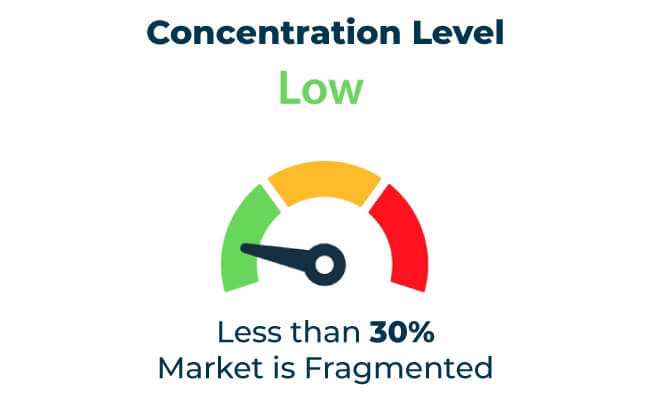
While the top tier commands roughly one-third of market share, a substantial majority of the market remains under the influence of mid-tier and emerging manufacturers. This layered market structure opens the door for new entrants and regional suppliers looking to gain traction. Smaller players can capitalize on growing demand in fast-industrialising regions—especially in Asia-Pacific, Africa and Latin America—by offering agile, locally-tuned solutions and servicing niche end-user segments such as contract packaging, speciality pharmaceuticals, and small-batch retail production.
For these up-and-coming manufacturers, the time is ripe to expand: by aligning with global sustainability mandates, they can carve out reputations for environmentally conscious innovation. By integrating embedded sensors, smart diagnostics and simplified user-interfaces, they can meet the needs of manufacturing operations that are increasingly leaning toward automation, traceability and flexibility. Entry-barriers such as high initial costs and raw-material volatility remain, yet they also serve as catalysts for creative business models—leasing options, modular upgrade paths, and service-based offerings.
Technology & Sustainability: Dual Engines of Growth
The convergence of technological advancement and sustainability has become a pivotal theme in the thermal inkjet space. Manufacturers are now pursuing three intertwined strategies:
- Eco-friendly ink systems: Printer vendors are replacing traditional solvent-based inks with water- or biodegradable-based alternatives, addressing regulatory pressures and the growing demand for green production.
- IoT-enabled printers: Machines equipped with real-time monitoring, analytics, and remote management are helping manufacturers reduce downtime, increase throughput and optimise ink usage.
- Compact, high-speed designs: To meet the needs of smaller footprint operations and high-velocity production lines, vendors are delivering printers that offer high resolution at faster speeds without heavy infrastructure demands.
These trends are not just forward-looking—they impact purchasing decisions today. End-users in packaging, food & beverage, retail and pharmaceuticals are prioritising printers that deliver compliant, high-quality output while supporting sustainability and flexible operational models.
Regional Growth and Market Penetration
Geographically, the established markets of North America and Europe continue to drive the lion’s-share of market value, thanks to mature regulatory frameworks, emphasis on branding and strong manufacturing bases. However, the fastest absolute growth is expected in the Asia-Pacific region, where industrialisation, rising e-commerce and surge in contract packaging all converge. For manufacturers—both established and emerging—this means strategic expansion into Asia-Pacific, Africa and Latin America presents a significant opportunity to capture growth before the competition becomes saturated.
Call to Action for Manufacturers
For established players: now is the moment to double-down on portfolio expansion, accelerate the deployment of sustainable solutions and deepen global service networks. For new or regional manufacturers: this is a prime window to differentiate through innovation, agile business models and region-specific offerings. Partnership opportunities abound—whether through co-development, licensing eco-friendly inks or embedding smart-printer platforms.
About Future Market Insights
This market intelligence reflects rigorous analysis of the thermal inkjet printer industry: market size, segmentation, competitive landscape, regional performance and technology roadmap. The insights help stakeholders understand who is winning today, where the next wave of growth will come from, and how to align strategy with evolving customer and regulatory expectations.