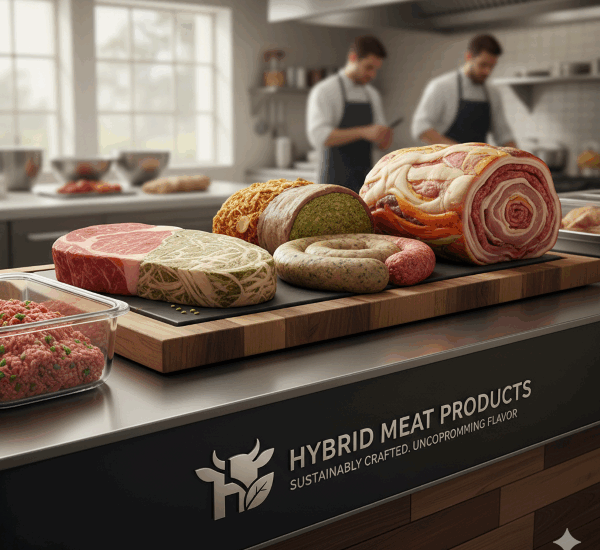
The global Hybrid Meat Products Market is poised for remarkable growth over the next decade, with the market projected to expand from USD 530.6 million in 2025 to approximately USD 1,314.9 million by 2035, reflecting a robust CAGR of 9.5%. This surge underscores the growing appetite for protein solutions that blend traditional meat with plant-based ingredients, combining taste familiarity with sustainability and nutritional benefits.
Hybrid meat products are gaining traction across multiple regions, including North America, Europe, and Asia-Pacific, as both established meat companies and new innovators push to diversify offerings. Leading players shaping the market include Tyson Foods, JBS S.A., Nestlé S.A., Perdue Farms, Maple Leaf Foods Inc., Hormel Foods Corporation, Conagra Brands, Eat Just (GOOD Meat), BioTech Foods, and Mush Foods. These companies are leveraging strategic partnerships, advanced protein technologies, and innovative formulations to meet evolving consumer preferences.
For Tailored Insights and Customization, Connect With Us Here: https://www.futuremarketinsights.com/reports/sample/rep-gb-26197
Burgers and Patties Lead Market Adoption
Among product types, burgers and patties are expected to account for 26.7% of the market in 2025, reflecting consumer comfort with familiar formats. Their mainstream appeal makes them an ideal entry point for hybrid proteins, allowing consumers to explore blended options without changing established eating habits. Minced and ground meat formats are also witnessing strong growth, projected at a CAGR of 7.8%, due to their versatility in home cooking and processed foods. Over the next decade, innovation in ready-to-eat meals, deli slices, and snackable hybrid formats is expected to further broaden market penetration.
Beef-Based Hybrids Dominate, While Plant Proteins Gain Traction
In terms of protein sources, beef-based hybrids hold a leading share of 22.7% in 2025, closely followed by chicken-based hybrids at 18.4%. Plant-based ingredients, particularly soy protein, are rapidly gaining relevance with a projected growth rate of 6.2%. This diversification into plant-forward formulations, including pea, rice, and mycoprotein, reflects a broader shift toward environmentally sustainable proteins and health-conscious options.
Retail Channels Drive Accessibility and Growth
Distribution through supermarkets and hypermarkets is expected to command the largest share at 25% in 2025, emphasizing the importance of visibility and consumer trust in mainstream grocery environments. Online retail, however, is set to be the fastest-growing channel, benefiting from subscription-based and direct-to-consumer models. Convenience stores and specialty outlets also play crucial roles, especially in urban markets where on-the-go consumption and premium ready-to-eat formats are in high demand.
Regional Insights: A Global Perspective
The United States will remain a cornerstone market, expanding from USD 147.3 million in 2025 to USD 268.4 million by 2035. Growth is underpinned by strong retail presence, active participation from major food companies, and rising interest from younger demographics seeking high-protein, clean-label options.
In Europe, countries like Germany, France, and the UK are projected to maintain steady growth, driven by sustainability regulations, cultural openness to food innovation, and strong retail infrastructure. Germany, in particular, is emerging as a hub for new product development and hybrid adoption, leveraging supermarkets, hypermarkets, and online channels to engage environmentally conscious consumers.
Asia-Pacific is expected to deliver the fastest relative growth, with China leading at a CAGR of 6.7% and India at 7.0%. Supportive government policies, urbanization, and increasing openness to diversified protein options are driving market expansion in these regions. Japan and South Korea are also witnessing rapid adoption, particularly in ready-to-eat formats and convenience-driven offerings, reflecting evolving urban lifestyles and premium positioning.
Drivers and Market Dynamics
The growth of hybrid meat products is being propelled by a convergence of sustainability, health, and consumer preference trends. Concerns over the environmental footprint of livestock production are encouraging companies and consumers to explore alternatives that reduce greenhouse gas emissions while preserving taste. Health-conscious consumers are increasingly attracted to hybrid options that offer familiar sensory experiences, high protein content, and balanced nutrition.
Established meat producers and plant-based innovators are collaborating through co-branding, technology partnerships, and retail integration to accelerate adoption. Advances in protein processing, flavor enhancement, and binding technologies are improving texture, scalability, and affordability, helping hybrid products transition from niche innovation to mainstream acceptance.
Innovation and Competitive Landscape
While global leaders such as Tyson Foods and Nestlé S.A. leverage scale, brand trust, and retail partnerships, mid-sized companies like Maple Leaf Foods and Hormel Foods are focusing on product agility, clean-label positioning, and hybrid-specific innovations. Specialized pioneers, including Eat Just, BioTech Foods, and Mush Foods, are driving advanced fermentation techniques and plant-based blends to appeal to younger, ethically conscious consumers.
Key developments in the market include Nestlé’s “Maggi Rindecarne” plant-based meat extender in Chile and Hillshire Farm’s new flavor launches, reflecting the sector’s ongoing focus on taste, convenience, and sustainability.
Comprehensive Market Insights at Your Fingertips – Get Full Report: https://www.futuremarketinsights.com/reports/hybrid-meat-products-market
Outlook
As hybrid meat products continue to evolve, competition will increasingly center on taste innovation, cost efficiency, and scalability, rather than novelty alone. With growing consumer trust, enhanced affordability, and strategic collaborations across retail and foodservice channels, hybrid meat products are set to become a mainstream protein choice, bridging the gap between conventional meat and plant-based alternatives over the next decade.
About Future Market Insights (FMI)
Future Market Insights, Inc. (ESOMAR certified, recipient of the Stevie Award, and a member of the Greater New York Chamber of Commerce) offers profound insights into the driving factors that are boosting demand in the market. FMI stands as the leading global provider of market intelligence, advisory services, consulting, and events for the Packaging, Food and Beverage, Consumer Technology, Healthcare, Industrial, and Chemicals markets. With a vast team of over 400 analysts worldwide, FMI provides global, regional, and local expertise on diverse domains and industry trends across more than 110 countries.
Contact Us:
Future Market Insights Inc.
Christiana Corporate, 200 Continental Drive,
Suite 401, Newark, Delaware – 19713, USA
T: +1-347-918-3531
For Sales Enquiries: sales@futuremarketinsights.com
Website: https://www.futuremarketinsights.com
LinkedIn| Twitter| Blogs | YouTube