The global aseptic carton packaging market is entering a dynamic phase of growth and transformation, driven by mounting demand for shelf-stable, convenient and sustainable packaging solutions. According to the recent report Aseptic Carton Market Share Analysis, the sector is projected to reach USD 18.5 billion by 2035, growing at a compound annual growth rate (CAGR) of 7.2% between 2025 and 2035.
This expanding horizon presents a compelling opportunity not only for the well-known packaging leaders, but also for new manufacturers seeking to stake their claim in the market by leveraging emerging technologies, materials and manufacturing processes.
Established players leading the way
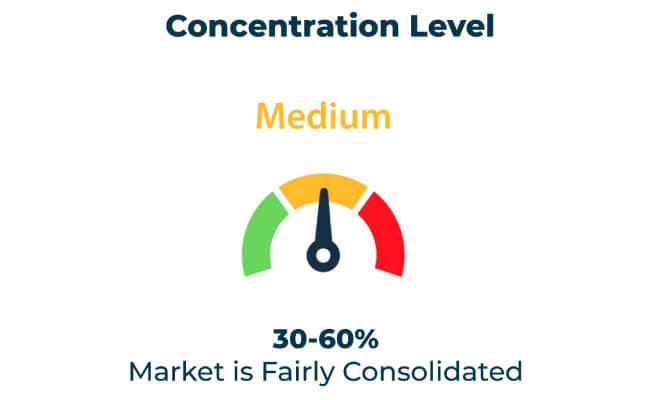
Companies such as Tetra Pak, SIG Combibloc and Elopak continue to dominate the aseptic carton space, combining heritage with innovation. Tetra Pak has reaffirmed its position by introducing advanced production capabilities and sustainable carton formats. SIG Combibloc focuses on ultra-lightweight and recyclable cartons, while Elopak emphasises carbon-neutral production and renewable materials. Together, the top three players account for roughly 20% of the global market share, while the top five reach around 30%.
Such incumbents set the performance benchmark and pave the way for further maturation of the industry—offering lessons in scalability, sustainability and supply-chain efficiency for newer market entrants.
New entrants and manufacturers expanding their footprint
Beyond the established names, a growing number of manufacturers are entering the aseptic-carton arena, buoyed by rising demand in emerging markets and advances in material science. Tier-2 companies such as Greatview Aseptic Packaging and Amcor are strengthening their capabilities and reaching new geographies. Meanwhile, smaller manufacturers and regional players are repositioning their operations to capitalise on opportunities in Asia-Pacific, Africa and Latin America.
These new entrants bring fresh energy: agile business models, localized production, and a willingness to trial innovative technologies—making them vital growth engines for the broader packaging ecosystem.
Technology and sustainability at the centre of change
Innovation is accelerating across multiple fronts. Aseptic carton producers are incorporating advanced sterilisation techniques, adopting lightweight laminate designs and integrating smart-packaging features such as QR codes and NFC tags to enhance traceability and consumer engagement. Sustainable packaging is now table stakes: enterprises are shifting toward bio-based materials, recyclable laminates and carbon-neutral manufacturing to align with circular-economy goals.
The drive for sustainability is especially resonant in Europe under regulatory frameworks, and in Asia-Pacific where rapid urbanisation and changing consumer lifestyles are increasing packaging demand. The combination of performance, convenience and eco-credentials is redefining how packaging is produced, transported and perceived.
Opportunities for manufacturers to scale and differentiate
For both established and new manufacturers, the growth path is clear but not without its hurdles. High initial capital costs—particularly for aseptic-filling lines—and complex recycling dynamics pose challenges. Still, the abundance of opportunities is palpable:
- Shelf-life extension: Aseptic cartons enable long-shelf-life products without refrigeration, making them particularly attractive for food & beverage and pharmaceutical applications.
- Emerging-market expansion: Growing middle-class populations and modern retail formats in Southeast Asia, Latin America and Africa are driving adoption of cost-effective, shelf-stable cartons.
- Circular-economy alignment: Manufacturers who prioritise renewable inputs and closed-loop recycling will benefit from regulatory tailwinds and consumer preference shifts.
- Smart-packaging adoption: Digital features such as traceability, authenticity verification and consumer interaction embed added value into packaging—not just the contents.
Manufacturers that position themselves at the intersection of these trends—bringing together manufacturing efficiency, material innovation and sustainability credentials—stand to differentiate in a crowded landscape.
A call to action
Manufacturers seeking to expand or enter the aseptic-carton market must combine clear strategic intent with technology-enablement and supply-chain readiness. Key actions include:
- Investing in cost-effective filling and sterilising systems, enabling production at scale without sacrificing flexibility or quality.
- Developing or sourcing recyclable and bio-based carton materials, to meet evolving environmental criteria and market demands.
- Forming strategic partnerships—with suppliers, recyclers, government bodies and downstream brands—to integrate material innovation, circular-economy logistics and market reach.
- Targeting high-growth regions with adaptable business models, emerging-market insights and localised manufacturing footprint.
For new entrants, the time is ripe to join the space, while for long-standing manufacturers, the moment is right to renew and reinforce their competitive edge.
About the market
The global aseptic carton market is experiencing structural transformation. Manufacturers who adapt to consumer demands for sustainability, performance and convenience are capturing market share. With underlying growth forecast strong through 2035, both established players and newcomers have a pivotal role to play in shaping the future of packaging.