The composite cardboard tube packaging industry is undergoing a dynamic transformation, and manufacturers both established and new are seizing the opportunity to grow, innovate, and respond to the evolving needs of brands around the globe. With rising demand for sustainable, high-performance packaging, the stage is set for manufacturers to accelerate business expansion and deploy next-generation technologies.
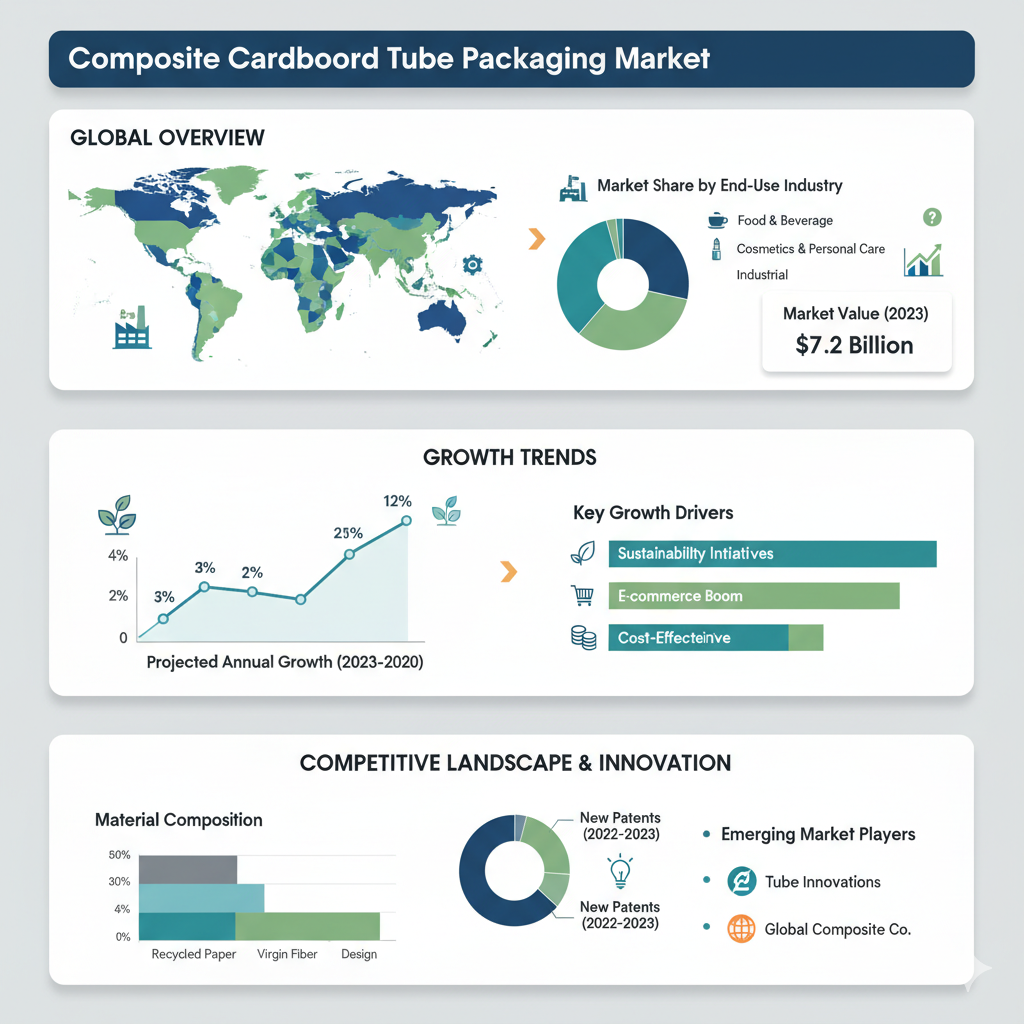
The market for composite cardboard tube packaging is steadily increasing, driven by a potent mix of eco-conscious brand owners and e-commerce growth, among other factors. Production and consumption of these tubes are scaling up, import-export dynamics are shifting, and consumers are placing ever-greater emphasis on packaging that aligns with environmental values while delivering branding impact. Manufacturers who embrace this shift stand to gain significantly in the years ahead.
Established industry leaders setting the pace
Top tier manufacturers – including the likes of Sonoco, Smurfit Kappa and Ace Paper Tube – continue to hold strong positions and define benchmarks in the market. These companies are investing in material innovation (such as fully recyclable composites with enhanced barrier protection), and optimizing production processes for e-commerce packaging and luxury segment applications. Their leadership and deep manufacturing and distribution networks enable them to scale swiftly and cater to global customers, while maintaining cost competitiveness and regulatory compliance.
Mid-sized and regional players seize niche opportunities
A vital part of the ecosystem is made up of mid-sized firms such as Mondi Group and CBT Packaging, which are making their mark by focusing on sustainable packaging solutions for food, personal care, and cosmetics brands. At the same time, smaller, agile Tier-3 players — those specializing in niche markets such as premium spirits, gourmet food, custom-printed packaging, and localized production — are tapping into specialized demand and flexible production methods. These players are increasingly important in fulfilling custom needs, quick-turn manufacturing and regional supply-chain responsiveness.
New manufacturers ready to expand and disrupt
For new manufacturers looking to expand business horizons, the market offers rich possibilities. The combination of sustainability priorities, smart-packaging demand (e.g., NFC or QR-enabled tubes), and the growing shift to online retail creates openings for entrants to differentiate themselves. Fresh players with the right technology, strong raw-material partnerships, and a focus on scalability and modular designs can carve out space even in a mature segment. The emphasis on biodegradable materials, lightweight composites, and customized branding means that innovation, not just size, will define success.
Technology and sustainability: The twin engines of growth
Across the board, manufacturers are embracing key trends:
- Sustainability: Biodegradable tubes, post-consumer recycled content and compostable solutions are rapidly moving from “nice to have” to “must-have”.
- Smart manufacturing: Automation, AI-driven quality control systems, and digitised production processes are helping producers reduce waste, enhance precision and respond faster to brand demands.
- Customisation and speed-to-market: Modular design, custom printing and embossing, and flexible production allow brands to create standout packaging tailored for e-commerce and luxury channels.
- Smart packaging: Features like NFC tags or QR-codes in tube packaging enable brand engagement and supply-chain traceability beyond mere containment.
Global dynamics and regional opportunities
Asia-Pacific is emerging as a significant growth region, driven by increasing demand for premium consumer goods and expanding e-commerce penetration. At the same time, North America and Europe continue to lead in regulatory push and sustainability adoption, creating opportunities for manufacturers who adhere to high environmental standards and offer differentiated performance.
What this means for manufacturers looking to expand
For both established firms and new entrants, the strategic path forward is clear:
- Partner with raw-material suppliers to develop cost-effective, high-performance composite tubes.
- Embrace automation and smart manufacturing to keep production competitive and scalable.
- Invest in R&D to drive material innovation and expand product portfolios (e.g., lightweight, protective, custom-printed).
- Target niche end-use markets (luxury goods, gourmet food, cosmetics, e-commerce) where customisation adds value.
- Localise production and supply chains to serve regional brand-owners with speed and flexibility.
Looking ahead
The composite cardboard tube packaging market is not just growing—it is evolving. Manufacturers who view their business through the lens of innovation and sustainability will be well-positioned to capture new market share, enter adjacencies, and expand global reach. Whether you are a long-standing industry leader or a nimble newcomer, the combination of green materials, smart design, manufacturing agility and brand-driven purpose signals a bright future for the space.