The recycled paper sector is entering a powerful new chapter of growth. Fueled by surging environmental awareness, regulatory momentum and the rise of e-commerce packaging demands, this industry is opening up dynamic opportunities not just for established manufacturers, but also for new entrants eager to scale and innovate.
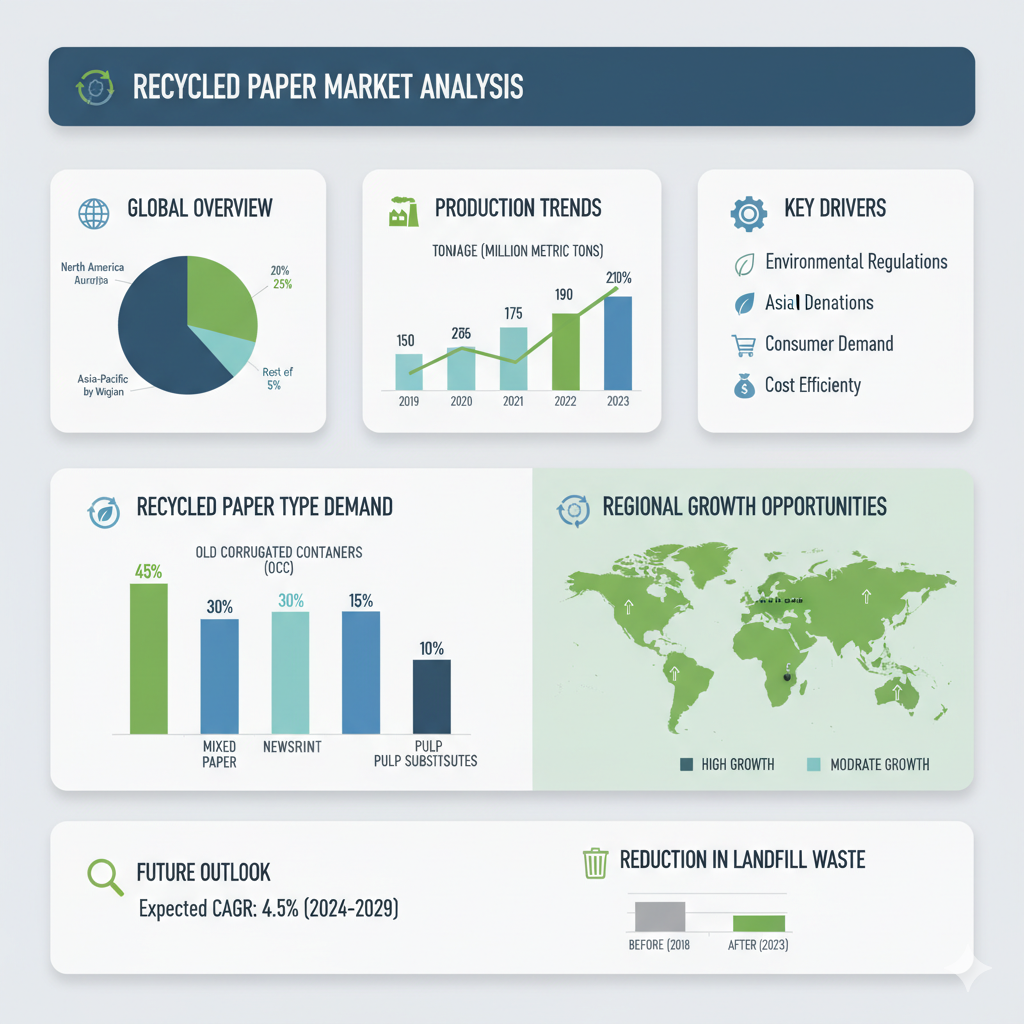
A recent market analysis reveals that global revenue for recycled-paper products is projected to exceed USD 45 billion by 2035, with a compound annual growth rate (CAGR) of approximately 5.6% from 2025 to 2035. This signals a robust long-term expansion trend and underscores the potential for both seasoned and nascent players to carve out meaningful market share.
Legacy Leaders Set the Pace
Long-standing manufacturers are not resting on their laurels. Tier-one firms are driving the sector forward through major investments in recycling facilities, advanced deinking technologies, automation and bio-based coatings. These enhancements are helping them not only maintain leadership but also raise the bar for the entire industry. By innovating around fiber‐recovery, zero-carbon operations and circular-economy models, these companies are defining what modern recycled-paper manufacturing looks like.
Emerging Manufacturers: A Window of Opportunity
For newer and growing manufacturers, the horizon is extremely favorable. The same structural tailwinds that benefit incumbents—such as stringent sustainability regulations, rising demand for eco-friendly packaging and increasing consumer preference for recycled content—also lower the barrier for entry and growth. With smart investment in technology and strategic partnerships, emerging players can move rapidly from niche to mainstream. Whether it’s processing secondary fiber, producing recycled cartonboard for e-commerce, or supplying sustainable pulp for stationery and printing, there is space for innovation and expansion.
Technology as the Game-Changer
At the heart of this market transformation are several key technological advances:
- Advanced deinking and pulping systems are raising the quality and lowering the cost of recycled‐paper feedstock, enabling smoother substitution for virgin fiber.
- Automated sorting and real-time digital monitoring systems are improving throughput and traceability in the recycling value-chain, which benefits both large and lean manufacturers.
- Bio-based and degradable coatings are enabling recycled-paper applications in packaging and consumer goods that demand performance and sustainability simultaneously.
- Water-efficient recycling processes and closed‐loop manufacturing are helping companies meet sustainability mandates while managing operational cost pressures.
These innovations are leveling the playing field: emerging manufacturers that adopt these technologies early can achieve quality parity with established peers, or even differentiate with niche specialties.
Market Structure & Strategic Insights
The competitive landscape in the global recycled-paper market is moderately concentrated: the top three players account for approximately 25 % of the market, the next two for around 10 %, with the remainder from a broader base of players. This distribution suggests that while established firms enjoy strong presence, more than half of the market remains accessible to challengers and dynamic new entrants.
Region-wise, mature recycling infrastructure in North America and strong regulatory frameworks in Europe still dominate. However, the Asia-Pacific region is emerging as a high-growth zone—driven by increasing industrialization, governmental focus on waste‐management and the boom in e-commerce packaging. For manufacturers looking to expand globally, investing in Asia-Pacific markets presents considerable upside.
What This Means for Manufacturers
- Established manufacturers should view this as a time to double‐down on scale, explore next-gen recycling technologies, secure supply of post‐consumer fiber and deepen offerings in packaging, printing and consumer goods.
- Newer manufacturers have an unprecedented window to enter with flexible, technology-enabled operations—whether specialising in fibre processing, creating highly sustainable paperboard, or serving niche downstream applications—positioning themselves for rapid gain.
- All manufacturers will benefit from strategic collaboration: forming partnerships with global brands seeking sustainable packaging, aligning operations with circular‐economy goals, and leveraging region-specific growth opportunities in Asia-Pacific and beyond.
Why the Moment is Right
Consumer preference is shifting decisively toward recycled and sustainably sourced paper products. Brands and retailers are increasingly demanding partners who can provide recycled‐content packaging with full traceability and minimal environmental impact. At the same time, regulatory regimes in many markets are phasing in requirements for recycled content, waste reduction and low‐carbon footprint solutions. Combine that with improved technologies and strong demand from e-commerce, and the result is a favourable environment for both growth and innovation in the recycled-paper space.
Final Note
The global recycled-paper market is not just growing—it’s evolving. It is making space for both the giants of the industry and agile newcomers. Manufacturers who act now—investing in cutting-edge recycling technologies, tapping emerging markets, and aligning their products with sustainability commitments—stand to thrive. This is not a side-story of the paper industry; it is the new mainstream.