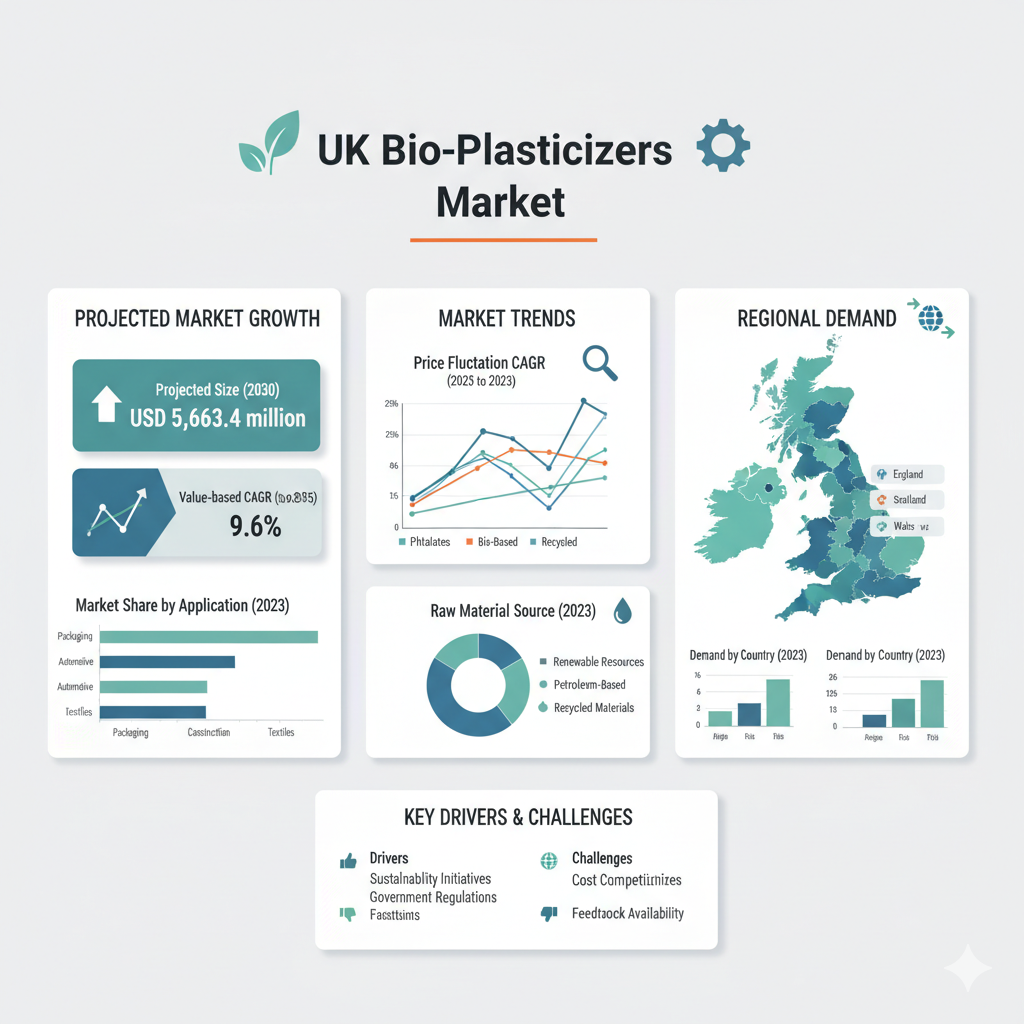
The United Kingdom’s bio-plasticizers market is entering an exciting new growth phase, fueled by surging demand for sustainable materials and the country’s commitment to greener manufacturing. The market is projected to reach USD 5.6 billion by 2030, expanding at an impressive 9.6% CAGR from 2025 to 2035, as both long-standing manufacturers and emerging innovators race to develop new technologies and scale production.
Sustainability at the Heart of Market Expansion
The rapid growth of the bio-plasticizers sector reflects a broader transformation sweeping through the UK’s chemical and materials industries. Companies are moving away from conventional, petroleum-based plasticizers toward environmentally friendly alternatives derived from renewable resources such as plant oils, citrates, and succinic acid.
This shift is driven by a combination of consumer awareness, tighter environmental regulations, and the national ambition to reach net-zero emissions. As a result, bio-plasticizers—valued for their lower toxicity, biodegradability, and compatibility with existing production processes—are seeing strong adoption in packaging, construction, automotive, and consumer goods manufacturing.
Packaging alone accounts for over 40% of the total market demand, while construction and automotive applications are growing rapidly thanks to the need for flexible, durable, and sustainable materials.
Established Industry Leaders Double Down on Innovation
Several leading chemical companies with a long presence in the UK are investing heavily in research, production capacity, and partnerships to stay ahead. Established players are introducing advanced bio-plasticizer lines designed for specialized applications such as food packaging, healthcare products, and automotive interiors.
These manufacturers are expanding their use of renewable feedstocks and building integrated supply chains to reduce carbon footprints. By leveraging decades of technical expertise and global reach, they are setting new benchmarks for performance, safety, and environmental responsibility.
Beyond simply replacing traditional products, major producers are now re-engineering formulations to deliver superior flexibility, longevity, and recyclability—qualities increasingly demanded by downstream industries and consumers alike.
Emerging Manufacturers Bring Fresh Energy and New Technologies
Alongside the market leaders, a new wave of UK-based companies and start-ups is entering the scene with innovative solutions and disruptive ideas. These emerging manufacturers are focusing on highly specialized formulations, faster product development, and localized production models that appeal to sustainability-driven brands.
Agile and technology-driven, these entrants are exploring feedstocks such as vegetable oils, bio-succinates, and other non-phthalate materials that can enhance product safety and regulatory compliance. Many of them are also working closely with packaging firms and automotive suppliers to co-develop tailor-made bio-plasticizers optimized for different performance needs.
This growing diversity of players—ranging from established global producers to niche innovators—creates a vibrant ecosystem that fosters healthy competition, cross-industry collaboration, and continuous technological progress.
Strategic Pathways for Growth
As the UK bio-plasticizers market accelerates, several strategic priorities are emerging for businesses aiming to capture long-term value:
- Feedstock Innovation:
Continued research into renewable and waste-derived raw materials will remain a core differentiator. Companies investing in scalable, cost-efficient bio-feedstocks will gain a competitive edge. - Application Expansion:
High-growth sectors such as flexible packaging, flooring, automotive interiors, and consumer goods offer lucrative opportunities for tailored formulations and brand partnerships. - Regulatory Readiness:
With stricter UK and EU chemical safety regulations on the horizon, compliance, certification, and traceability are key to market access and brand trust. - Capacity Building:
As demand rises, manufacturers are expanding facilities, optimizing logistics, and building resilient supply chains to ensure consistent feedstock availability and cost stability. - Collaborative Innovation:
Partnerships between bio-plasticizer producers, feedstock suppliers, and end-user industries are becoming a cornerstone of sustainable product development.
Market Outlook: A Decade of Opportunity
The UK’s commitment to sustainable materials, combined with rising consumer preference for eco-friendly products, is positioning bio-plasticizers as a cornerstone of future manufacturing. Market forecasts suggest robust growth over the next decade, with strong adoption across multiple end-use industries.
For established corporations, the challenge lies in scaling production and integrating bio-based innovations into global operations. For new entrants and smaller firms, the focus is on agility—introducing differentiated products and leveraging partnerships to gain market visibility.
Ultimately, the UK’s bio-plasticizers sector is becoming a proving ground for sustainable innovation. Every participant—whether a multinational chemical giant or a homegrown start-up—has a role to play in shaping a cleaner, more circular future for the plastics and materials industry.