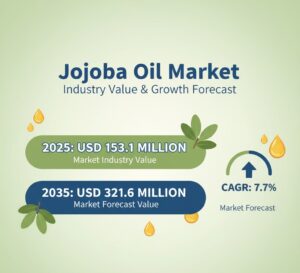
The jojoba oil market is experiencing remarkable growth, projected to nearly double from USD 153.1 million in 2025 to USD 321.6 million by 2035, at a healthy CAGR of 7.7%. This surge is propelled by increasing consumer preference for natural, sustainable ingredients in skincare, haircare, and pharmaceuticals, alongside innovations in production technologies and expansion by both established manufacturers and emerging players.
Derived from the seeds of the jojoba plant, jojoba oil’s unique molecular structure closely resembles human sebum, making it an ideal ingredient in cosmetic and therapeutic formulations. The rising global demand for clean beauty products and a decisive shift from synthetic emollients and mineral oils have cemented jojoba oil’s status as a key bio-based ingredient across multiple industries.
Unlock the full market insights and exclusive data breakdowns – Request Your Sample Report Now
Key Market Segments
The comprehensive market report highlights the following pivotal segments shaping the jojoba oil landscape:
- Type:
- Cold Pressed (dominant with 59.8% share): Preferred for its purity and nutrient retention, cold pressing preserves antioxidants, vitamins, and fatty acids essential for high-efficacy skincare and therapeutic uses.
- Refined: Used where specific processing is required, but with lesser nutrient retention.
- Application:
- Cosmetics and Personal Care (leading segment with 73.2% share): Jojoba oil is widely used in moisturizers, serums, hair conditioners, lip balms, and massage oils, favored for its moisturizing, anti-inflammatory, and non-comedogenic properties.
- Pharmaceutical: Leveraged for its soothing effects in topical formulations.
- Industrial: Employed as a bio-based lubricant and functional additive.
- Others: Including aromatherapy and wellness sectors.
- Sales Channel:
- B2B (57.4% share): Bulk procurement by cosmetic, pharmaceutical, and industrial manufacturers ensures consistent supply and cost efficiency.
- B2C: Growing consumer awareness is expanding retail sales.
- Regional Outlook:
- North America, Asia-Pacific, and Europe remain key growth regions, with emerging markets in Latin America and Middle East & Africa offering new opportunities.
Market Drivers and Growth Opportunities
- Consumer Shift Toward Natural & Sustainable Products:
Heightened awareness around ingredient safety and environmental impact is pushing consumers and manufacturers alike to favor natural oils like jojoba over synthetic alternatives. - Technological Advances in Extraction:
Cold-press extraction advancements improve yield and oil quality, ensuring consistent supply of high-grade jojoba oil, critical for premium formulations. - Expanding Applications & Product Innovation:
Beyond traditional skincare, jojoba oil is now gaining traction in male grooming, nutraceuticals, and anti-pollution products, diversifying revenue streams. - Regional Growth Hotspots:
- United States: CAGR of 7.9% fueled by clean beauty trends and rising demand for natural personal care products.
- United Kingdom: Expected CAGR of 9.2%, with manufacturers innovating new product lines emphasizing ingredient transparency and sustainability.
- China: Fastest growth at 13.4% CAGR, driven by adoption of Western beauty trends and skincare advancements.
- Japan: Growth supported by social media influence and accessibility through multi-channel retail networks.
- South Korea: Demand for lightweight, non-greasy formulations, and anti-pollution skincare boosts jojoba oil usage.
- Strategic Collaborations and Partnerships:
Industry players are forging alliances with growers and technology innovators to scale production and develop novel jojoba oil derivatives, reinforcing market expansion.
Challenges to Market Growth
- Agricultural Variability:
Climatic conditions and pests affect jojoba crop yields, causing supply fluctuations that impact pricing and availability. - Competitive Oils:
Argan, coconut, and almond oils remain alternatives, compelling jojoba oil producers to differentiate via quality, certification, and sustainability credentials. - Price Volatility:
Production costs and currency fluctuations pose challenges for manufacturers in pricing strategies and profit margins. - Consumer Awareness in Emerging Markets:
Limited knowledge about jojoba oil’s benefits in certain regions restrains market penetration, necessitating education and marketing efforts.
Leading Players Pioneering Market Growth
The jojoba oil market features a dynamic mix of established manufacturers and ambitious newcomers focused on sustainability, innovation, and market reach:
- Purcell Jojoba International:
Renowned for premium quality jojoba oil and broad cosmetic ingredient portfolio, focusing on purity and customer satisfaction. - EcoOil:
Committed to sustainable production, EcoOil emphasizes ethical sourcing and environmental stewardship, appealing to eco-conscious brands and consumers. - Inca Oil SA, ConnOils LLC, Jojoba Naturals, JD Jojoba Desert, Hallstar, Nutrix International LLC, USA Organic Group Corp, OPW Ingredients GmbH:
These key players are expanding footprints by adopting cutting-edge extraction techniques and launching novel jojoba-based products catering to diverse industry needs.
Buy Full Report: Jojoba Oil Market
Future Outlook
The jojoba oil market is poised for steady growth over the next decade, with several promising trends:
- Cold Pressed Segment Leadership:
Demand for minimally processed, nutrient-rich jojoba oil will continue to dominate, driven by consumer preference for clean-label, high-efficacy ingredients. - Cosmetics and Personal Care Dominance:
Increasing global expenditure on skincare and haircare will sustain this segment’s leadership, especially with growing interest in sensitive skin formulations. - B2B Sales Expansion:
Bulk procurement will remain crucial for stable supply chains, supported by enhanced transparency and certification standards. - Innovations in Packaging and Distribution:
Sustainability-focused packaging and omnichannel retail strategies will enhance consumer engagement and reduce environmental footprint. - Emerging Markets Penetration:
Asia-Pacific and Latin America present lucrative opportunities as awareness grows and purchasing power increases.
Why FMI: https://www.futuremarketinsights.com/why-fmi
About Future Market Insights (FMI)
Future Market Insights, Inc. (ESOMAR certified, recipient of the Stevie Award, and a member of the Greater New York Chamber of Commerce) offers profound insights into the driving factors that are boosting demand in the market. FMI stands as the leading global provider of market intelligence, advisory services, consulting, and events for the Packaging, Food and Beverage, Consumer Technology, Healthcare, Industrial, and Chemicals markets. With a vast team of over 400 analysts worldwide, FMI provides global, regional, and local expertise on diverse domains and industry trends across more than 110 countries.
Contact Us:
Future Market Insights Inc.
Christiana Corporate, 200 Continental Drive,
Suite 401, Newark, Delaware – 19713, USA
T: +1-347-918-3531
For Sales Enquiries: sales@futuremarketinsights.com
Website: https://www.futuremarketinsights.com
LinkedIn| Twitter| Blogs | YouTube