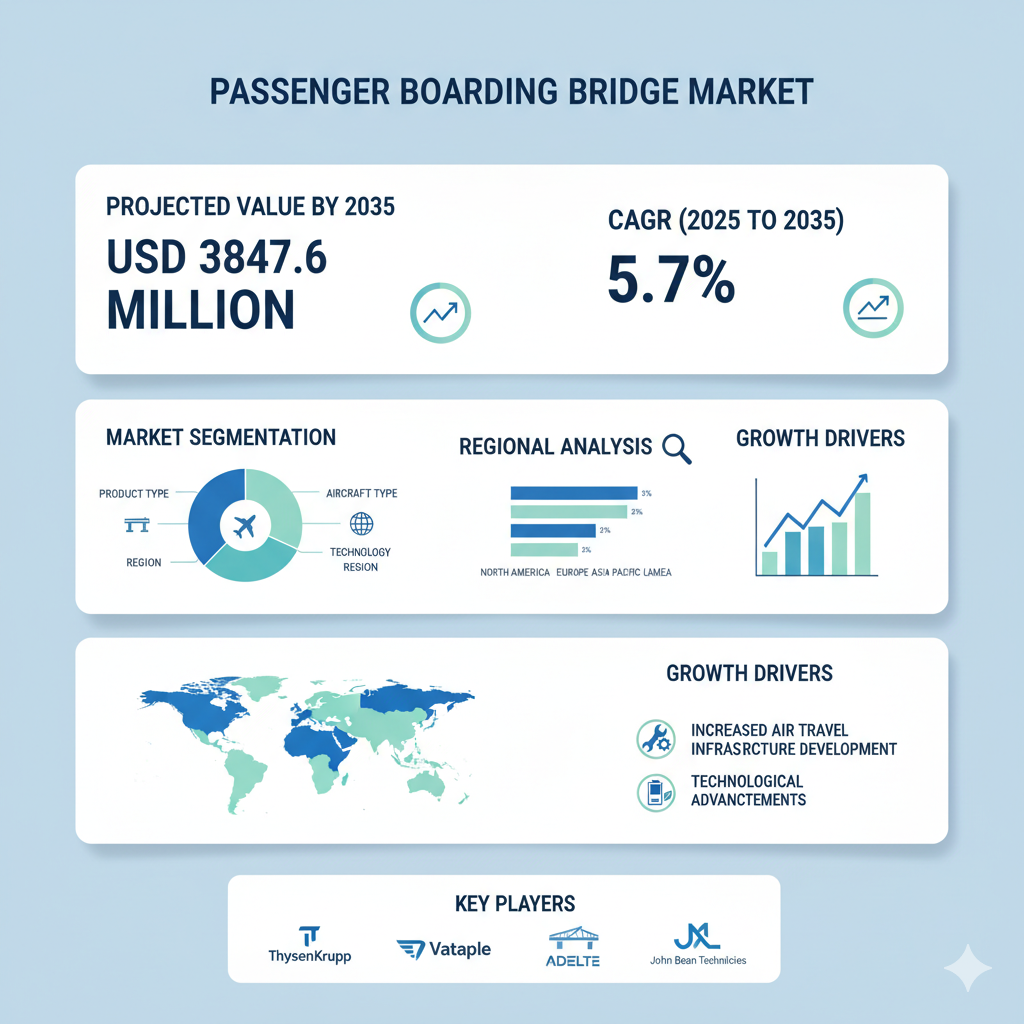
The global passenger boarding bridge (PBB) market is on the runway for impressive growth over the next decade, driven by rapid airport expansion, rising passenger traffic, and strong demand for seamless, tech-enabled boarding experiences. Industry projections indicate the market will reach nearly US $3.85 billion by 2035, growing at a steady CAGR of 5.7% between 2025 and 2035.
This surge in demand is not only energizing well-established players but also creating space for a new generation of manufacturers to innovate and capture emerging opportunities. Both global giants and agile new entrants are focusing on smarter technologies, sustainable materials, and efficient designs to meet the evolving needs of airports and travelers alike.
Established Industry Leaders Scaling Up
Several long-standing leaders continue to shape the future of the passenger boarding bridge market. Companies such as thyssenkrupp AG, ADELTE Group, and FMT Sweden AB remain at the forefront, leveraging decades of engineering experience and international presence.
These manufacturers are scaling up production capacities and enhancing their offerings with next-generation solutions. thyssenkrupp AG is prioritizing automation, data-driven service models, and eco-efficient bridge systems that help airports reduce operational downtime. ADELTE Group continues to impress with custom-designed glass-walled bridges and adaptable structures that enhance both functionality and passenger experience. Meanwhile, FMT Sweden AB has built a reputation for durable, climate-resilient designs that serve airports in challenging weather regions.
These established players are also expanding into retrofitting projects and integrating digital maintenance systems, ensuring that their equipment remains competitive and future-ready. Their focus on reliability and smart integration positions them as key partners for airport modernization efforts worldwide.
Emerging Manufacturers Enter the Runway
Beyond the established names, a wave of emerging and regional manufacturers is entering the global passenger boarding bridge market. Companies such as JBT Corporation, ShinMaywa Industries Ltd., Vataple Machinery Co. Ltd., and PT Bukaka Teknik Utama Tbk are quickly gaining visibility by offering flexible and cost-efficient solutions for regional and developing airports.
These newer entrants often focus on modular, lightweight, and adaptable bridges, which appeal to smaller airports and operators working within tighter budgets. Their competitive pricing, combined with rapid delivery timelines and customization capabilities, enables them to penetrate new markets that major players may overlook.
For manufacturers seeking to grow their presence, the rise of telescopic and glass-walled bridges represents a particularly lucrative opportunity. These segments have seen strong adoption in recent years, driven by the dual priorities of efficiency and passenger comfort. Additionally, smart docking systems and connected maintenance tools are rapidly transforming the way airports manage ground operations—an area where agile innovators can thrive.
Technology and Sustainability Drive Market Evolution
The next generation of passenger boarding bridges is being defined by technology, sustainability, and user experience. Across the industry, leading and emerging manufacturers are investing heavily in innovation, focusing on key advancements such as:
- AI-powered docking and positioning systems that ensure precision alignment, faster boarding, and reduced aircraft turnaround times.
- IoT-based predictive maintenance platforms that monitor bridge health, predict wear and tear, and minimize downtime through remote diagnostics.
- Electric-powered and energy-efficient bridge systems, supporting airports’ sustainability goals and reducing carbon footprints.
- Modular, customizable bridge architectures designed for flexibility—ideal for airports managing varied aircraft types and fluctuating passenger volumes.
These innovations not only enhance operational efficiency but also help airports meet strict environmental and safety regulations. As governments and aviation authorities push for greener infrastructure, the demand for low-emission, durable, and intelligent boarding solutions continues to rise.
Strategic Pathways for Growth
The market offers distinct opportunities for both established and new players:
- For established manufacturers: Expanding into retrofit and maintenance services offers a reliable growth avenue, as airports modernize older infrastructure without full replacements. Established brands can also leverage their global reach to enter emerging markets in Asia, the Middle East, and Africa—regions experiencing rapid airport expansion.
- For emerging manufacturers: There is immense potential in niche markets—smaller regional airports, budget-sensitive projects, and adaptive retrofit solutions. By embracing modular design and sustainable technologies, these companies can differentiate themselves from larger incumbents.
- For all manufacturers: Collaboration with airport authorities, aircraft OEMs, and technology developers will be key. Integration of AI, automation, and green design principles will shape the future competitive landscape.
The Road Ahead
The passenger boarding bridge industry is entering a transformative phase, fueled by innovation and infrastructure growth. Airports around the world are investing in smarter, safer, and more comfortable passenger boarding systems to meet the demands of the modern traveler.
For manufacturers—whether legacy leaders or ambitious newcomers—the next decade presents a window of opportunity to scale, innovate, and redefine the passenger experience. Those who embrace digitalization, sustainability, and adaptability will not only grow their market share but also help shape the next era of global air travel.